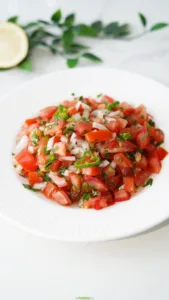
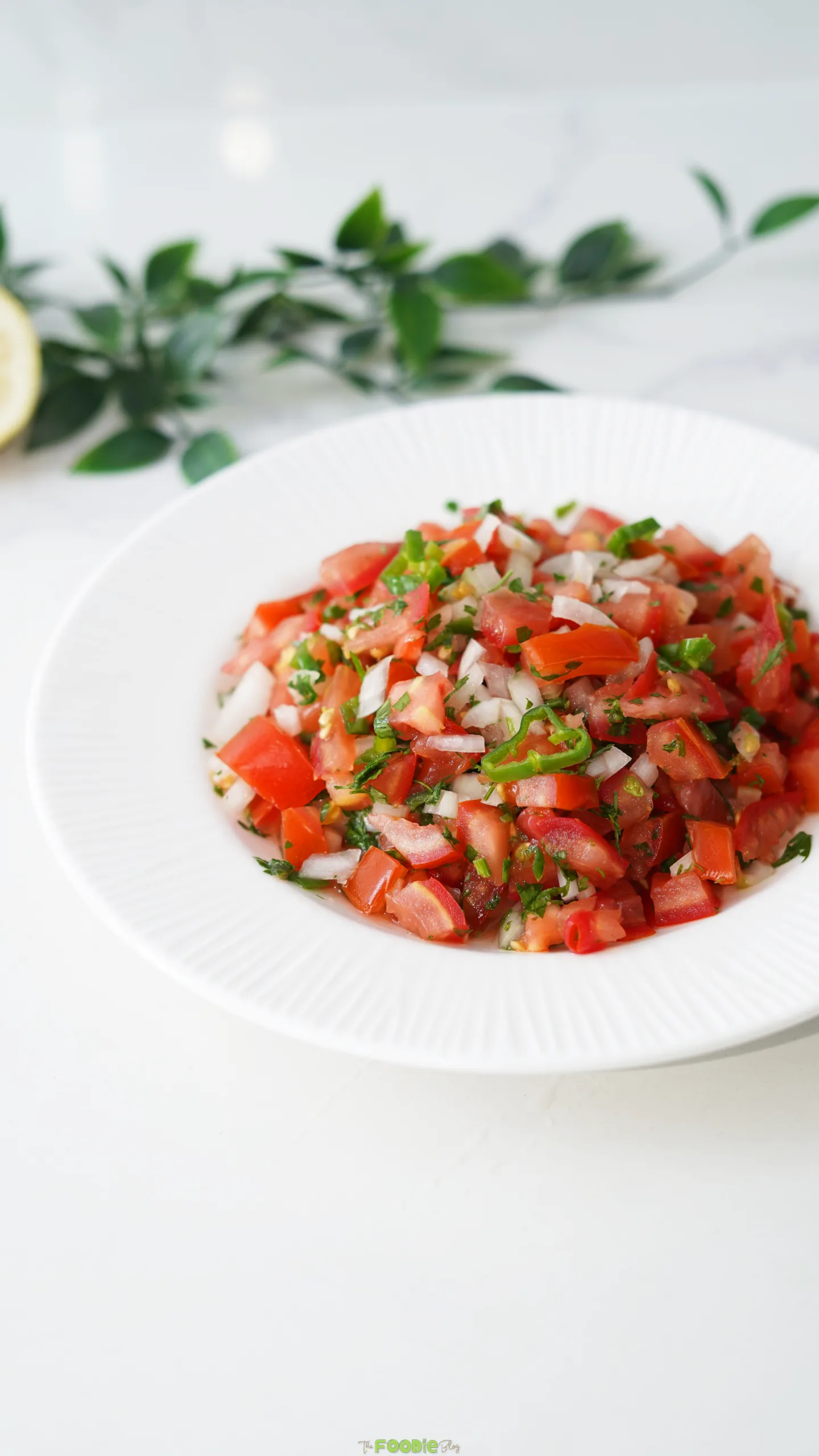
This authentic Mexican salsa recipe, also known as pico de gallo, is fresh, chunky, and packed with ripe tomatoes, white onion, cilantro, jalapeño, and bright lime juice. It takes only 15 minutes to prepare and is perfect for tacos, chips, quesadillas, burrito bowls, grilled meats, and more.

For another fresh salsa, try my Corn Salsa. Serve this pico de gallo with Chicken Quesadilla, add my creamy Chuy’s Jalapeño Ranch for dipping, or spoon it over Mexican Shrimp Tacos for an easy taco-night dinner.
What Is Pico de Gallo
Pico de gallo is a fresh, chunky Mexican salsa made with chopped tomatoes, onion, cilantro, fresh chile pepper, lime juice, and salt.
Unlike many restaurant-style salsas that are blended into a smooth or pourable consistency, pico de gallo keeps each ingredient clearly visible.
You may also hear it called fresh salsa or salsa fresca.
Because there is no cooking involved, the quality and ripeness of the tomatoes make a big difference.
Table of contents
- What Is Pico de Gallo
- What You Need
- How to Make Pico de Gallo
- How to Keep Pico de Gallo From Getting Watery
- Jalapeño vs. Serrano Pepper
- How Spicy Should Pico de Gallo Be
- Should You Remove Tomato Seeds
- Why Fresh Lime Juice Matters
- How to Dice Tomatoes for Pico de Gallo
- How to Make Pico de Gallo Less Spicy
- FAQs
- More Recipes You Will Like

What You Need

How to Make Pico de Gallo
- Chop the tomatoes and add the fresh ingredients
Dice the tomatoes into small, even pieces, about ¼ to ⅓ inch wide. Add them to a large bowl.
Add the chopped white onion, cilantro, and jalapeño. Pour over the lime juice, sprinkle in the salt, and keep everything in the bowl ready for mixing.
For a less watery salsa, remove the very seedy center of the tomatoes before dicing. This is especially useful when tomatoes are very ripe. See The Kitchn’s guide to seeding tomatoes for an easy, less-messy method.

- Mix gently and let the flavors come together
Use a spoon to gently toss the tomatoes, onion, cilantro, jalapeño, lime juice, and salt until everything is evenly combined.
Taste and adjust with more lime juice, salt, or jalapeño if needed. Let the salsa rest for 5 to 10 minutes before serving so the flavors blend together.

- Serve while fresh
Spoon it into a bowl, pile it over tacos, or serve it beside tortilla chips.It is also especially good tucked into a warm Chicken Quesadilla, where the fresh tomato, cilantro, and lime balance the cheesy filling. Fresh tomato salsa is commonly served with tacos, burritos, quesadillas, nachos, and other Mexican dishes.
How to Keep Pico de Gallo From Getting Watery
Fresh tomatoes naturally release juice after they are cut and salted.
A little liquid is normal and flavorful.
Too much, however, can turn your salsa into tomato soup.
For a chunkier salsa:
Use ripe but firm tomatoes.
Remove very watery seed centers if necessary.
Don’t chop the tomatoes too small.
Don’t overmix.
Add salt shortly before serving rather than hours in advance.
Serve the salsa relatively soon after preparing it.
A slotted serving spoon is also helpful if juice collects at the bottom.
Jalapeño vs. Serrano Pepper
Both peppers work well, but they don’t give exactly the same result.
- Jalapeño
Jalapeño is usually the better choice when you want a mild-to-medium pico de gallo.
Its flavor is fresh and slightly grassy.
Remove the seeds and inner membrane for less heat.
- Serrano
Serrano peppers are generally hotter.
They are a good choice if you want a spicier salsa without adding a large volume of chile.
Whichever pepper you choose, start conservatively.
You can always add more heat, but you can’t remove it once everything is mixed together.
How Spicy Should Pico de Gallo Be
There isn’t one correct heat level.
The tomatoes, onion, lime, and cilantro should still be easy to taste.
If the chile completely dominates the salsa, you may have gone too far unless that’s specifically what you enjoy.
For serving a crowd, I recommend making the main bowl moderately mild and putting extra chopped jalapeño or hot sauce on the side.
Should You Remove Tomato Seeds
You don’t have to.
If your tomatoes are firm and meaty, keep them.
If they are especially juicy, removing some of the watery seed pockets can help maintain a chunkier texture.
The goal isn’t to completely dry the tomatoes.
You simply want to prevent an excessive amount of liquid from collecting at the bottom of the bowl.
Why Fresh Lime Juice Matters
Pico de gallo has very few ingredients, so each one matters.
Fresh lime tastes brighter and more aromatic than bottled lime juice.
It also balances the sweetness of ripe tomatoes and the sharp flavor of raw onion.
Start with less lime and add more after tasting.
Too much can overpower the tomato flavor and make the salsa unnecessarily sour.
How to Dice Tomatoes for Pico de Gallo
A sharp knife makes a big difference.
A dull knife tends to crush ripe tomatoes and release more juice onto the cutting board.
Cut the tomato into slices first.
Then cut those slices into strips.
Turn the strips and cut across them to create small cubes.
Aim for approximately the same size throughout.
Uniform pieces make the finished salsa easier to scoop and give you a better balance of ingredients in each bite.
How to Make Pico de Gallo Less Spicy
There are several easy options.
Remove the jalapeño seeds and white membrane.
Use only half the chile initially.
Choose jalapeño instead of serrano.
Add more diced tomato if you’ve already made the salsa too spicy.
You can also serve avocado, sour cream, or another creamy dip alongside the salsa to balance the heat.
FAQs
Yes, but it is best prepared close to serving time. For a next-day batch, chop the tomatoes, onion, cilantro, and jalapeño, then store them covered in the refrigerator. Add lime juice and salt shortly before serving.
It is at its best within a few hours. Leftovers can be stored for 1 to 2 days, but the tomatoes will release more juice and become softer over time.
No. Freezing changes the texture of fresh tomatoes, cilantro, and onion, so the salsa will not stay crisp after thawing.
Serve it with tortilla chips, grilled chicken, scrambled eggs, tacos, or quesadillas. It also makes a bright, fresh side for these Charcoal Chicken Shop Chicken Skewers served with pita and lemon.
Yes. Red onion, shallots, or scallions can work, but white onion gives the cleanest and most traditional flavor.
This usually happens when the tomatoes are too soft, the salsa sits too long, or the tomatoes were not drained of their watery seed centers. Use firm tomatoes, mix gently, and season shortly before serving.
Pico de gallo is fresh, chunky, and made with raw chopped ingredients. Salsa is usually smoother, saucier, and may be blended or cooked.
Yes. Pico de gallo is made with fresh vegetables, lime juice, and herbs, so it is naturally low in calories and full of fresh flavor.
Freezing is not recommended because the tomatoes and cilantro become soft and watery after thawing.
More Recipes You Will Like
Pico de Gallo (Authentic Mexican Salsa)
Ingredients
Equipment
Method
- Dice the tomatoes into small, even pieces. Add them to a large mixing bowl.
- Add the chopped white onion, cilantro, and jalapeño to the tomatoes.
- Pour in 1 tablespoon lime juice and sprinkle over the salt.
- Toss gently until the ingredients are evenly combined.
- Taste and add more lime juice, salt, or jalapeño if needed.
- Let rest for 5 to 10 minutes before serving.
Nutrition
Video
Notes
- Remove tomato seeds and watery centers for a less watery salsa.
- Use serrano pepper instead of jalapeño for extra heat.
- Start with 1 tablespoon lime juice, then adjust after tasting.
- Store leftovers in an airtight container in the refrigerator.
- Best served fresh on the day it is made.
- Nutrition values are approximate and based on 4 servings.
Tried this recipe?
Let us know how it was!Estimated reading time: 7 minutes