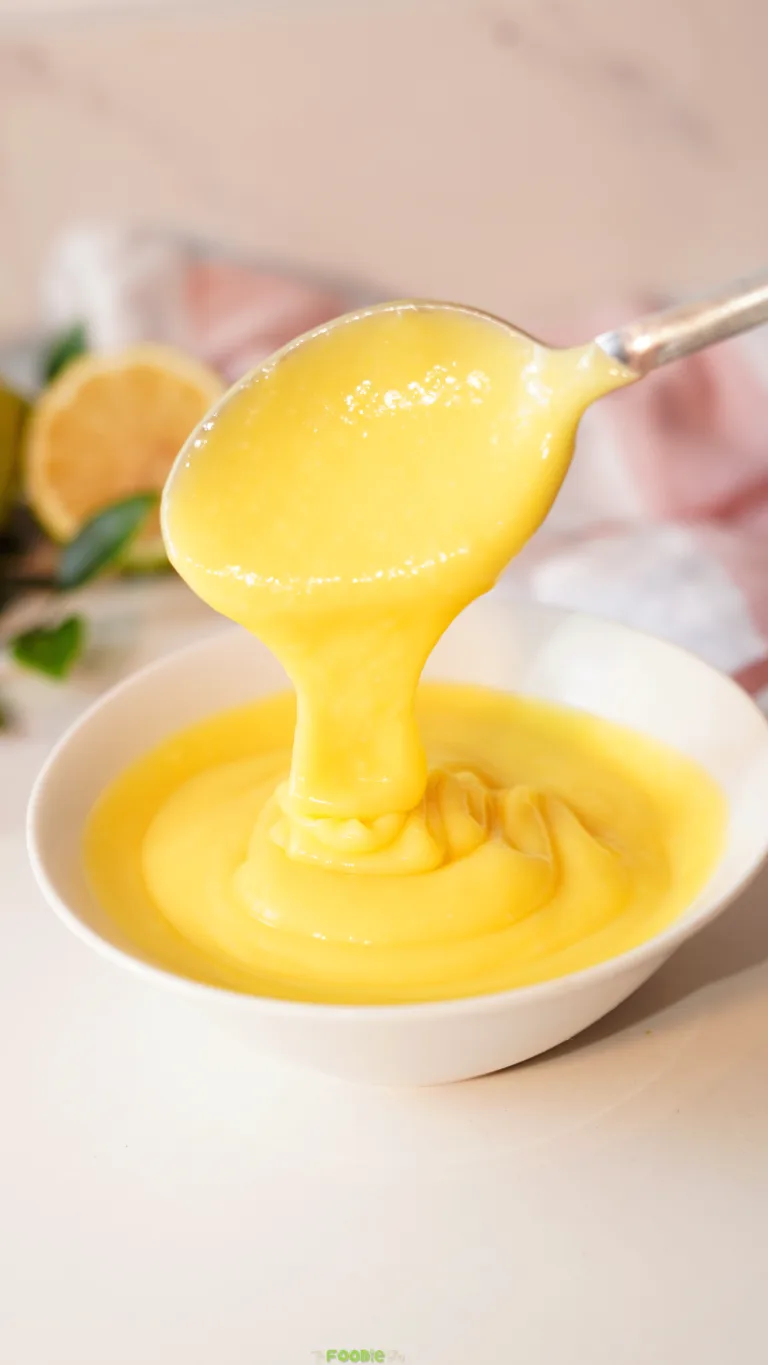
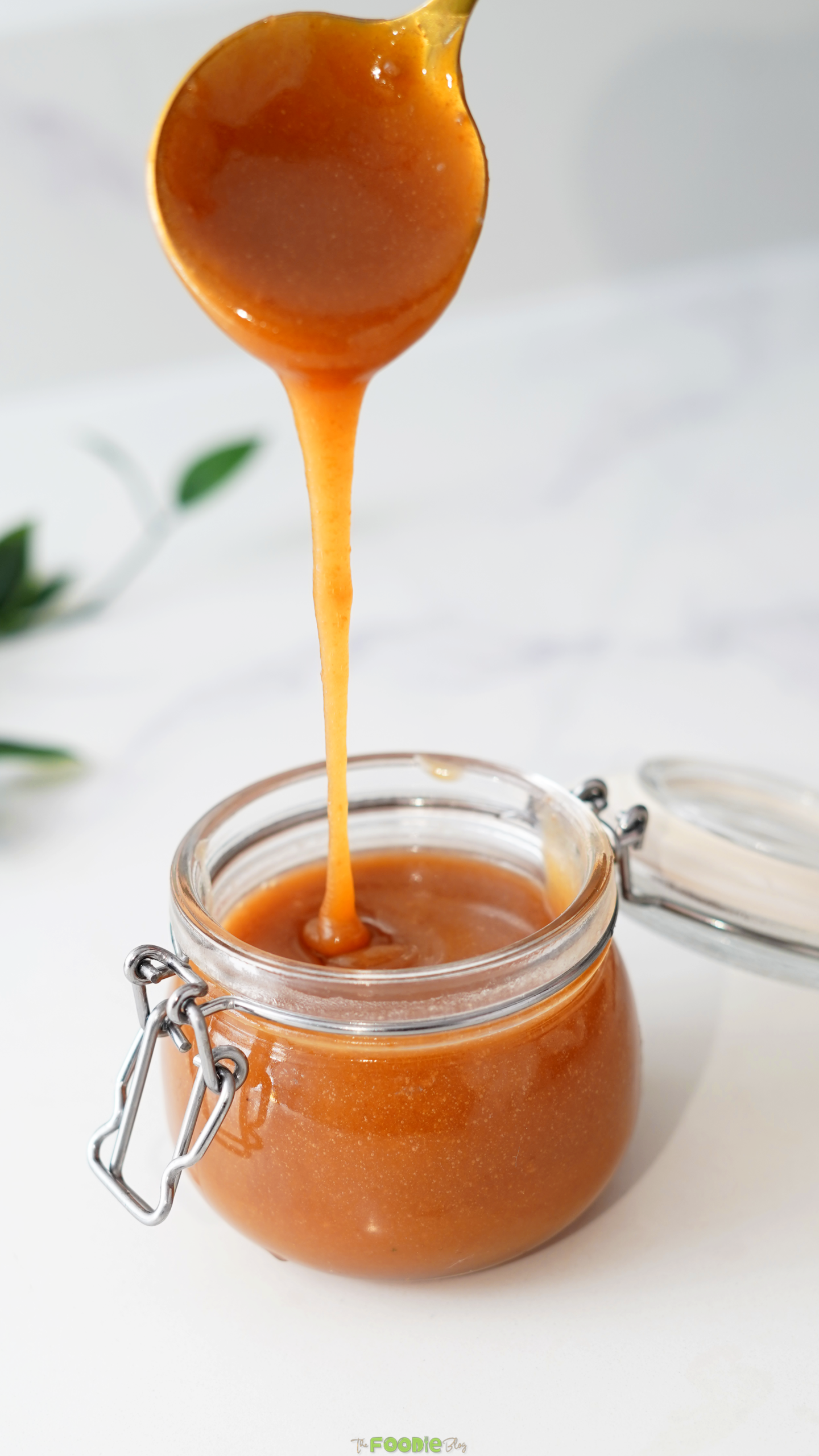
This salted caramel sauce recipe is rich, glossy, and smooth, with a deep caramel flavor balanced by just the right amount of salt. It’s made with five simple ingredients and uses an easy wet-caramel method—no candy thermometer needed.
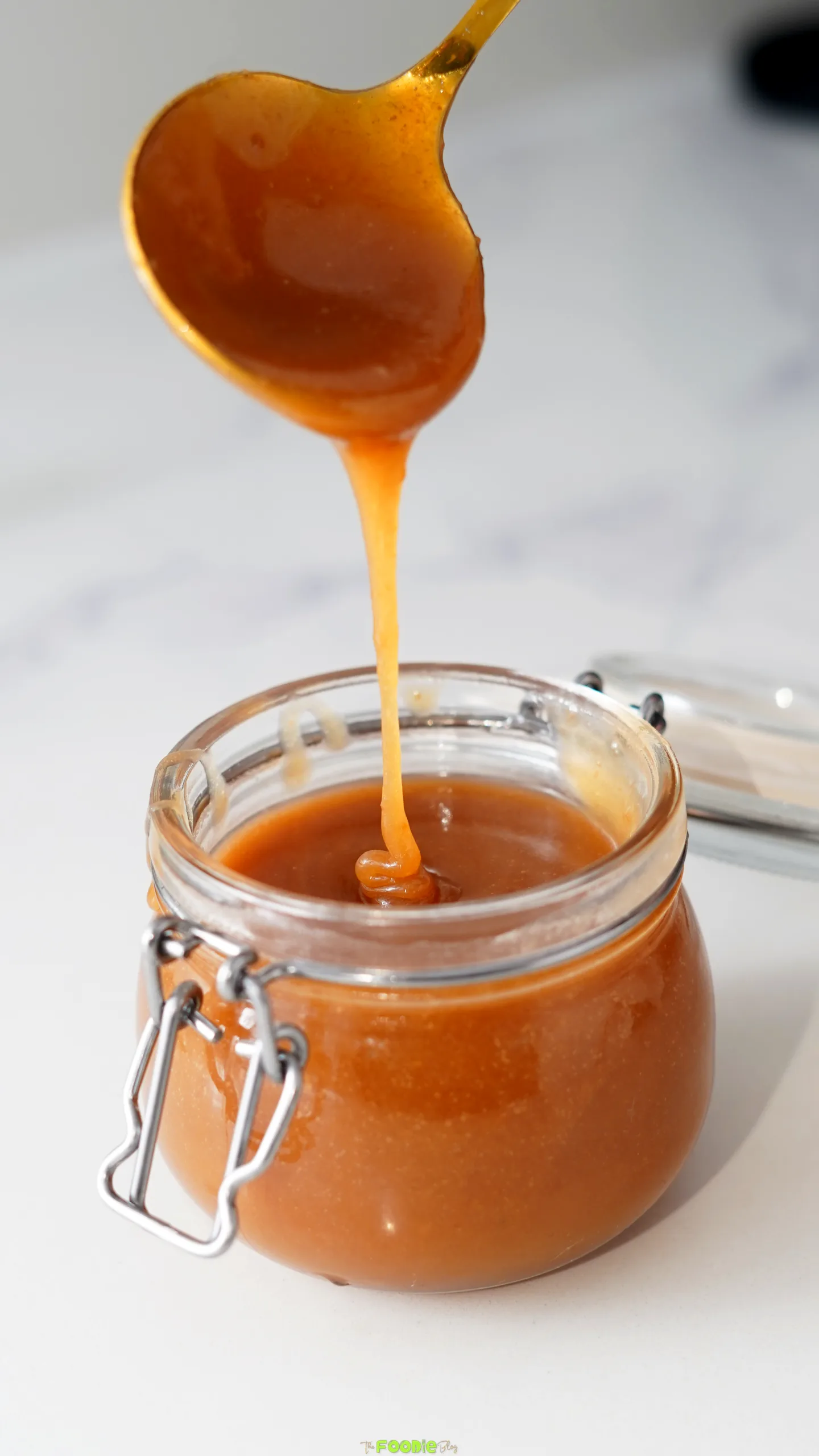
I love serving it slightly warm so it stays silky and pourable. Drizzle it over my Chocolate Fudge Cake, spoon it over Caramel Slice, use it alongside Caramel Popcorn, or pour it over warm Mini Waffles.
What Is Salted Caramel Sauce?
Salted caramel sauce is a rich homemade caramel made by cooking sugar until golden, then whisking in heavy cream, vanilla, and salt. The sweet caramel and touch of salt create the perfect balance of flavors, making it a delicious topping for desserts, breakfast, and coffee drinks.
Table of contents
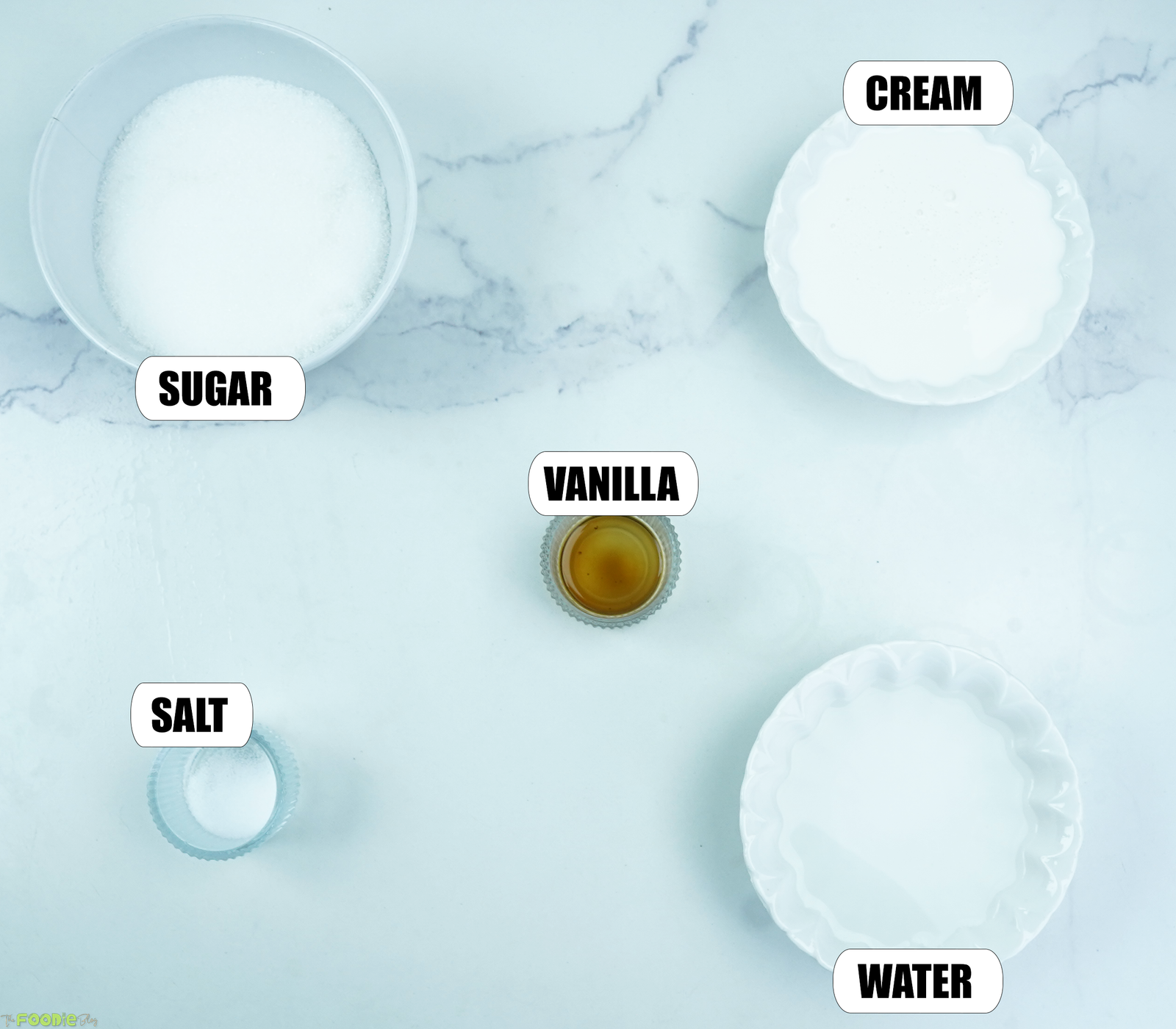
Ingredients You’ll Need
Before you start, measure all of the ingredients and keep them close to the stove. Once the sugar begins turning amber, everything happens quickly, so having the cream, vanilla, and salt ready will make the process much less stressful.
For another caramel dessert with a thicker, sliceable filling, try this Caramel Slice with its buttery base, creamy caramel layer, and smooth chocolate topping.
Let’s Make Salted Caramel Sauce
Making homemade salted caramel sauce is much easier than most people expect. The most important part is watching the sugar closely as it changes from clear to a rich amber color. Once you understand that step, the rest comes together in just a few minutes.
Combine the sugar and water
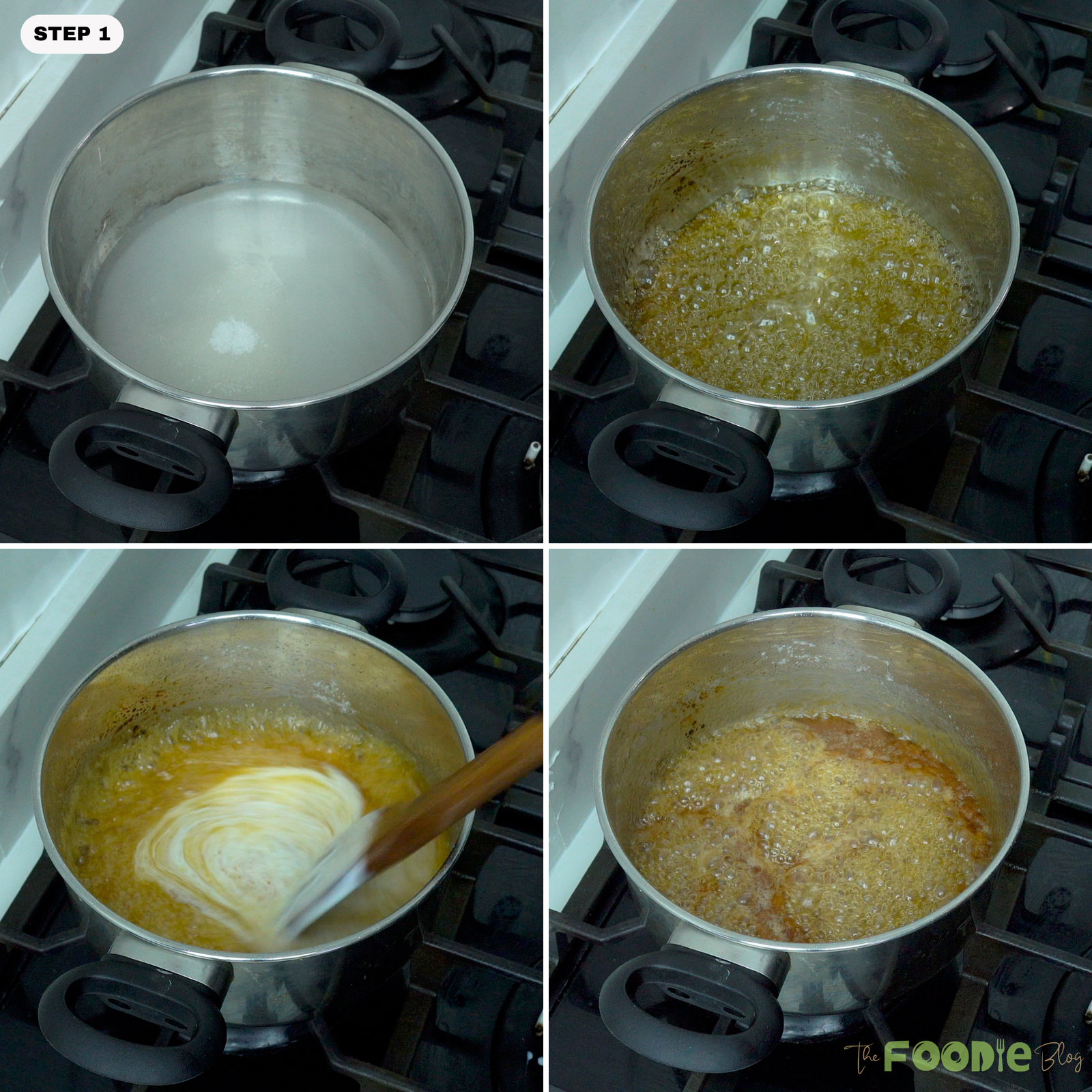
- Add the sugar and water to a medium heavy-bottomed saucepan. Place it over medium heat and stir gently until the sugar begins dissolving.
- Once the syrup reaches a boil, stop stirring and let the heat do the work. Stirring after this point can encourage sugar crystals and make the caramel grainy. For a detailed explanation of the wet-caramel method, see King Arthur Baking’s guide to making caramel.
- Use a saucepan that is larger than you think you need. The caramel will bubble up quickly when the cream is added later.
Boil until the syrup turns amber
- Bring the sugar mixture to a steady boil. Once it is boiling, stop stirring and let it cook until the color changes from clear to pale gold, then golden amber.
- This usually takes around 7 to 12 minutes, depending on the heat and saucepan. Watch it closely during the final minutes because caramel can darken very quickly.
Whisk in the cream
- Reduce the heat to low. Slowly pour in the heavy cream while whisking continuously.
- The caramel will foam up and release steam, so keep your hands and face back from the pan Use a deep saucepan and pour the cream in slowly because hot caramel bubbles up very quickly when the cold cream hits it. For more step-by-step caramel technique, see Handle the Heat’s homemade caramel sauce guide.
- Continue whisking until the cream and caramel are fully combined and smooth.
Important: Do not judge the thickness yet
- The sauce will look thin while it is hot. That is normal. It thickens a lot as it cools, so do not keep cooking it just to make it thicker.
Add vanilla and salt
- Remove the pan from the heat. Whisk in the vanilla extract and salt until the sauce looks glossy and smooth.
- Taste only after it has cooled slightly. Add a tiny pinch more salt if you want a stronger salted caramel finish.
Cool and transfer to a jar
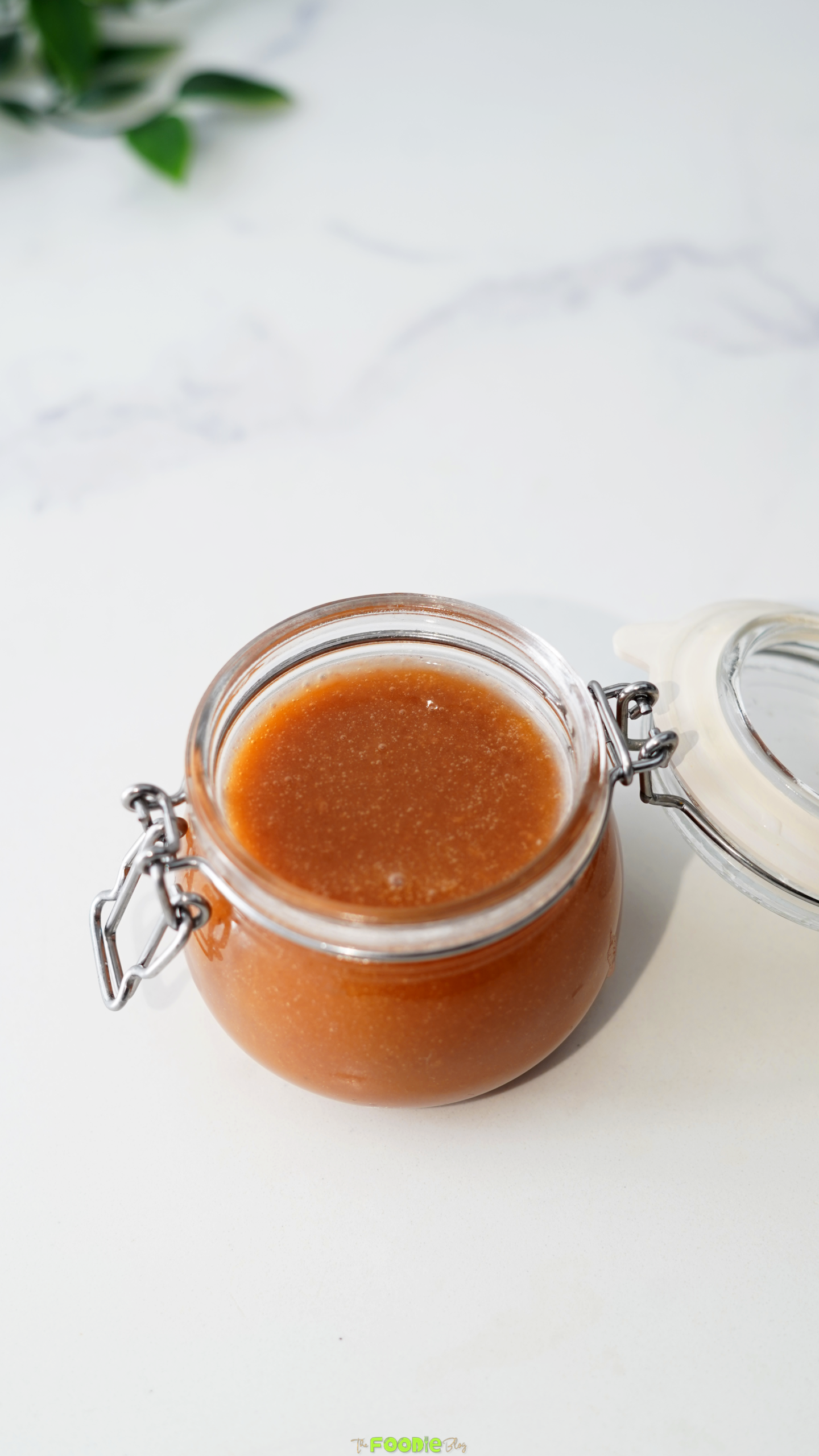
- Let the caramel cool in the saucepan for 15 to 20 minutes. Pour it into a clean heatproof jar, then let it cool completely before closing the lid.
- Use it warm for pouring over desserts, or chill it for a thicker caramel topping.
How Thick Should Salted Caramel Sauce Be?
Don’t expect the sauce to look thick while it’s still hot.
Fresh caramel should be smooth and quite pourable at first. As its temperature drops, it gradually becomes thicker and more spoonable.
That means hot caramel = thinner, while cool caramel = thicker.
If you keep cooking the sauce just because it looks thin while hot, you risk ending up with caramel that becomes much too thick once cool.
Common Mistakes to Avoid
Stirring after the syrup begins boiling: Stop stirring once it boils.
Walking away while the caramel changes color: The final change from golden to too dark can happen quickly.
Cooking the sugar too dark: Aim for a warm golden amber rather than very dark brown.
Using a saucepan that is too small: The mixture bubbles rapidly when the cream is added.
Adding the cream too quickly: Pour slowly while whisking.
Using boiling-hot cream technique incorrectly: Keep your face and hands away from the steam and bubbling caramel.
Continuing to cook because the sauce looks thin: It naturally thickens as it cools.
Tasting the caramel while extremely hot: Hot caramel can cause serious burns.
What to Serve With Salted Caramel Sauce
This sauce works especially well with:
- Vanilla ice cream
- Chocolate cake
- Cheesecake
- Brownies
- Apple pie
- Pancakes
- Waffles
- French toast
- Fresh apple slices
- Coffee or hot chocolate
For me, the simplest combination is warm salted caramel sauce over vanilla ice cream.
FAQs
Caramel can become grainy if sugar crystals form around the sides of the pan or if the syrup is stirred after boiling. Stir only until the sugar dissolves, then let the syrup cook without stirring.
Keep it sealed in the refrigerator for up to 3 weeks. Always use a clean spoon when serving so the sauce stays fresh longer.
Yes. Freeze it in a freezer-safe jar or container for up to 2 months. Leave a little room at the top because the sauce expands slightly as it freezes.
Spoon it over your Hot Chocolate Fudge Cake with vanilla ice cream, drizzle it over apple slices, or use it as a topping for pancakes and waffles.
Heavy cream is the best option because it makes the sauce smooth and rich. Half-and-half or milk can make the sauce too thin and may affect the final texture.
The sugar was likely cooked too dark. Remove it from the heat when it reaches a warm amber color. Dark brown caramel can taste bitter even after cream and vanilla are added.
Yes. This recipe uses heavy cream instead of butter, creating a smooth, rich caramel sauce with fewer ingredients.
Yes. In fact, homemade salted caramel sauce is even better after a few hours in the refrigerator because the flavors develop and the sauce thickens slightly. Warm it gently before serving if you prefer a pourable consistency.
Yes. This recipe relies on the color of the caramel rather than temperature. Once the sugar reaches a deep amber color, it’s ready for the cream. Watching the color carefully is all you need.
If you loved this salted caramel sauce, here are a few more caramel and dessert recipes to try next:
Salted Caramel Sauce
Ingredients
Equipment
Method
- Add the sugar and water to a medium saucepan over medium heat. Stir gently until the sugar begins dissolving.
- Bring the mixture to a boil. Once boiling, stop stirring and let it cook until it changes from clear to golden amber, about 7 to 12 minutes.
- Reduce the heat to low. Slowly pour in the heavy cream while whisking continuously. Be careful because the mixture will bubble and steam.
- Whisk until the caramel is smooth and the cream is fully combined.
- Remove from the heat. Stir in the vanilla extract and salt.
- Let the sauce cool in the pan for 15 to 20 minutes. Transfer to a clean heatproof jar and cool completely before sealing.
Nutrition
Video
Notes
- The sauce will look thin while hot but thickens as it cools.
- Use a larger saucepan because the caramel foams up when cream is added.
- Do not add the cream before the syrup turns amber.
- If the caramel becomes too dark, it may taste bitter.
- Reheat chilled sauce slowly in the microwave or on low heat.
- Nutrition is estimated for 1 tablespoon.
Tried this recipe?
Let us know how it was!Estimated reading time: 8 minutes