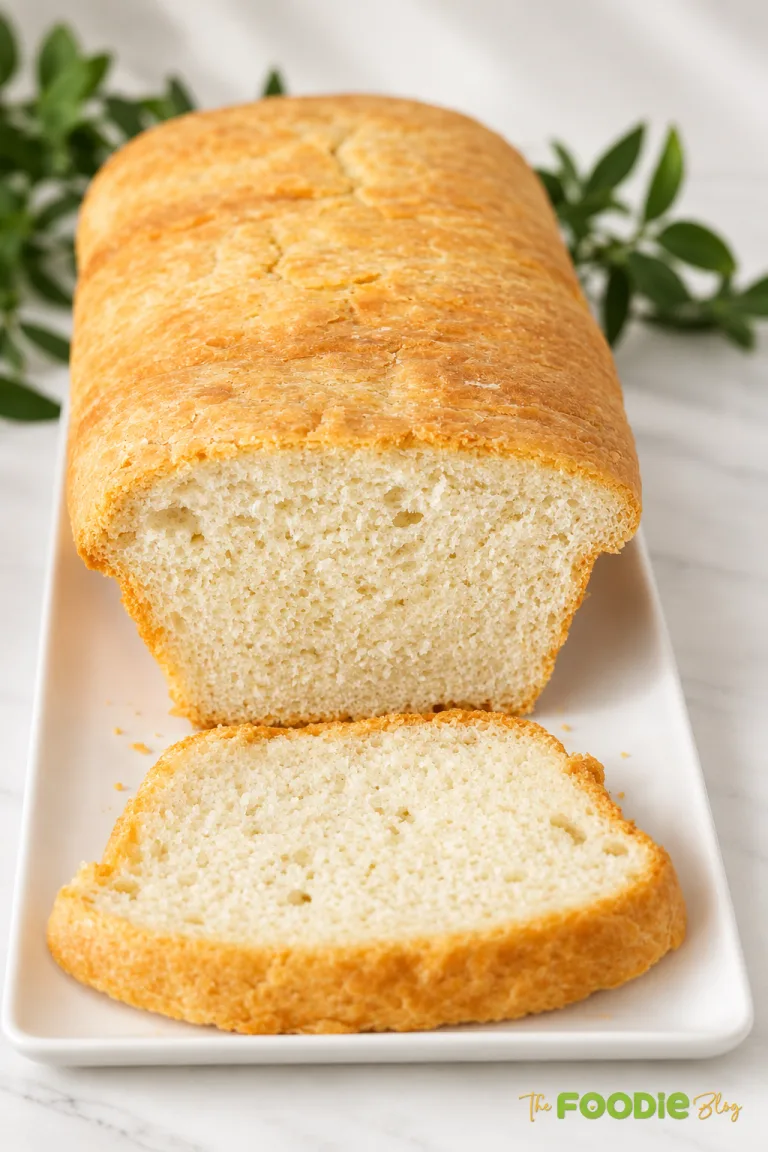
This soft white bread recipe makes a tall, fluffy homemade loaf with a tender crumb and a buttery golden crust. It uses simple pantry ingredients, a little honey for sweetness, and two rises to give the bread that light sandwich-bread texture.
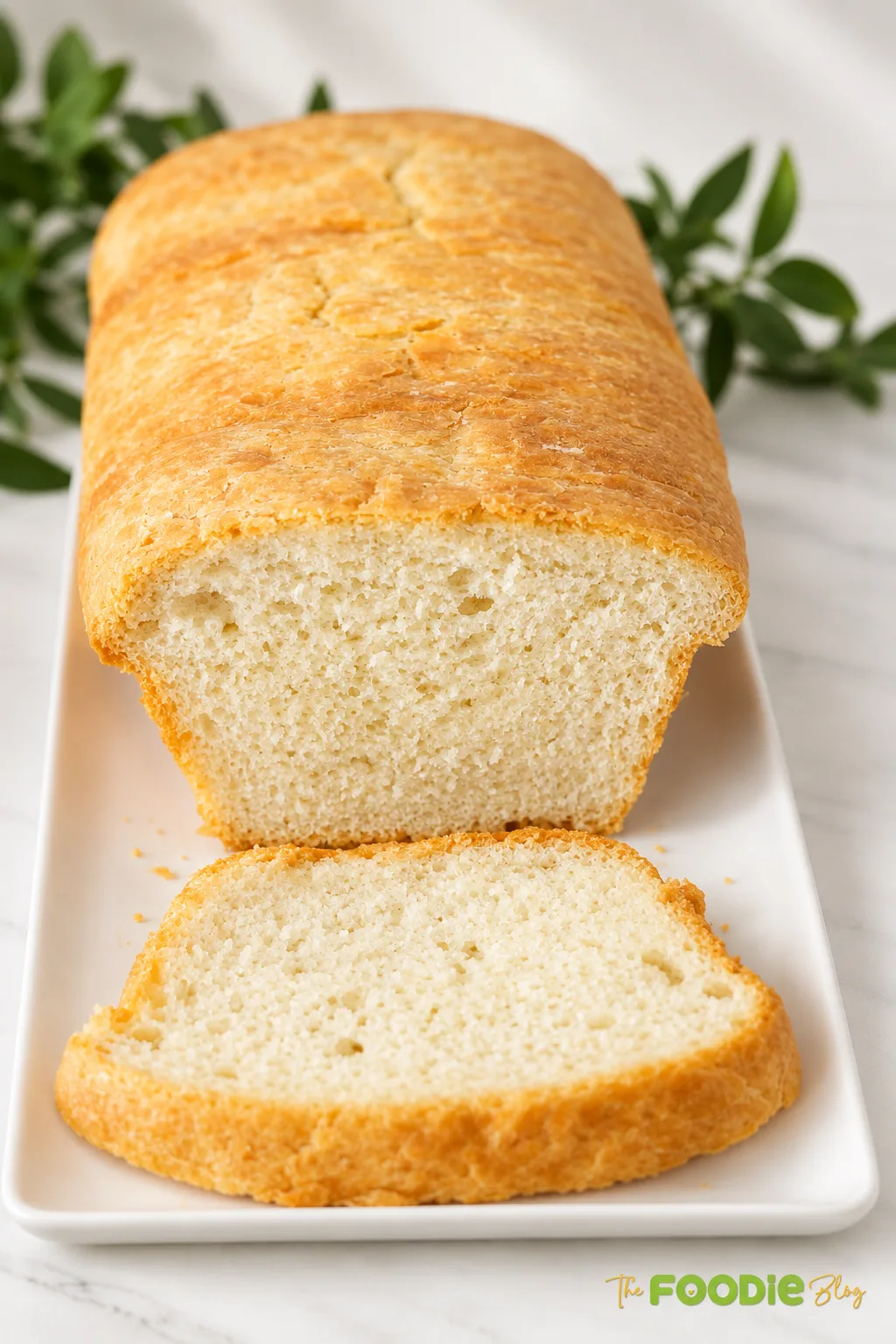
Homemade bread is one of those recipes that makes the whole kitchen smell amazing. If you want another yeast bake, try my Focaccia Bread. A thick slice of this loaf is also perfect next to Creamy Tomato Soup, with a cold Cucumber Lemonade, or used the next morning to make my Strawberry French Toast.
The dough is soft and slightly enriched with butter and honey, then shaped into a loaf and baked until golden. I like brushing the hot crust with melted butter as soon as it comes out of the oven—it keeps the top soft and gives it that bakery-style finish.
What Is White Bread?
White bread is a soft yeast bread made primarily with white flour, water, yeast, salt, and usually a small amount of fat or sweetener.
This homemade version uses all-purpose flour, butter, sugar, and honey.
The butter keeps the crumb tender while the honey adds subtle sweetness and helps create a nicely colored crust.
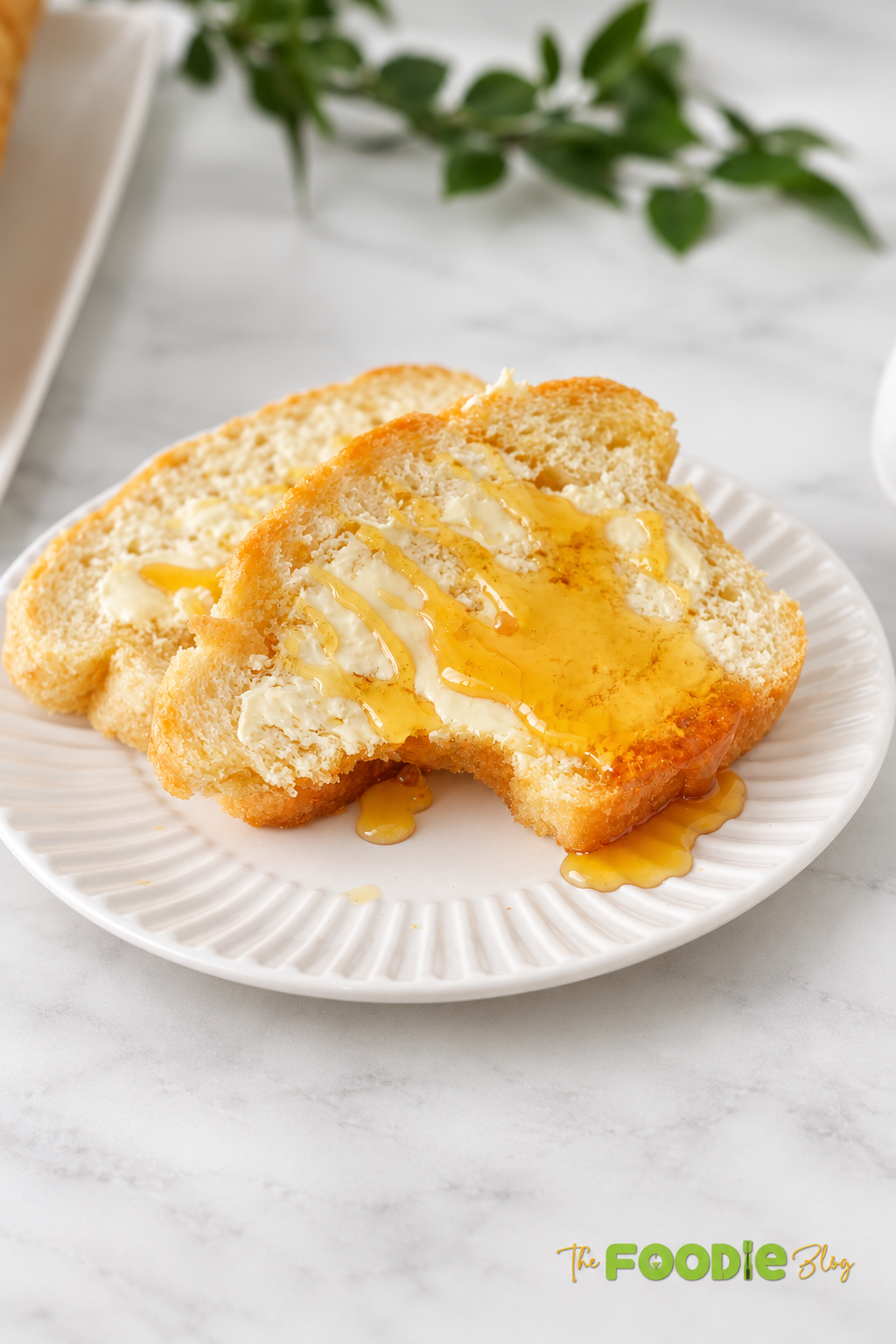
Unlike crusty artisan bread, this loaf is meant to stay soft, which makes it especially good for sandwiches, toast, French toast, or simply eating warm with butter and honey.
Table of contents
What You Need
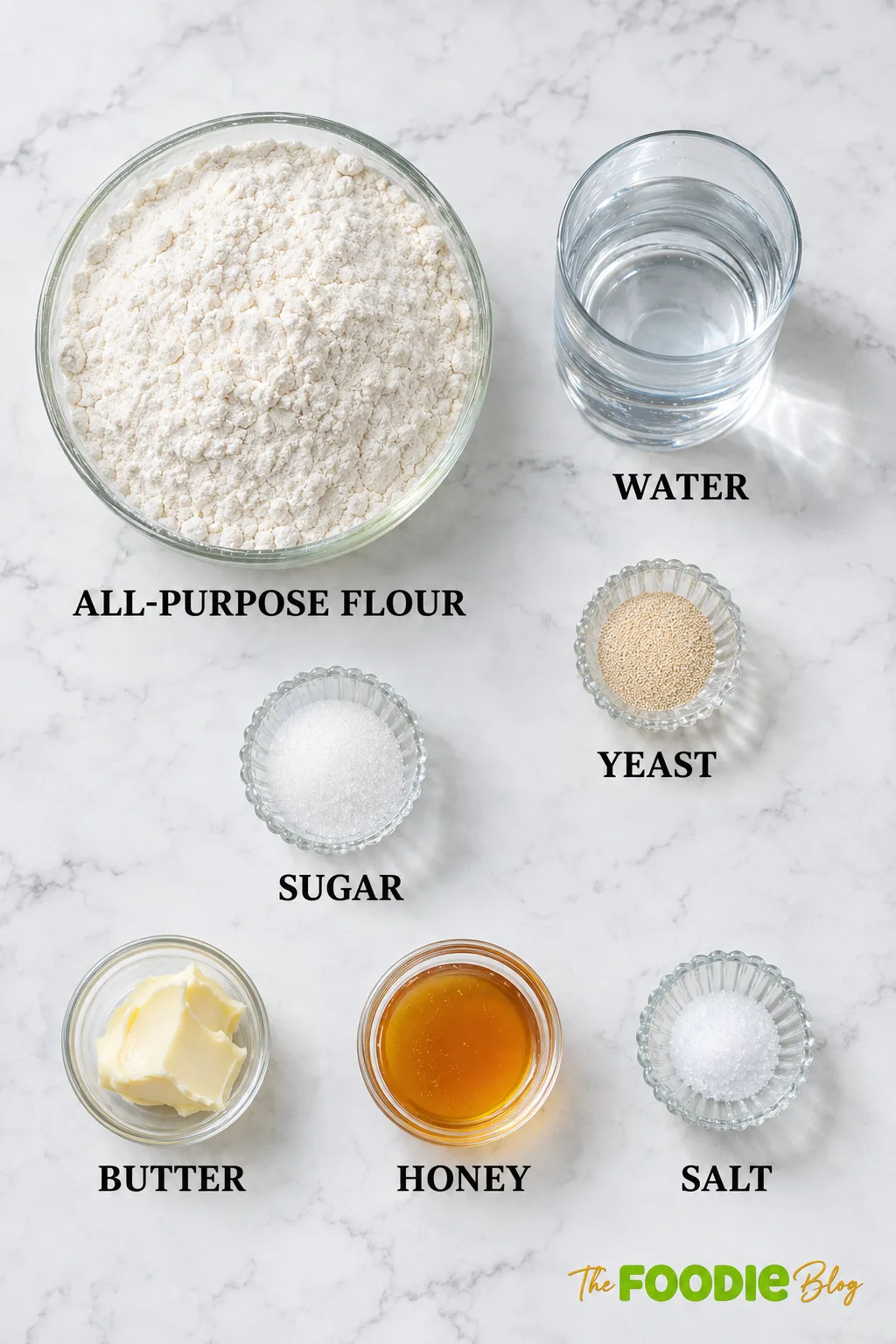
How to Make Soft White Bread
- Activate the Yeast
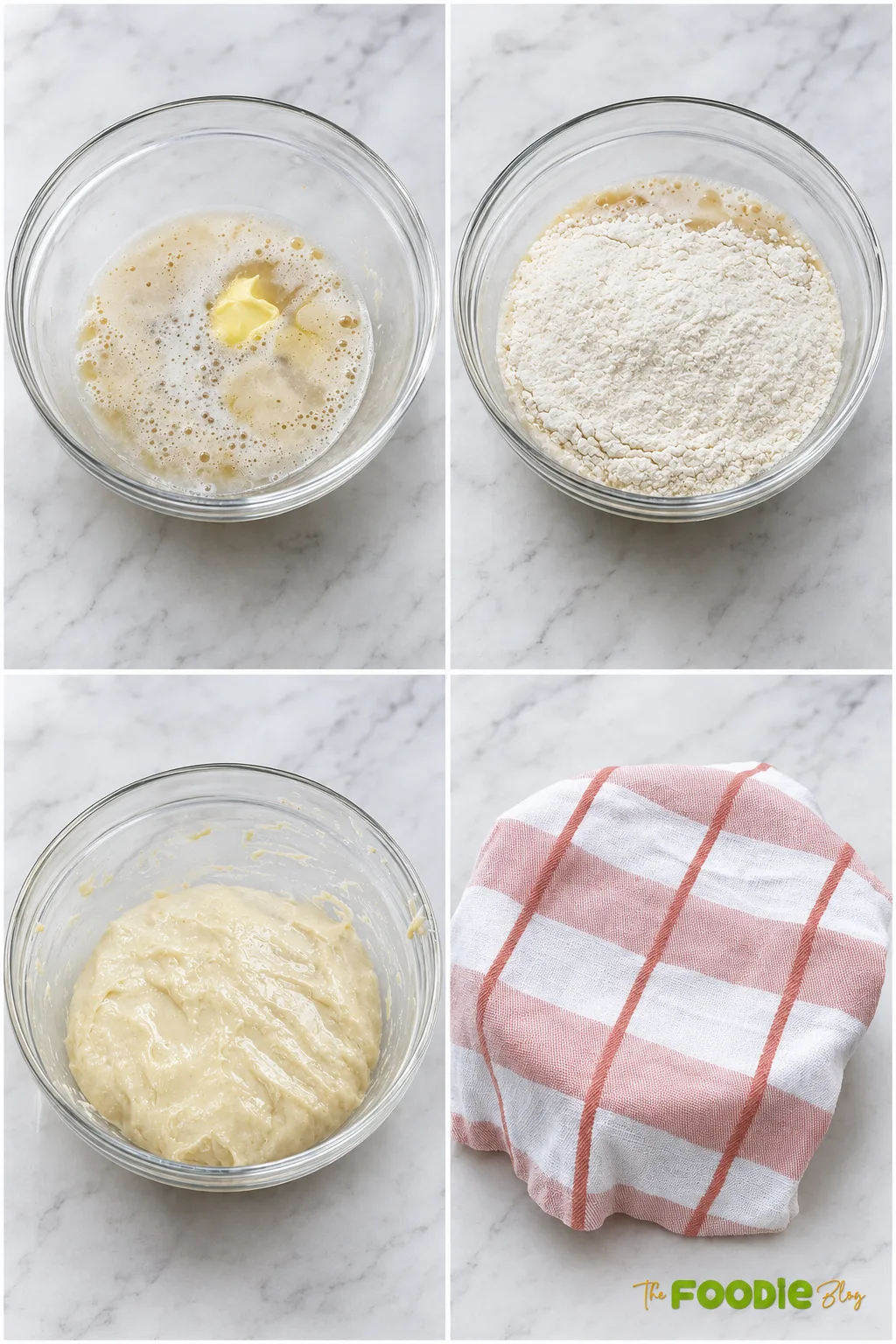
Add about half of the lukewarm water to a large mixing bowl.
Stir in the sugar and yeast.
Let the mixture stand until you see foam forming on the surface.
With instant yeast, this usually takes about 5–10 minutes. Active dry yeast may take a little longer.
- Make the Dough
Add the remaining lukewarm water, honey, salt, and softened butter.
Add about 4 cups of the flour.
Mix until a shaggy, soft dough starts to form.
Add a little of the remaining flour at a time only if the dough is extremely sticky.
- Knead the Dough
Using a stand mixer fitted with a dough hook, knead until the dough becomes smooth, elastic, and starts pulling cleanly away from the sides of the bowl.
This usually takes around 6–9 minutes.
If kneading by hand, transfer the dough to a lightly floured surface and knead until smooth and elastic.
The finished dough should be soft. Avoid adding enough flour to make it stiff or dry.
- First Rise
Place the dough in a lightly greased bowl.
Turn it once so the outside has a light coating of oil or butter.
Cover with a clean kitchen towel or plastic wrap.
Leave it in a warm, draft-free place until approximately doubled in size, about 45 minutes depending on your room temperature.
Do not rely only on the clock. Cooler kitchens may need more time.
- Shape the Loaf
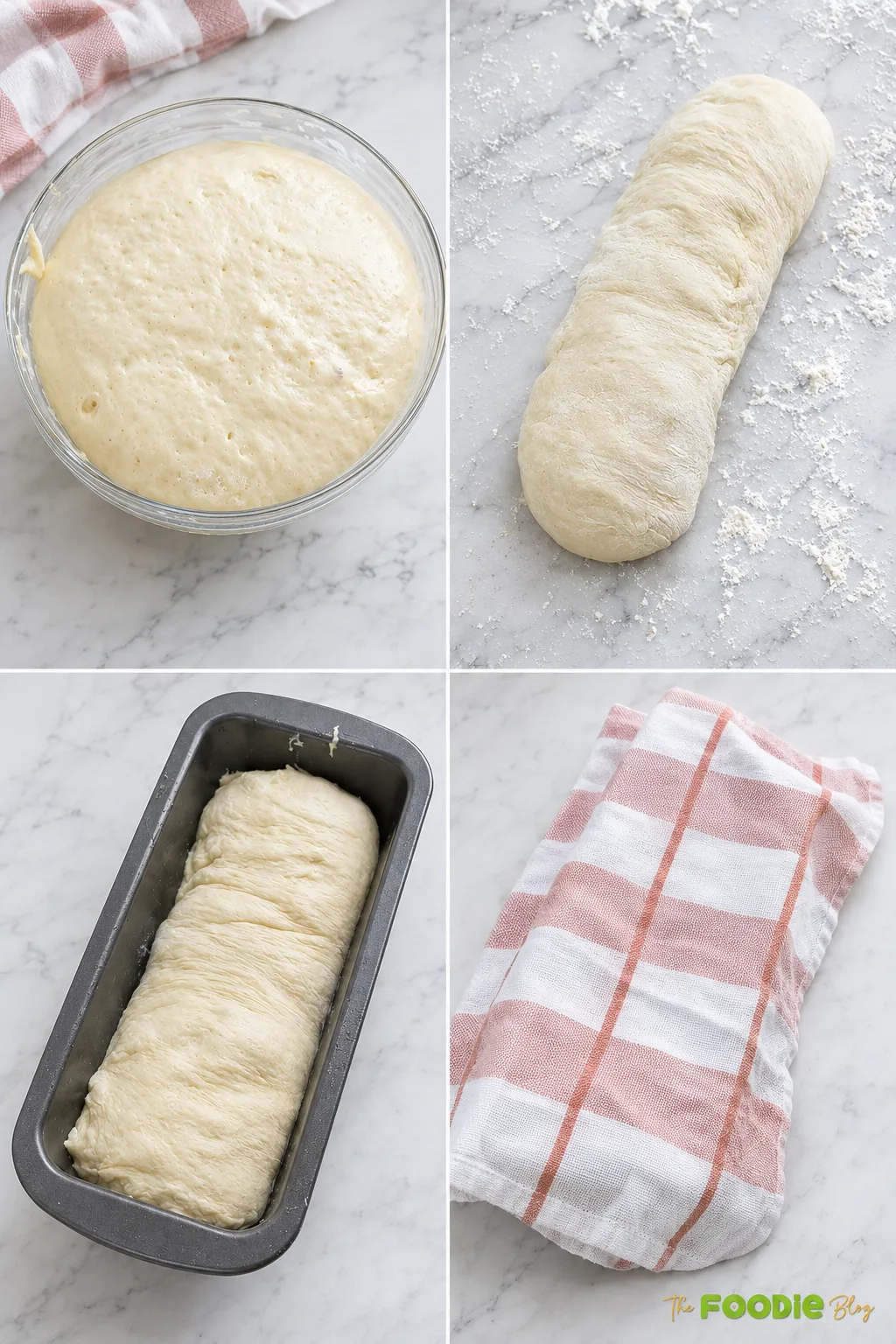
Gently deflate the risen dough.
For one large loaf like the one shown in my photos, shape the dough into a rectangle and roll it tightly into a log.
Pinch the seam closed and tuck the ends underneath.
Place seam-side down in a greased large loaf pan.
You can also divide the dough into two equal portions and use two standard 8×4-inch loaf pans.
- Second Rise
Cover the loaf loosely.
Let it rise again until visibly puffy and roughly doubled, about another 45 minutes.
Do not let it rise far beyond the top of the pan. Overproofed dough can lose strength and collapse during baking.
- Bake
Preheat the oven to 390°F (200°C) with the rack in the lower-middle part of the oven.
Bake one large loaf for approximately 30–35 minutes. If dividing the recipe between two 8×4-inch pans, they generally bake in about 25–30 minutes.
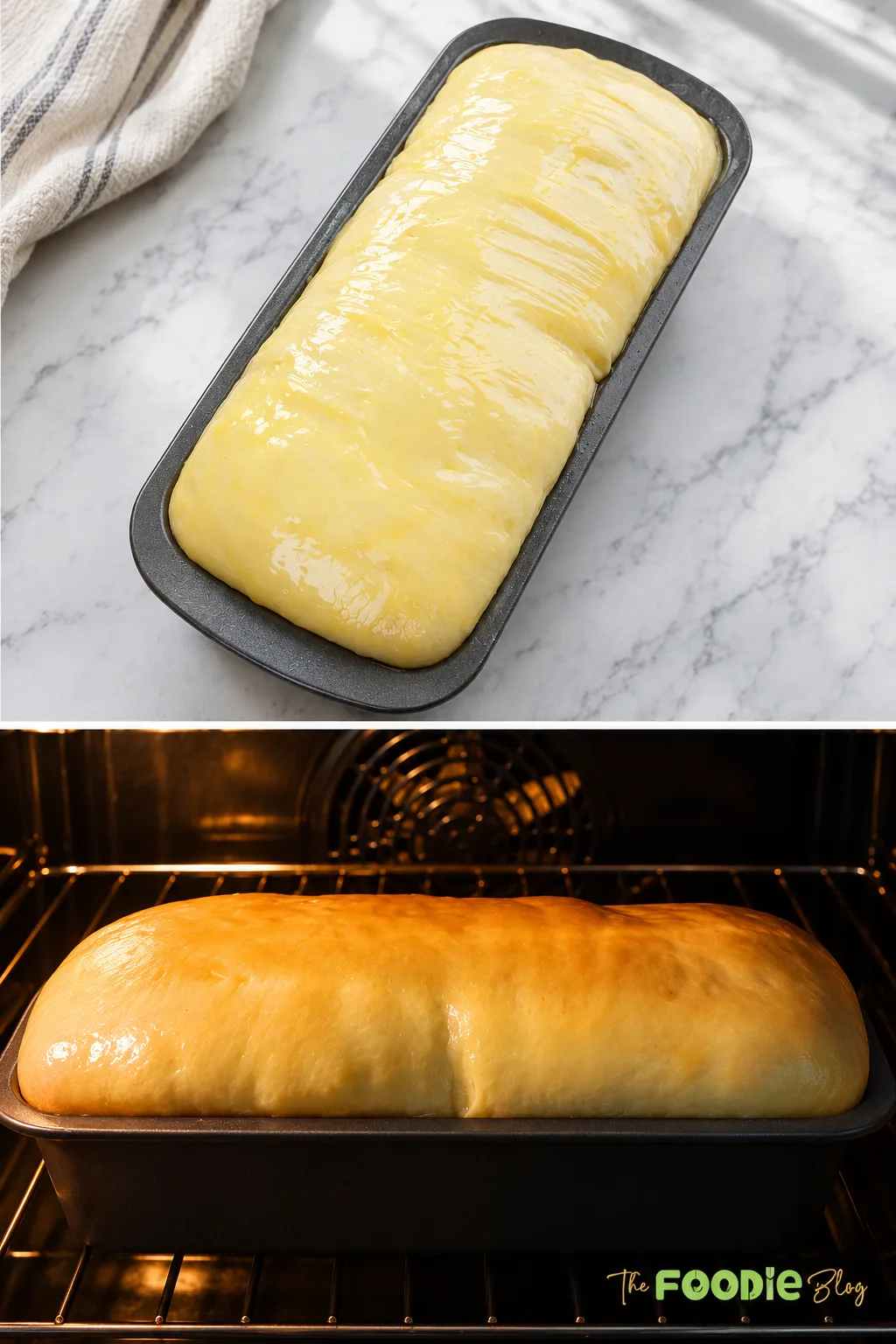
The finished bread should have a rich golden-brown crust.
- Brush with Butter
Remove the bread from the pan and place it on a wire rack.
While the loaf is still hot, brush the top and sides with the melted butter.
This gives the crust extra flavor and helps keep it soft.
- Cool Before Slicing
This step is important even though warm bread is tempting.
Let the loaf cool completely before slicing.
The inside continues setting as it cools. Cutting too soon can compress the crumb and make the center seem gummy.

How to Know When Bread Dough Has Risen Enough
Bread rise times are always approximate.
Room temperature, yeast activity, water temperature, and even the weather can affect how quickly your dough rises.
For the first rise, look for dough that has approximately doubled in volume.
For the second rise, the shaped loaf should look noticeably puffy and should hold a light indentation when gently pressed.
If the dough immediately springs back, give it more time.
If your finger leaves a deep indentation and the loaf starts deflating, it may have risen too long.
Common Mistakes to Avoid
- Using hot water: Very hot water can damage the yeast.
- Using old yeast: If the yeast mixture shows no activity, check the yeast before continuing.
- Adding too much flour: This creates dry, heavy bread.
- Under-kneading: The dough may not have enough structure to rise well.
- Rushing the first rise: Wait until the dough has visibly expanded.
- Overproofing: Dough that rises too far can collapse.
- Using the wrong pan size: A pan that is too small can overflow.
- Underbaking the center: Look for a well-browned crust rather than a pale loaf.
- Leaving the bread in the pan too long: Transfer it to a rack so steam does not make the sides damp.
- Slicing while hot: This can make the crumb gummy.

Tips for Soft and Fluffy White Bread
Measure flour carefully. Too much flour is one of the easiest ways to turn a soft bread recipe into a dense loaf.
Keep the dough soft. A slightly tacky dough is better than a stiff, dry dough.
Knead until elastic. Proper kneading builds the gluten structure needed to trap the gas produced by the yeast.
Let the dough rise by appearance, not just time. Forty-five minutes is a guide.
Do not overproof the second rise. The bread still needs enough strength for oven spring.
Use the right pan size. One large pan works for the tall loaf shown in these photos; two 8×4-inch pans will produce two smaller sandwich loaves.
Brush with butter after baking. This is one of the easiest ways to get a soft crust.
Cool before cutting. The crumb needs time to set.
FAQs
A soft dough, proper kneading, two good rises, butter in the dough, and avoiding excess flour all contribute to a light and fluffy crumb.
Yes. This recipe is designed to work with all-purpose flour.
Bread flour can also be used if you prefer a slightly chewier texture.
Yes.
Use the same amount. Active dry yeast may take a little longer to become active and to raise the dough.
Use lukewarm water rather than hot water.
It should feel comfortably warm to the touch.
Common causes include too much flour, not kneading enough, yeast that is no longer active, or not allowing enough rising time.
You might also like
More Recipes To Try



Swipe to see all 5 recipes
Soft White Bread Recipe
Ingredients
Equipment
Method
- Add half of the lukewarm water, sugar, and yeast to a large mixing bowl. Stir and let stand for about 5–10 minutes, until foamy.
- Add the remaining water, honey, salt, softened butter, and about 4 cups of the flour.
- Mix until a soft dough forms.
- Knead with a dough hook for approximately 6–9 minutes, adding small amounts of the remaining flour only as necessary. The finished dough should be smooth, elastic, and soft.
- Transfer the dough to a lightly greased bowl. Cover and let rise in a warm place for approximately 45 minutes, or until doubled.
- Gently deflate the dough.
- For one large loaf, shape the full batch into a tight log and place seam-side down in a greased large loaf pan. For two standard loaves, divide the dough in half and shape each portion separately.
- Cover and let rise again for approximately 45 minutes, until visibly doubled and puffy.
- Preheat the oven to 390°F (200°C).
- Bake one large loaf for approximately 30–35 minutes, or two smaller loaves for 25–30 minutes, until deeply golden.
- Remove the bread from the pan and transfer to a wire rack.
- Brush the top and sides immediately with melted butter.
- Let cool completely before slicing.
Nutrition
Video
Tried this recipe?
Let us know how it was!Estimated reading time: 8 minutes