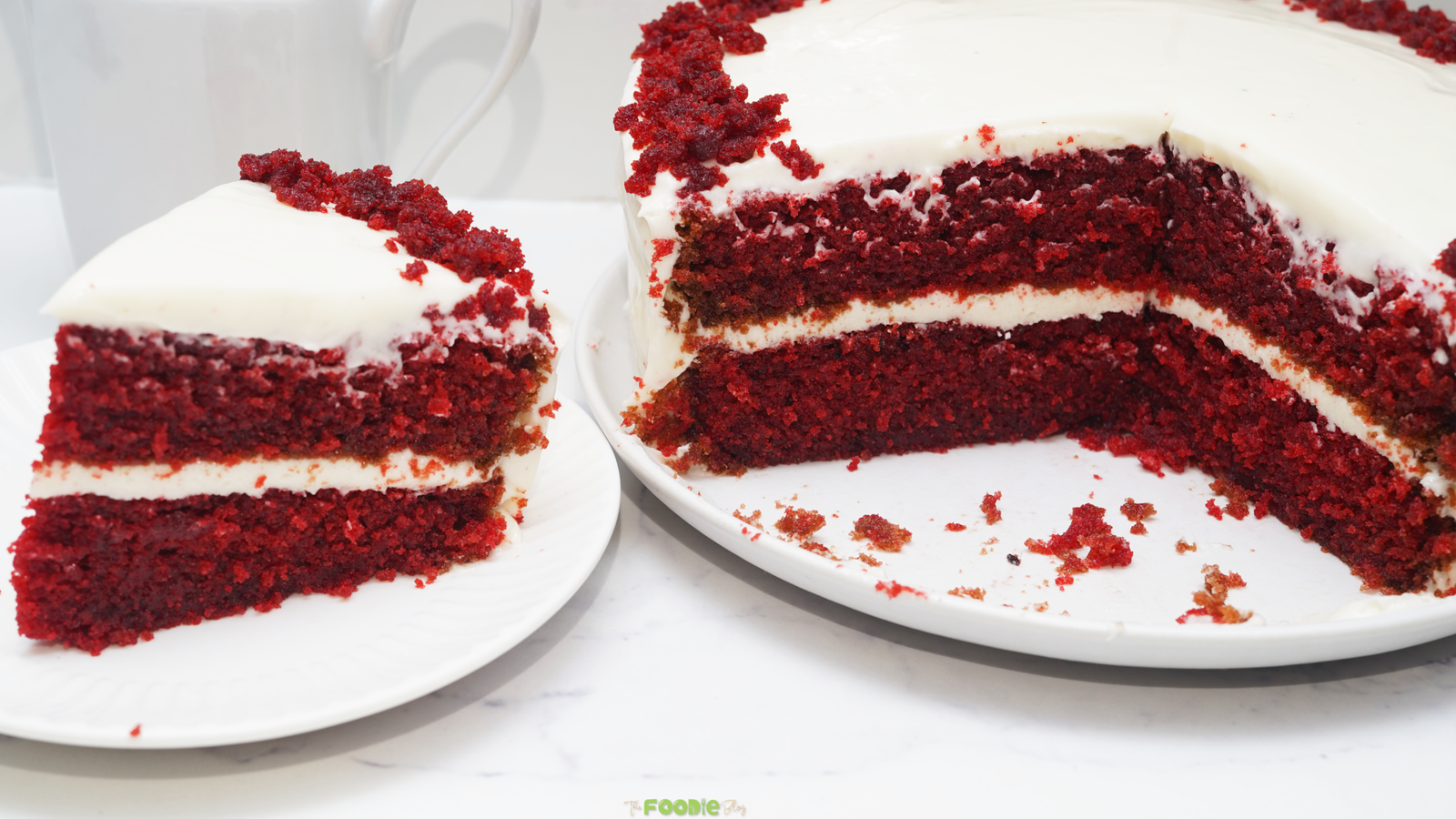
This red velvet cake with cake flour has two soft, moist layers with a subtle cocoa flavor and a smooth cream cheese frosting. Buttermilk, vegetable oil, cocoa, and a little vinegar give the cake its classic tender texture, while the bright red layers make it feel instantly celebration-ready.
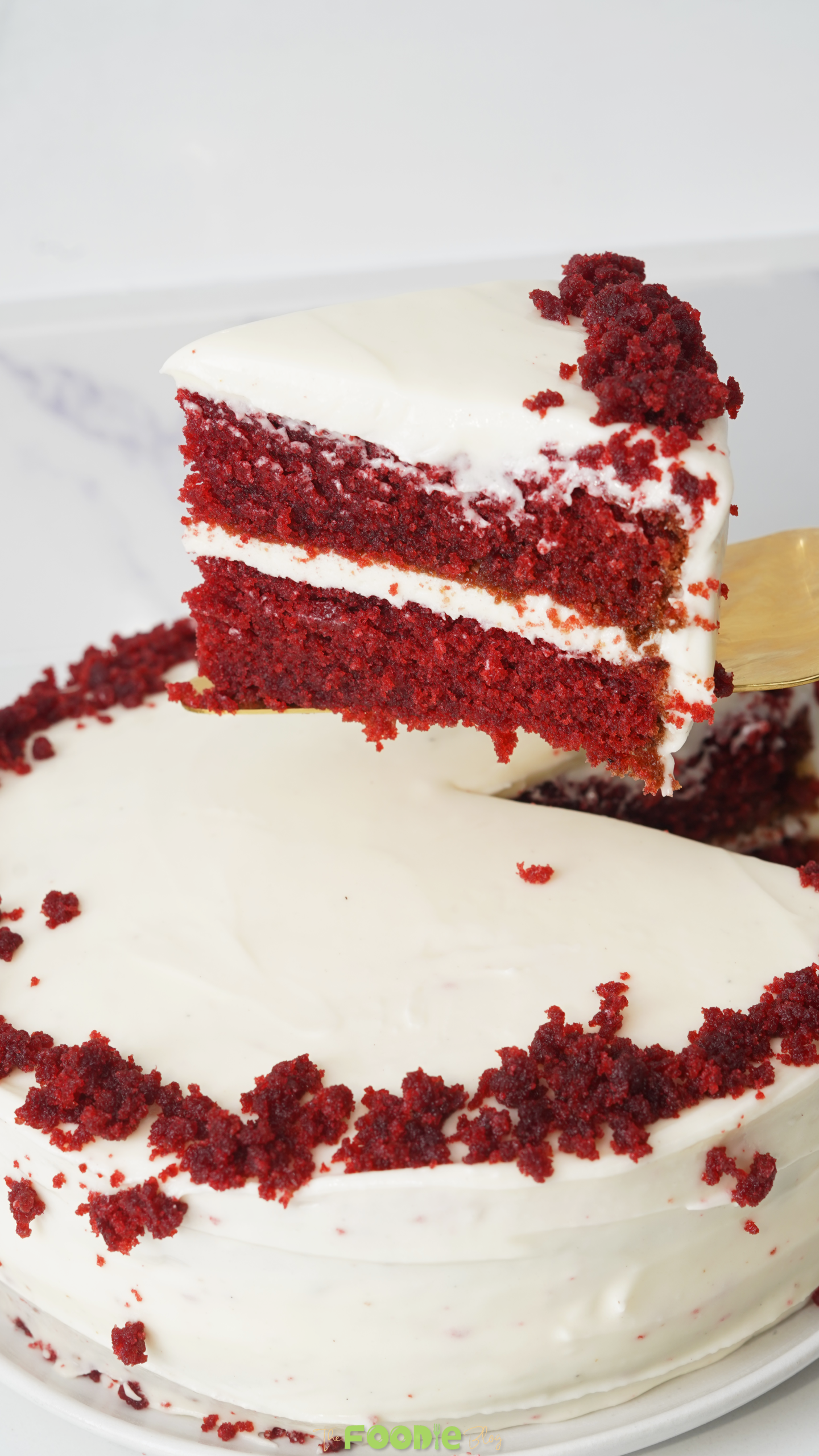
What I like most about homemade red velvet is that it sits somewhere between vanilla and chocolate cake. The cocoa is noticeable without taking over, the buttermilk gives the crumb a slight tang, and the cream cheese frosting balances everything with its rich, creamy finish.
If you want the same flavor in individual portions, try my Red Velvet Cupcakes. My Cinnamon Rolls are another good excuse to make cream cheese frosting, while this Easy Chocolate Filled Cake is great when you want a richer chocolate dessert. For another bakery-style option, try my Chocolate Cream Filled Cupcakes.
What Is Red Velvet Cake Made Of
Classic red velvet cake is built around a few ingredients that give it its distinctive flavor and texture: cocoa powder, buttermilk, vinegar, red coloring, and a tender cake base.
It isn’t supposed to taste like a full chocolate cake.
This recipe uses only 1 tablespoon cocoa powder, so you get a mild cocoa note behind the vanilla and tangy buttermilk rather than an intense chocolate flavor.
The cake is also oil-based, which helps the crumb stay soft even after refrigeration.
Table of contents
Ingredients You Need
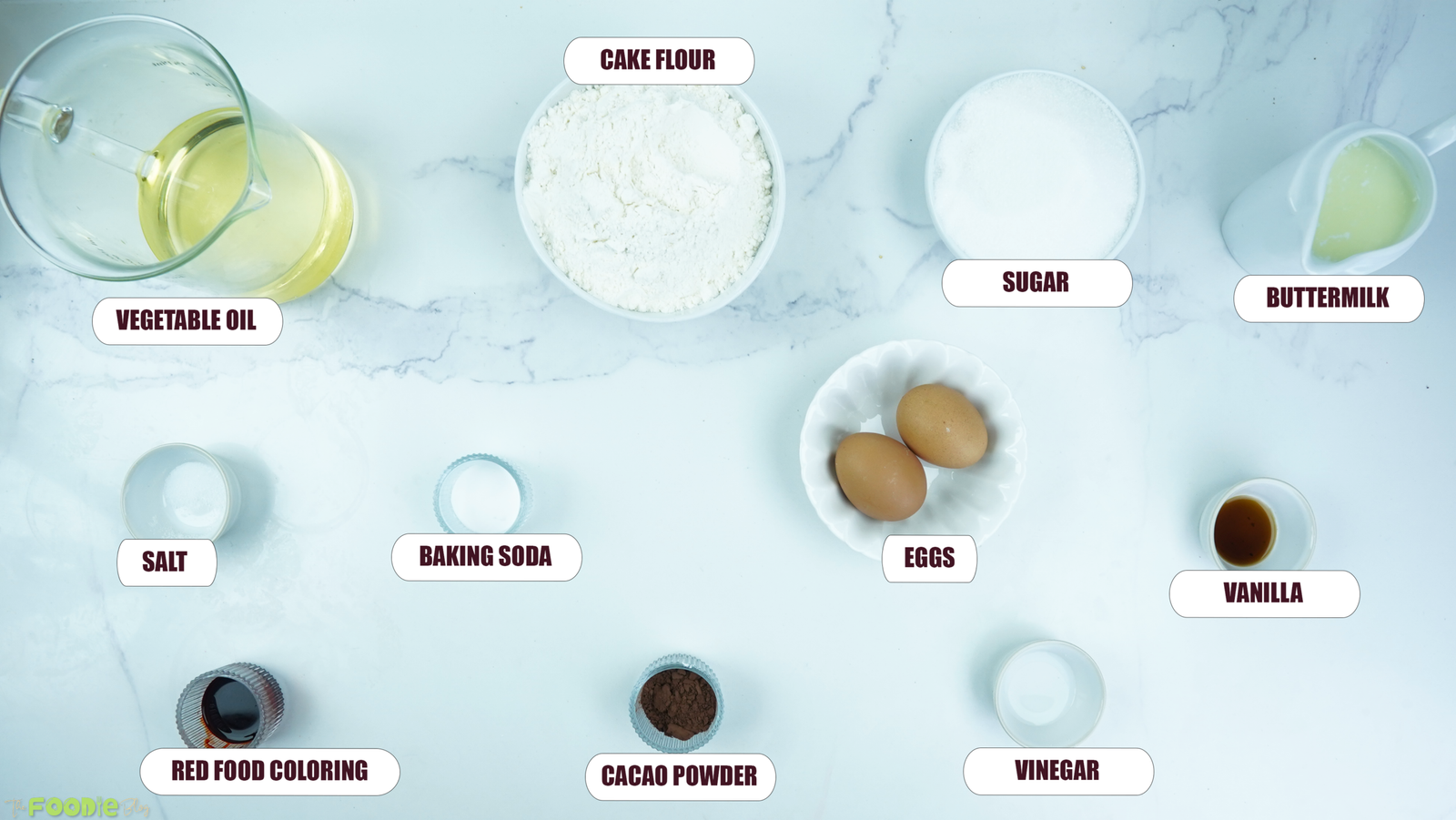
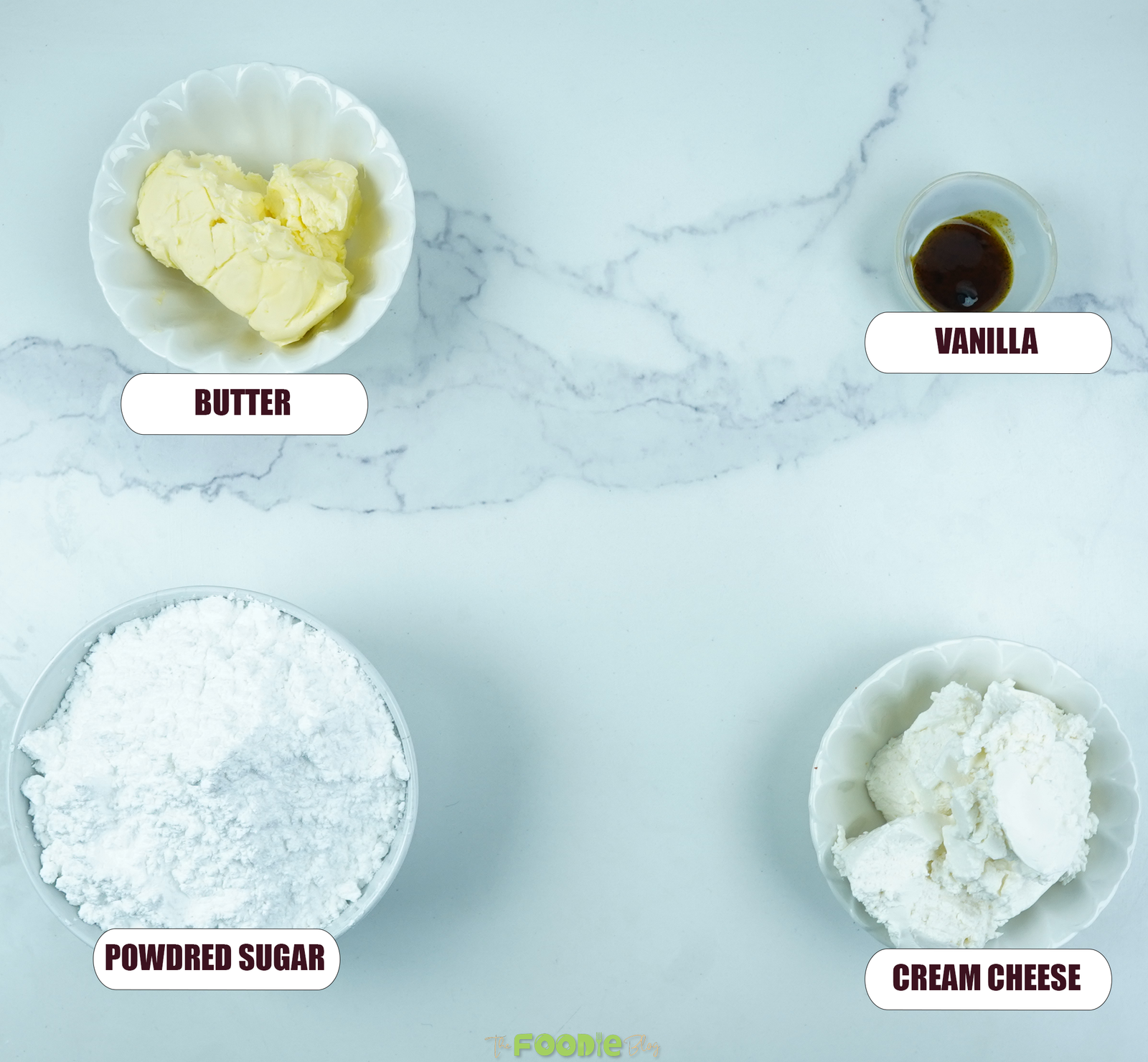
Let’s Make Red Velvet Cake
- Preheat the oven to 350°F (175°C). Grease two 9-inch round cake pans and line the bottoms with parchment paper.
- In a large bowl, whisk together the cake flour, granulated sugar, baking soda, cocoa powder, and salt.
- In another bowl, whisk the eggs, vegetable oil, buttermilk, red food coloring, vanilla extract, and white distilled vinegar until smooth.
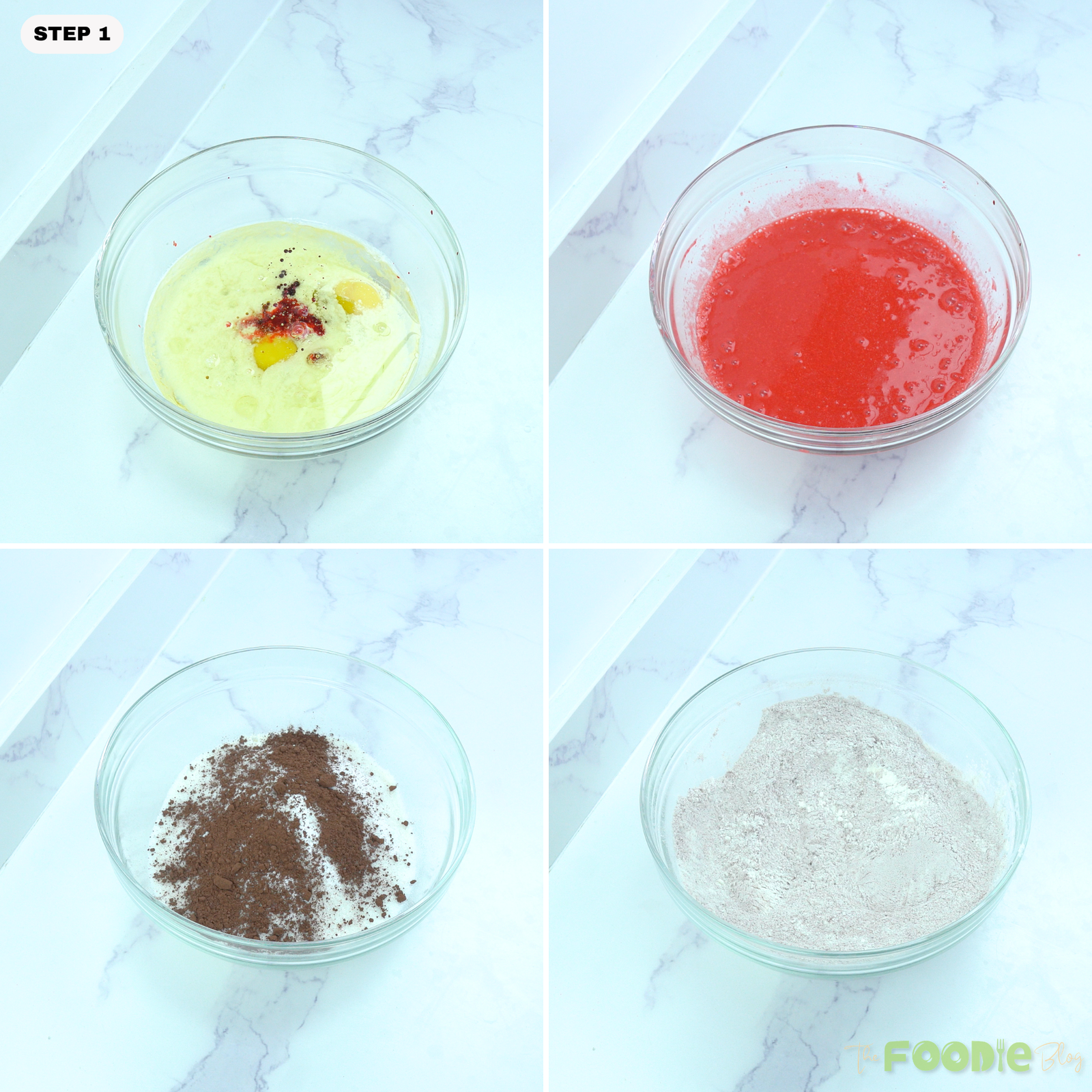
- Pour the wet ingredients into the dry ingredients. Mix just until the batter is smooth and no dry streaks remain.
- Divide the batter evenly between the prepared cake pans. Smooth the tops gently.
- Bake for 25–30 minutes, or until a toothpick inserted into the center comes out clean or with a few moist crumbs.
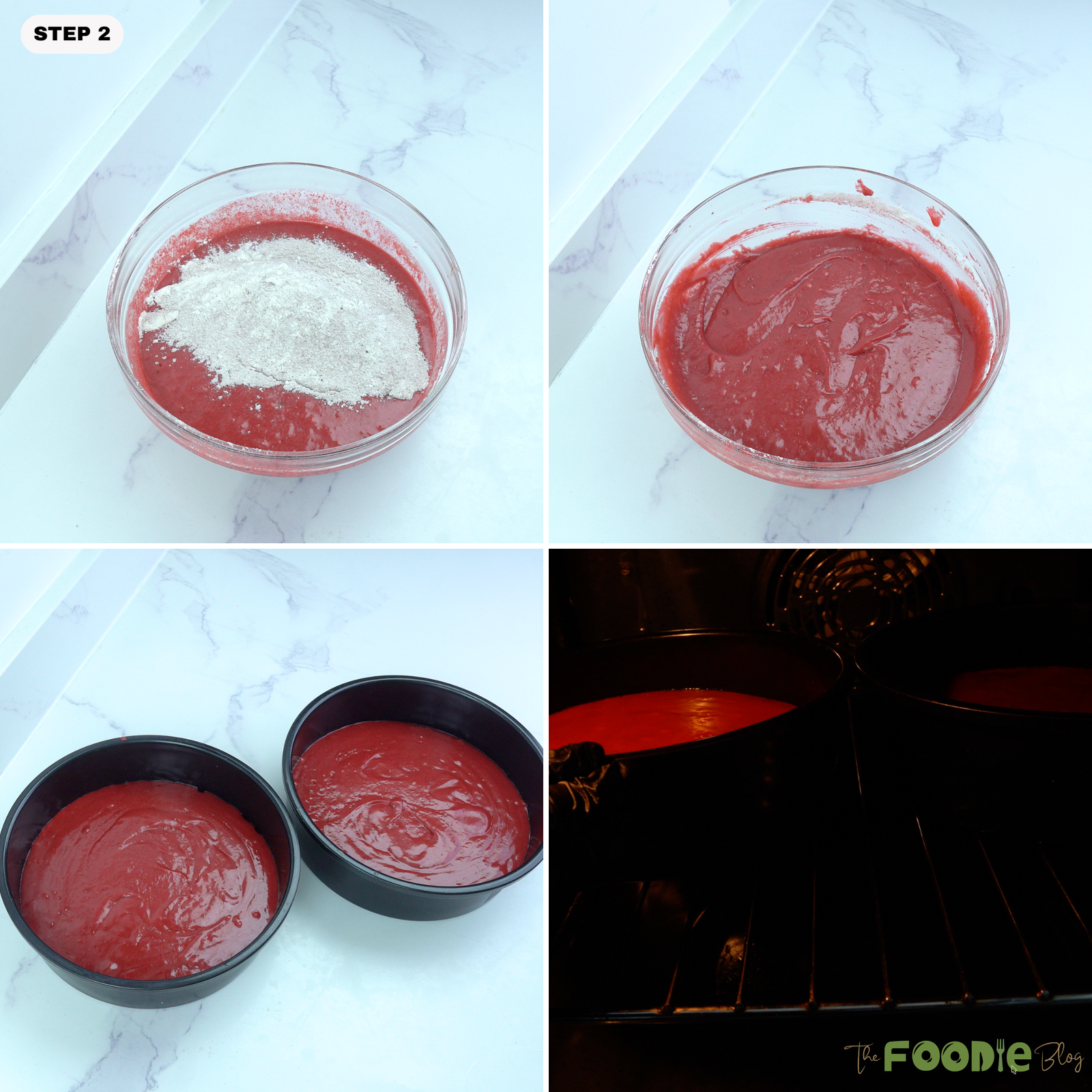
- Let the cakes cool in the pans for 10–15 minutes, then turn them out onto a wire rack. Cool completely before frosting.
- Make the icing by beating the softened cream cheese and butter until smooth and creamy.
- Add the vanilla extract and powdered sugar. Beat until the frosting is smooth, thick, and spreadable.
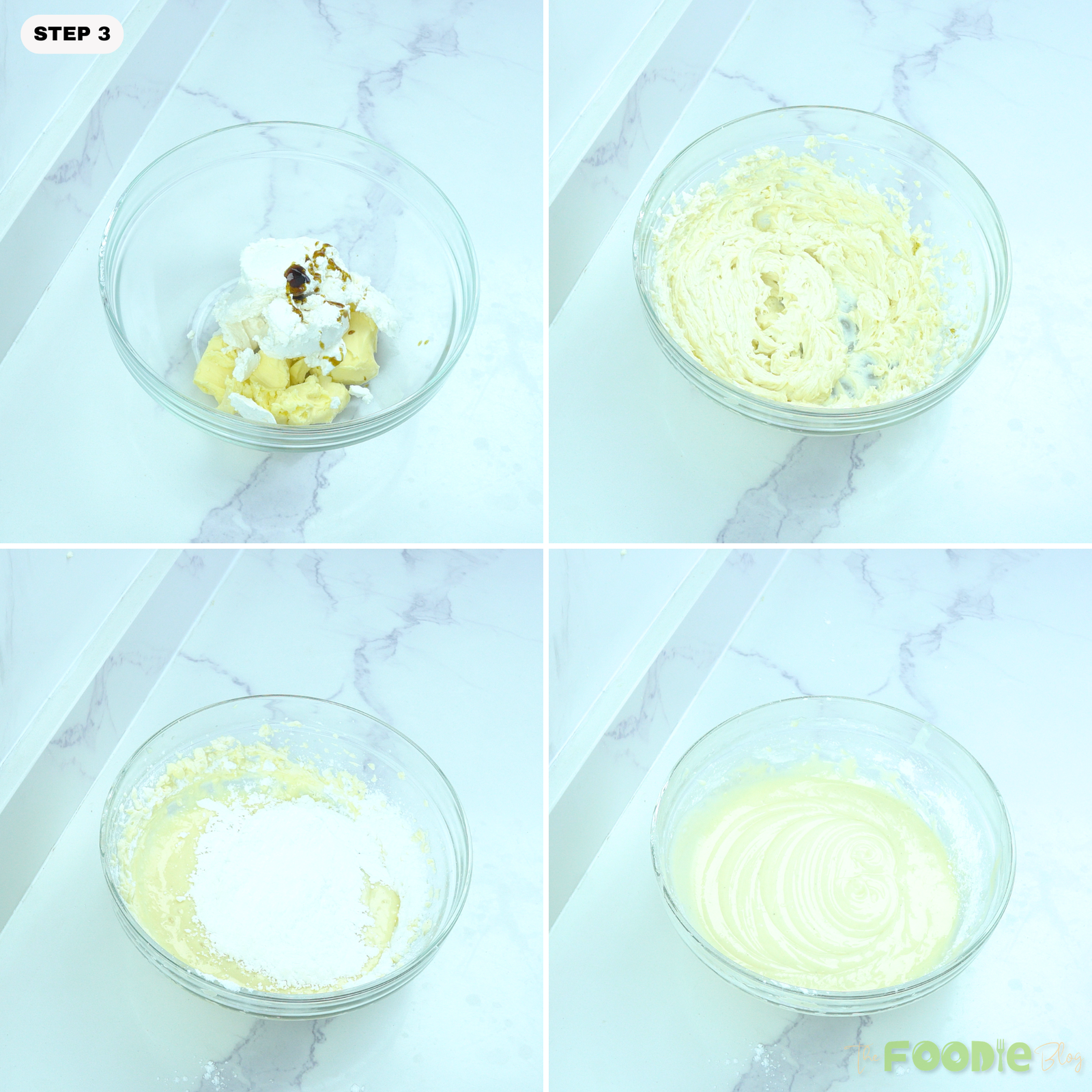
- Place one cake layer on a cake plate or turntable. Spread a layer of cream cheese icing over the top.
- Add the second cake layer, then frost the top and sides of the cake.
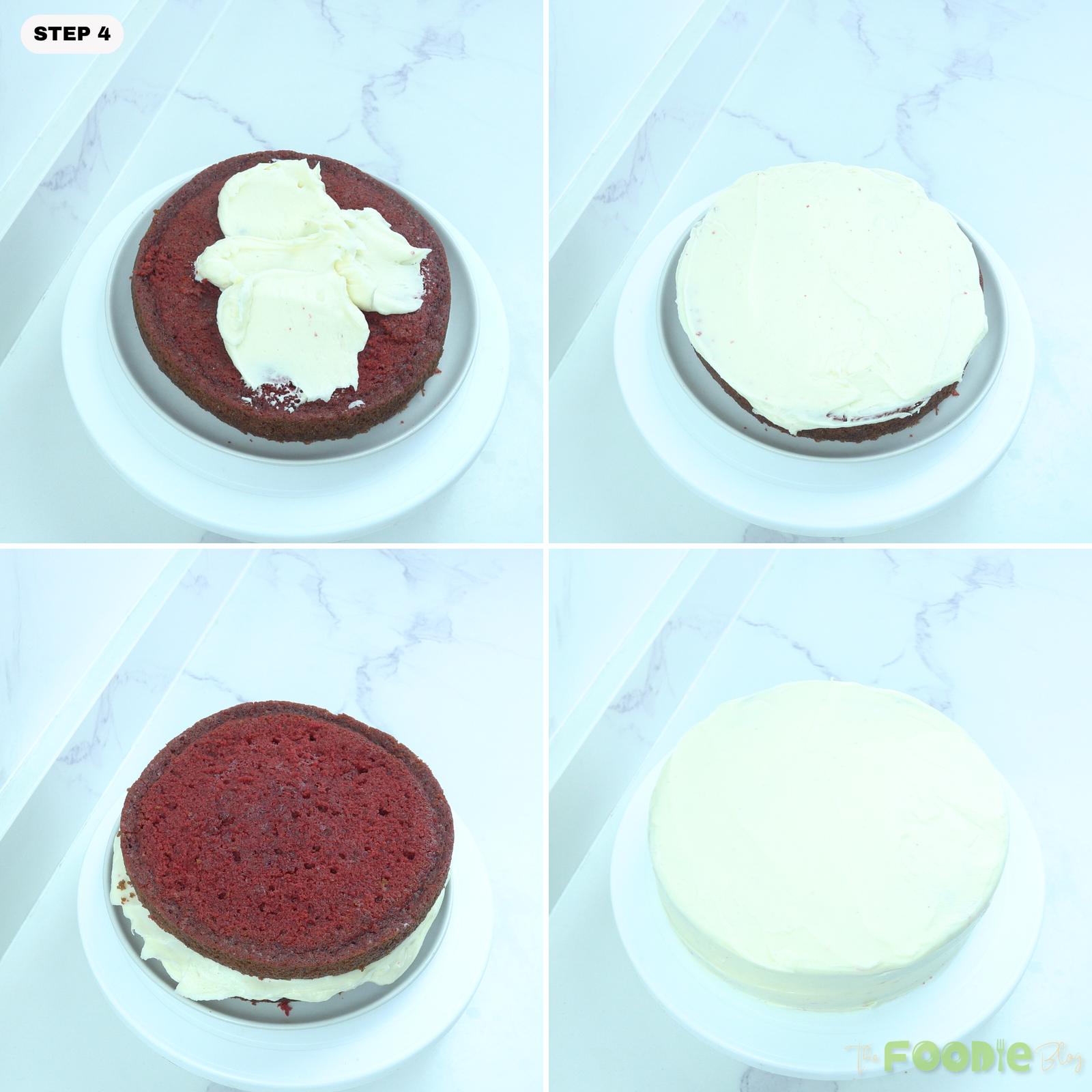
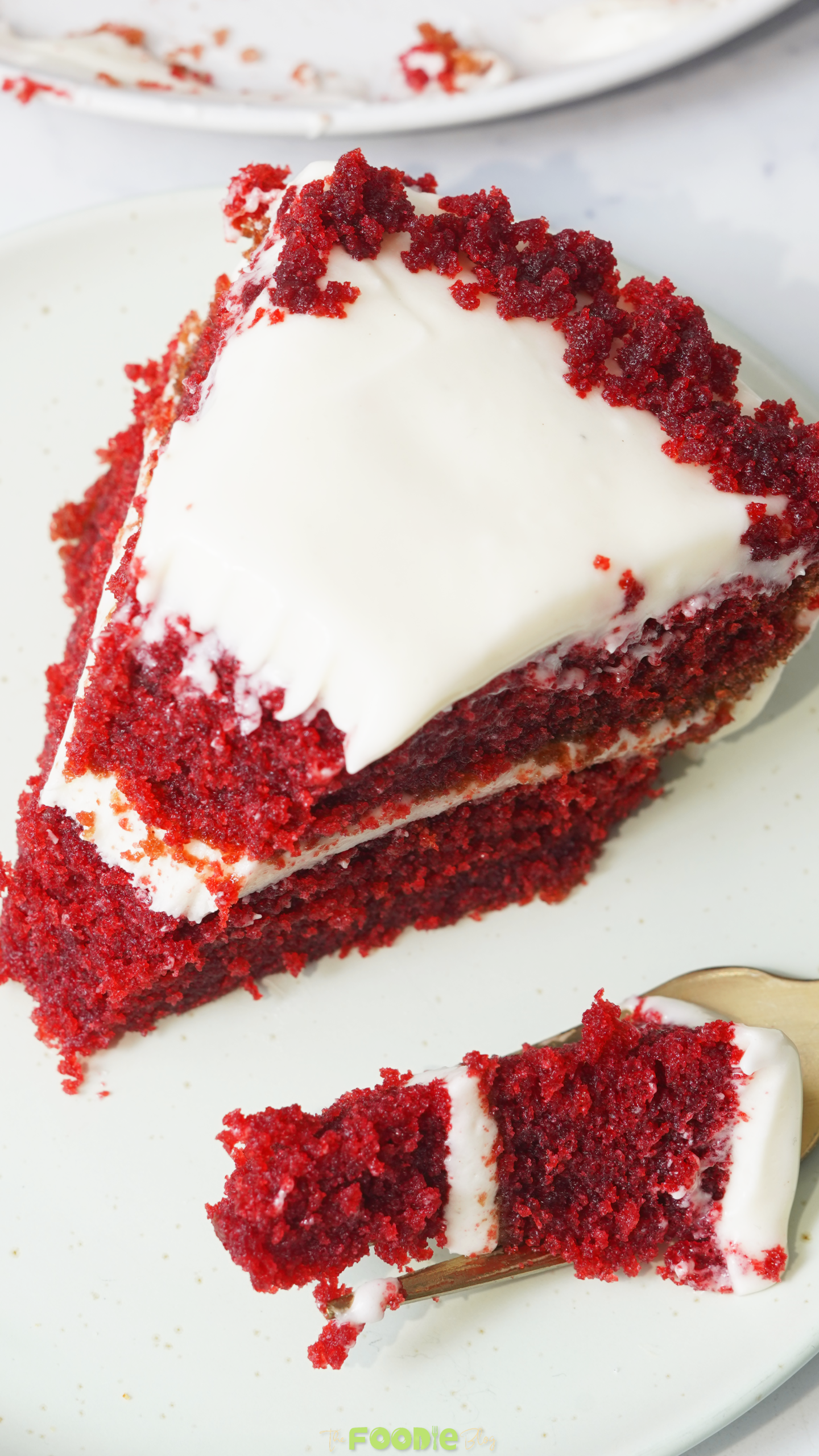
- Decorate with extra red velvet cake crumbs if desired. Chill briefly before slicing for cleaner layers.
Why Cake Flour and Buttermilk Work So Well Here
This recipe has a particularly soft crumb because several ingredients are working together.
Cake flour provides less gluten-forming protein than typical all-purpose flour, which helps create a finer, more tender cake.
Oil keeps the crumb moist even after the cake cools.
Buttermilk and vinegar bring acidity to the batter, while baking soda supplies the alkaline leavener.
And because there’s only a small amount of cocoa, the chocolate doesn’t dominate the flavor or turn the cake into a chocolate layer cake.
King Arthur also uses cake flour and buttermilk together in its red velvet cupcakes, with cake flour specifically forming the flour base of the recipe.
Common Mistakes to Avoid
Overmixing after adding the flour. Mix only until no dry streaks remain. Continuing to work the batter can make the layers less tender.
Packing the cake flour into measuring cups. Measure the cake flour carefully and avoid packing it into the cup.
Changing several acidic ingredients at once. The recipe is built around buttermilk, vinegar, and baking soda. I wouldn’t casually substitute the buttermilk or remove the vinegar without retesting.
Using melted butter in the frosting. The butter should be softened, not liquid.
Using spreadable tub cream cheese. It can make the frosting noticeably looser.
Frosting warm cake. Let both layers cool completely first.
Overbaking because you want a perfectly dry toothpick. A few moist crumbs are fine. The cake will continue to set as it cools.
Adding extra cocoa just to make it more chocolatey. Extra cocoa changes the balance of dry ingredients and moves the flavor away from the mild cocoa taste of this recipe.
Guessing gel-food-color amounts. Different food colorings have different concentrations. This recipe uses liquid red food coloring; gel coloring is not a direct measure-for-measure substitute.
What to Serve with Red Velvet Cake
Red velvet cake is already rich from the cream cheese frosting, so I’d keep the rest of the plate simple.
My favorite pairing is black coffee or espresso. The bitterness works really well against the sweet frosting.
You can also serve it with fresh strawberries, raspberries, cold milk, black tea, vanilla ice cream, or fresh berries for a Valentine’s Day presentation.
For birthdays, you don’t need much besides the cake itself — and red velvet birthday cake is actually a substantial related search at 2,400 searches / KD22, so birthday language is worth mentioning naturally without turning the entire page into a birthday-specific recipe.
FAQs
Red velvet has a mild cocoa flavor with a soft, tangy sweetness from the buttermilk and cream cheese frosting. It is not as chocolatey as a chocolate cake.
Yes. You can make a quick substitute by adding 1 tablespoon white vinegar or lemon juice to 1 cup milk, then letting it sit for 5 minutes.
Yes, but the cake may be slightly less tender. Cake flour gives the softest, lightest texture.
Vinegar helps activate the baking soda and adds to the tender texture. It also supports the classic tangy flavor of red velvet.
Yes. Bake the cake layers one day ahead, wrap them well, and refrigerate. Frost the cake the next day.
Yes. Since this cake has cream cheese frosting, store it covered in the refrigerator.
Red velvet has a much milder cocoa flavor than chocolate cake, with a distinctive tangy taste from buttermilk and vinegar. The texture is also softer and more tender, and the classic red color combined with white cream cheese frosting makes it visually iconic. Think of red velvet as its own category — not just colored chocolate cake.
Store the frosted cake covered in the refrigerator for up to 5 days. The flavor actually gets better after a day as the cake absorbs the frosting. You can also freeze unfrosted layers wrapped tightly for up to 3 months — thaw overnight in the fridge before frosting.
More Recipes You Will Like
Red Velvet Cake with Cake Flour
Ingredients
Equipment
Method
- Preheat the oven to 350°F (175°C). Grease two 9-inch round pans and line the bottoms with parchment.
- Whisk the cake flour, sugar, baking soda, cocoa powder, and salt in a large bowl.
- In another bowl, whisk the eggs, vegetable oil, buttermilk, food coloring, vanilla, and vinegar until smooth.
- Pour the wet ingredients into the dry ingredients and mix just until no dry streaks remain.
- Divide the batter evenly between the two pans and smooth the tops.
- Bake for 25–30 minutes, until the centers are set and a toothpick comes out clean or with a few moist crumbs.
- Cool in the pans for 10–15 minutes, then turn out onto a wire rack and cool completely.
- Beat the softened cream cheese and butter until smooth and creamy.
- Add the vanilla, then gradually beat in the powdered sugar until the frosting is smooth and spreadable.
- Place one cake layer on a serving plate and spread frosting over the top.
- Add the second layer and frost the top and sides.
Nutrition
Video
Notes
- Use cake flour for the softest crumb.
- Do not overmix the batter after combining the wet and dry ingredients.
- Cool the cake completely before adding cream cheese frosting.
- Use full-fat block cream cheese for the thickest icing.
- Chill the frosted cake before slicing for neater layers.
- Store leftovers covered in the refrigerator.
Tried this recipe?
Let us know how it was!Estimated reading time: 8 minutes