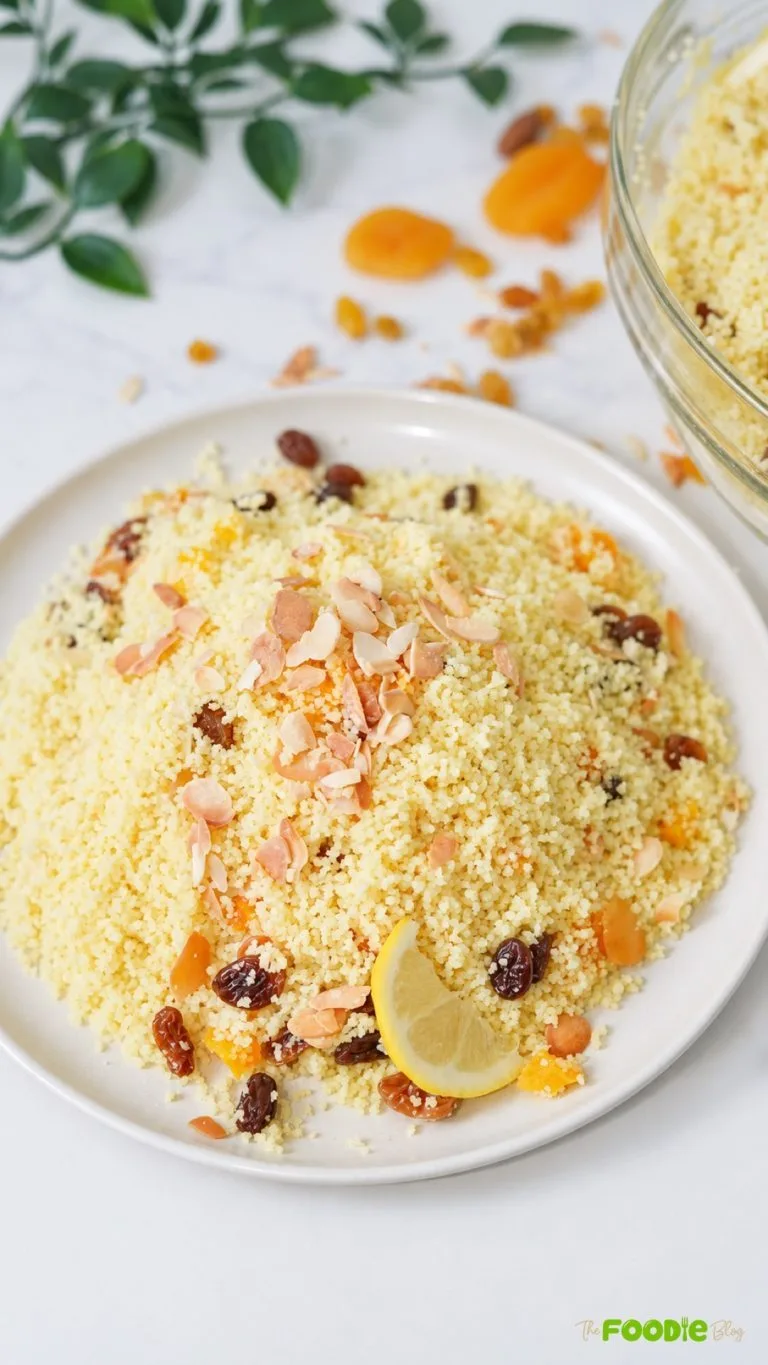
This couscous with dried fruit and almonds uses fine, quick-cooking couscous. Cover it with hot stock, let the grains absorb it, then fluff them with a fork. Stir in the lemon, apricots, and currants, and keep the toasted almonds handy for crunch.
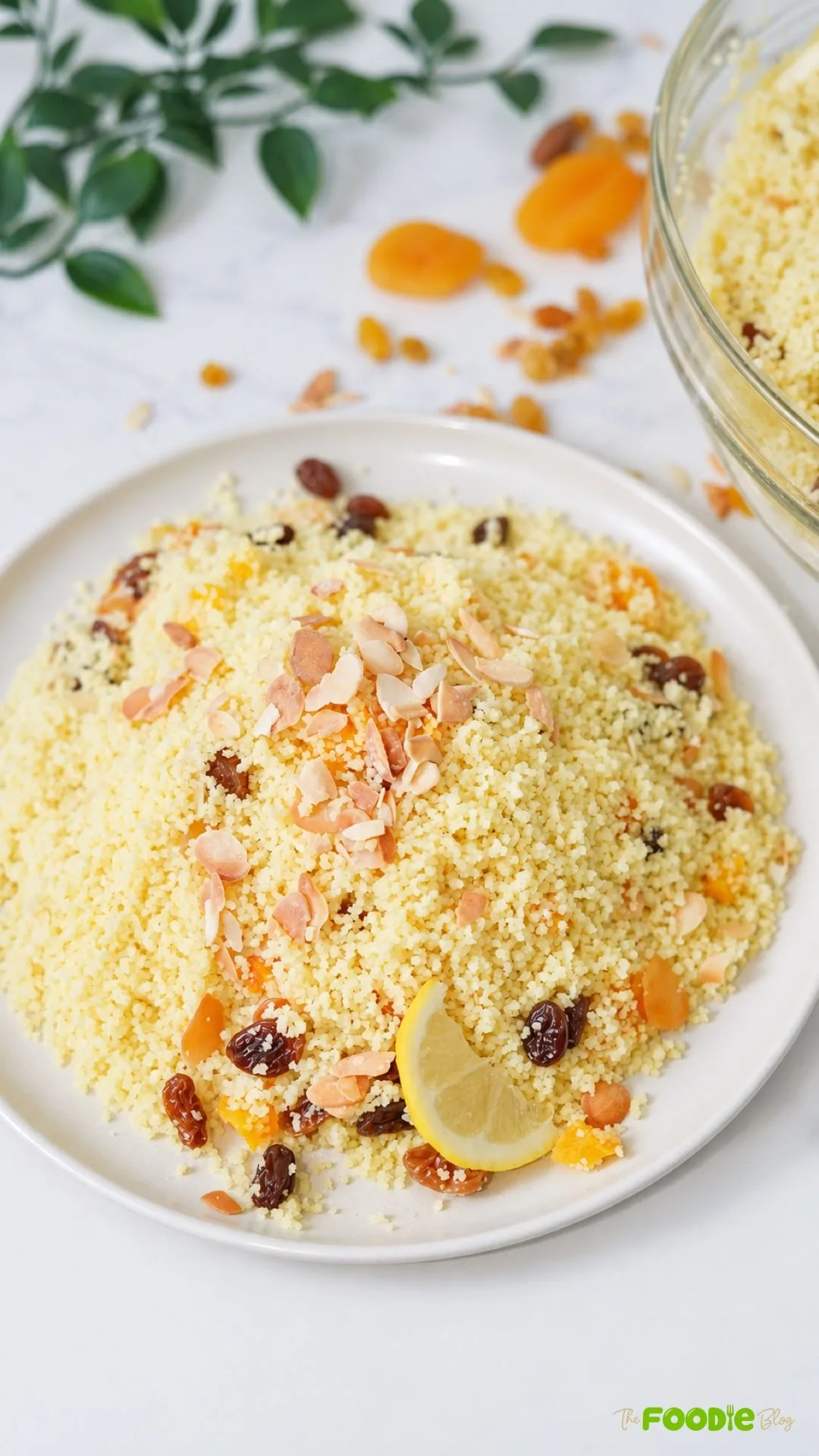
Serve it alongside my Chicken Kabobs in Oven for an easy dinner. Add Hummus and Greek Yogurt Sauce for a complete Mediterranean-inspired meal, or pair it with Fresh Cucumber Lemonade for something light and refreshing.
Table of contents
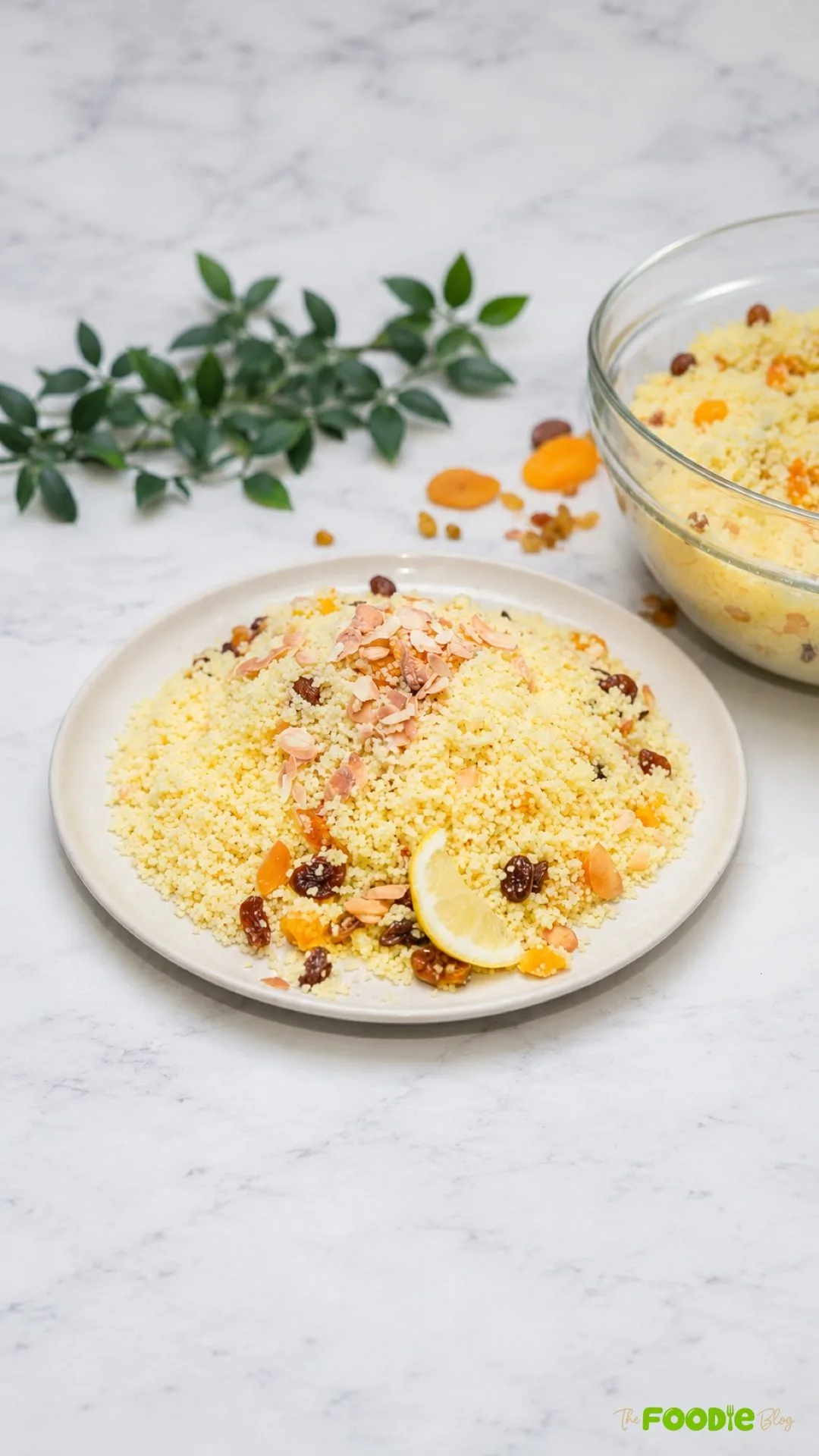
What You Need
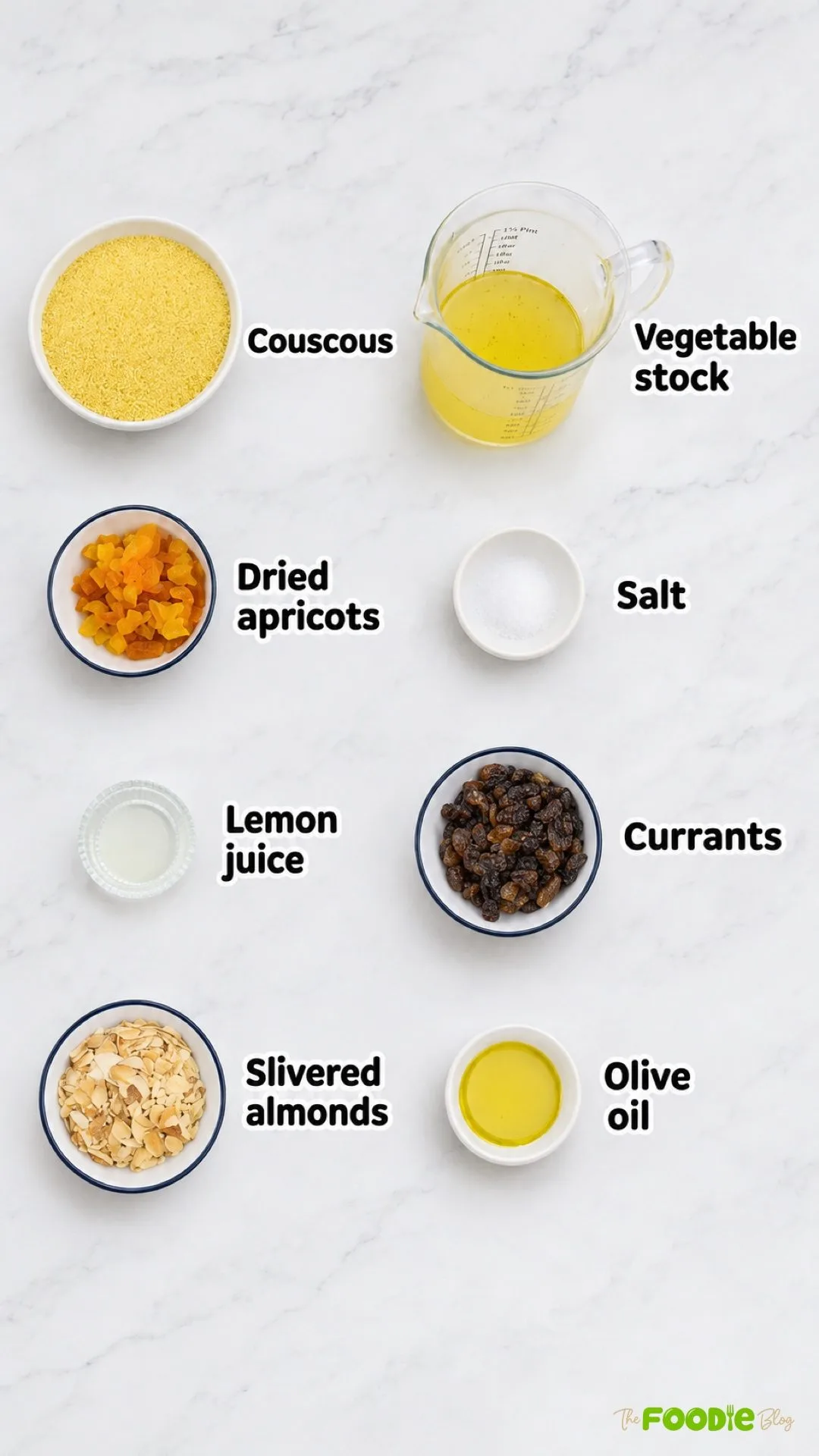
Let’s Make Couscous
- Prepare the Couscous
Place the couscous in a large heat-safe mixing bowl.
Add the olive oil, lemon juice, and salt.
Bring the vegetable stock to a boil.
Carefully pour the hot stock evenly over the couscous.
Stir briefly so all the grains are moistened.
- Cover and Let It Rest
Immediately cover the bowl tightly with plastic wrap or a plate.
Let the couscous stand for about 5–10 minutes without uncovering it.
During this time, the couscous absorbs the hot stock and becomes tender.
- Fluff the Couscous
Remove the cover.
Use a fork to gently fluff the couscous, separating any grains that have clumped together.
Avoid pressing or stirring too aggressively because you want the finished couscous to remain light and fluffy.
- Add the Fruit and Almonds
Add the chopped dried apricots, currants, and toasted slivered almonds.
Gently toss everything together until the fruit and nuts are evenly distributed throughout the couscous.
Taste and adjust the salt or lemon juice if needed.
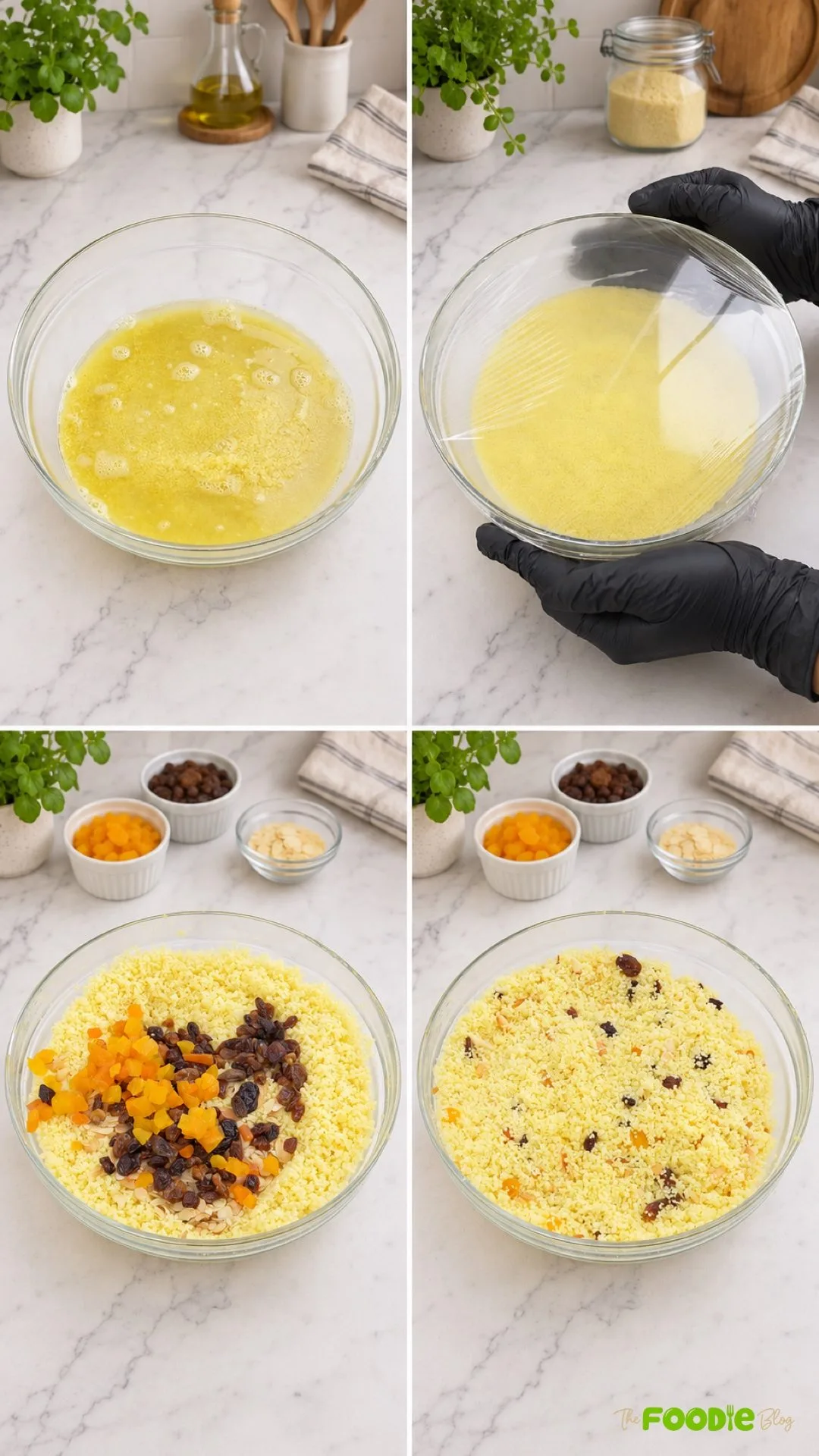
- Serve
Transfer the couscous to a serving bowl or platter.
Add a few extra toasted almonds, currants, or chopped apricots on top if desired.
Serve warm or at room temperature.
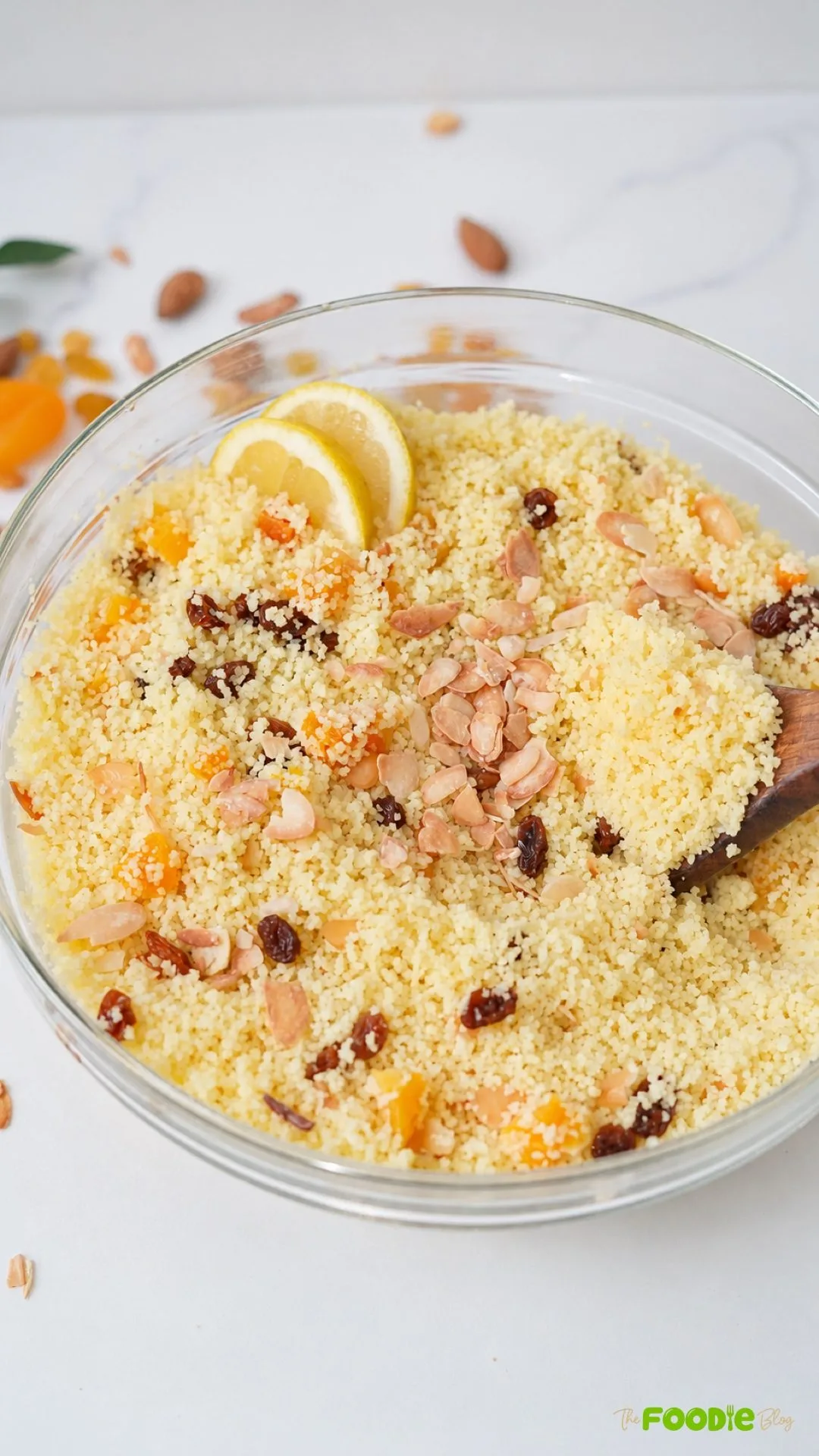
What Is the Best Couscous-to-Liquid Ratio
For the couscous used in this recipe, the ratio is simple:
2 cups couscous : 2 cups vegetable stock
That gives you a 1:1 couscous-to-liquid ratio.
The couscous absorbs the hot stock while resting, creating separate, tender grains without excess liquid.
Different brands and varieties can require slightly different amounts of liquid, so always check the package if you’re using a different type.
Pearl or Israeli couscous is also different from the fine couscous used here and normally requires a different cooking method.
Why Use Vegetable Stock Instead of Water
You can prepare couscous with water, but vegetable stock gives it much more flavor without adding another cooking step.
Because couscous absorbs nearly all of the liquid poured over it, the flavor of that liquid becomes part of the finished dish.
That’s why a good stock makes such a noticeable difference.
Using low-sodium stock also lets you season the final dish more precisely.
How to Get Fluffy Couscous
The key is not overworking it.
Once the couscous has absorbed the stock, use a fork rather than a spoon to separate the grains.
Start at one side of the bowl and gently lift and loosen the couscous.
Continue until there are no large clumps.
The olive oil also helps give the finished couscous a light texture.
Why Dried Fruit Works So Well with Couscous
Couscous itself has a fairly mild flavor, making it an excellent base for stronger ingredients.
The dried apricots bring sweetness and a slightly chewy texture, while the currants add smaller bursts of fruit throughout the dish.
The lemon prevents the finished couscous from tasting overly sweet.
That combination makes this recipe work as a savory side dish rather than a dessert.
What to Serve with Couscous
This couscous works especially well with savory proteins and vegetables.
Try serving it with:
Grilled or baked chicken
Chicken skewers
Roasted vegetables
Lamb
Grilled fish
Chickpeas
Hummus
Yogurt-based sauces
The sweet dried fruit also makes it a great side dish for heavily seasoned or slightly spicy foods.
FAQs
For quick-cooking couscous, pour hot stock or water over the couscous, cover it, let it absorb the liquid for about 5–10 minutes, then fluff it with a fork.
The couscous itself does not need to boil in this recipe. Bring the stock to a boil, pour it over the couscous, cover, and let it absorb the hot liquid.
No. Pearl couscous has much larger pieces and requires a different cooking method. This recipe is intended for regular fine couscous.
Either works. This dried fruit and almond couscous is delicious warm, at room temperature, or chilled.
You might also like
More Recipes To Try


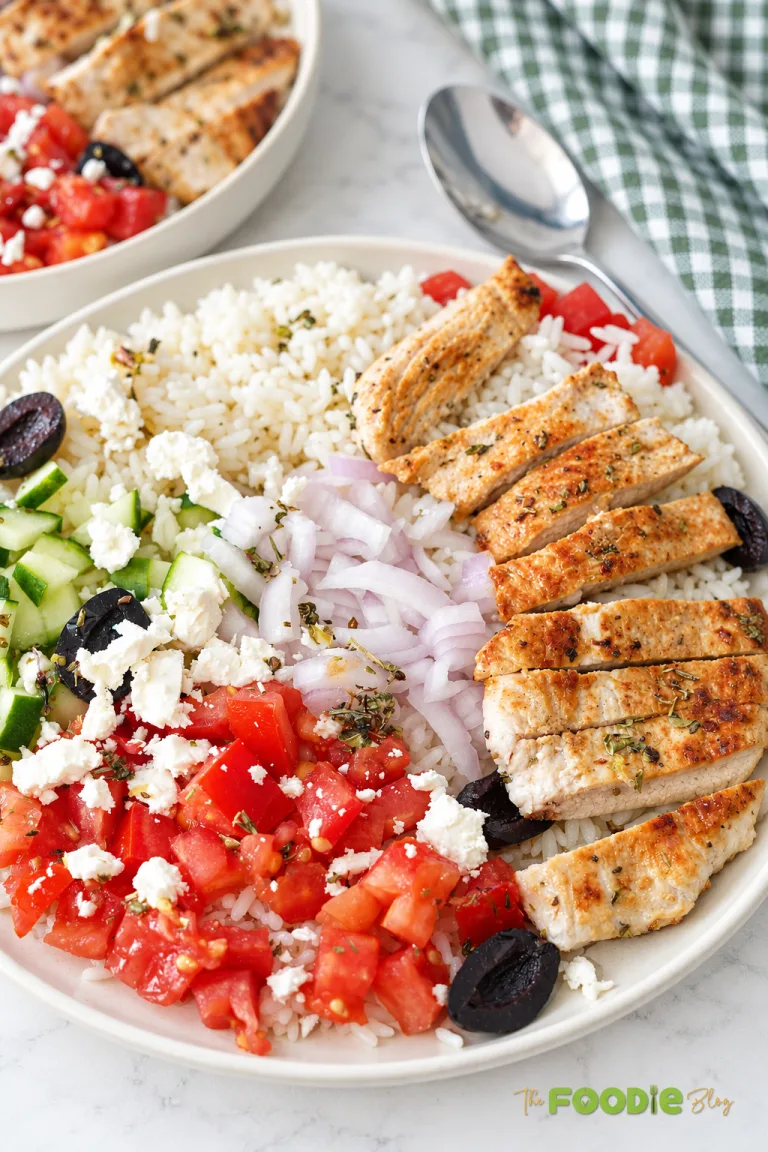
Swipe to see all 5 recipes
Couscous with Dried Fruit and Almonds
Ingredients
Equipment
Method
- Place the couscous in a large heat-safe bowl.
- Add the olive oil, lemon juice, and salt.
- Bring the vegetable stock to a boil.
- Pour the hot vegetable stock evenly over the couscous and stir briefly.
- Cover the bowl tightly and let the couscous rest for 5–10 minutes.
- Remove the cover and gently fluff the couscous with a fork.
- Add the chopped dried apricots, currants, and toasted slivered almonds.
- Gently toss until everything is evenly distributed.
- Taste and adjust the salt or lemon juice if needed.
- Transfer to a serving bowl and serve warm or at room temperature.
Nutrition
Video
Tried this recipe?
Let us know how it was!Estimated reading time: 5 minutes