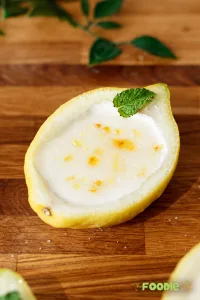
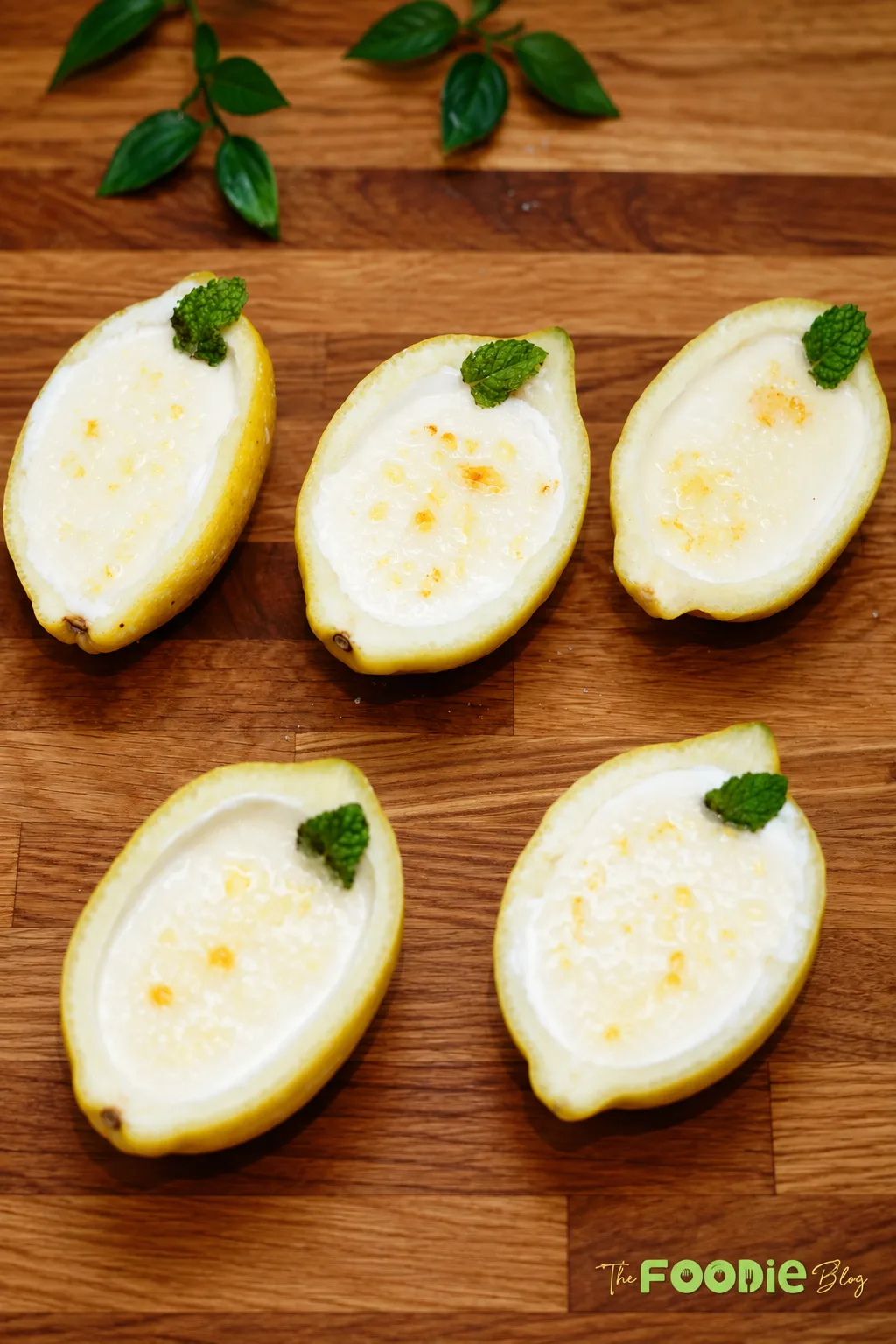
Lemon posset brûlée pairs chilled lemon cream with a thin sugar crust that cracks under a spoon. This version is served in six hollowed lemon halves and uses cream, sugar, fresh lemon and vanilla. There are no eggs or gelatin, and no oven is needed.
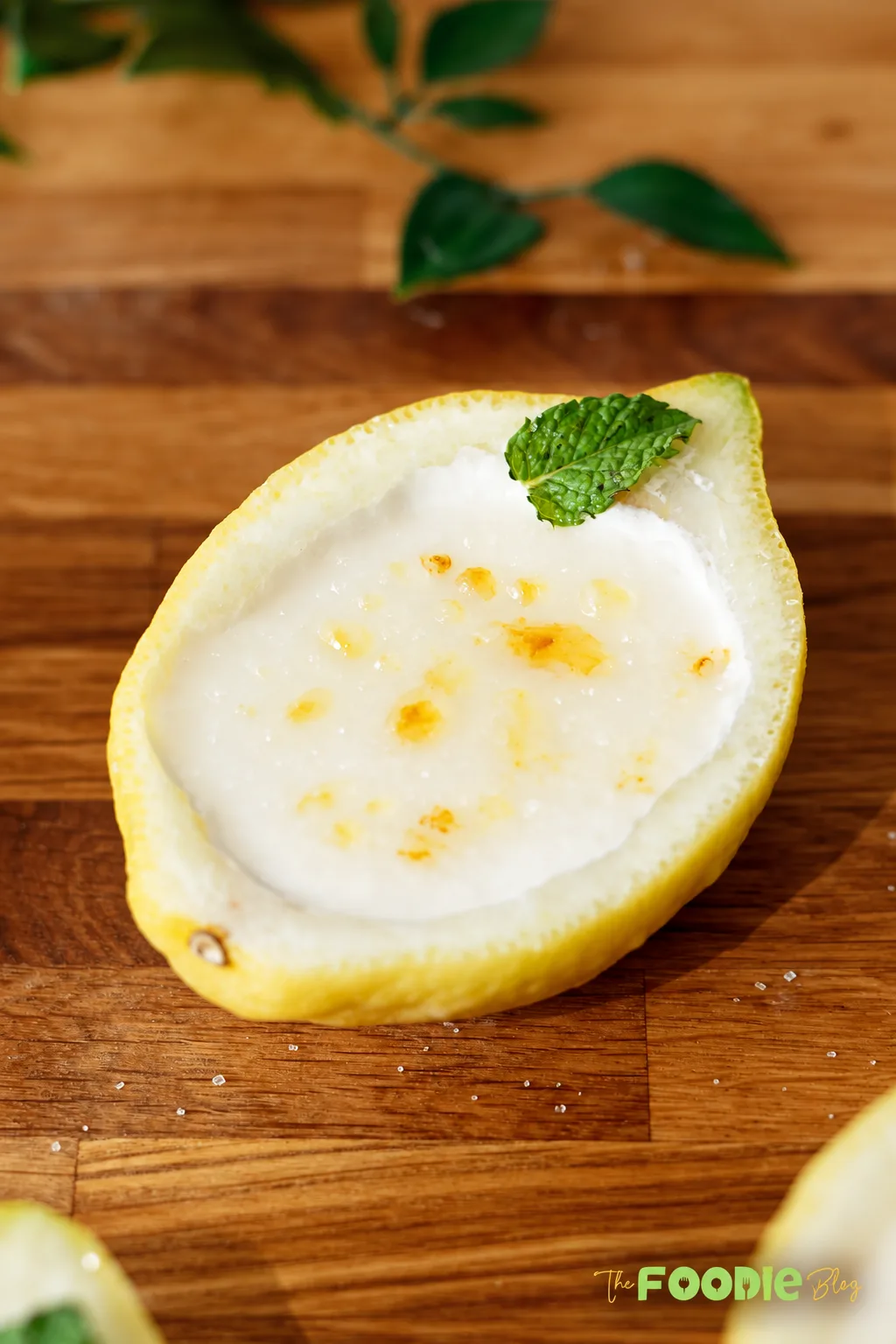
Plan ahead for the chilling: the recipe allows 25 minutes of prep, 10 minutes of cooking and at least 4 hours in the refrigerator. Make the filling the day before if that suits you, then torch the sugar just before serving.
For a crisp biscuit alongside the cream, try my 3 ingredient butter cookies or coffee bean cookies. Any lemon juice left after measuring can go into homemade lemonade.
Table of contents
Ingredients For Lemon Posset Brûlée
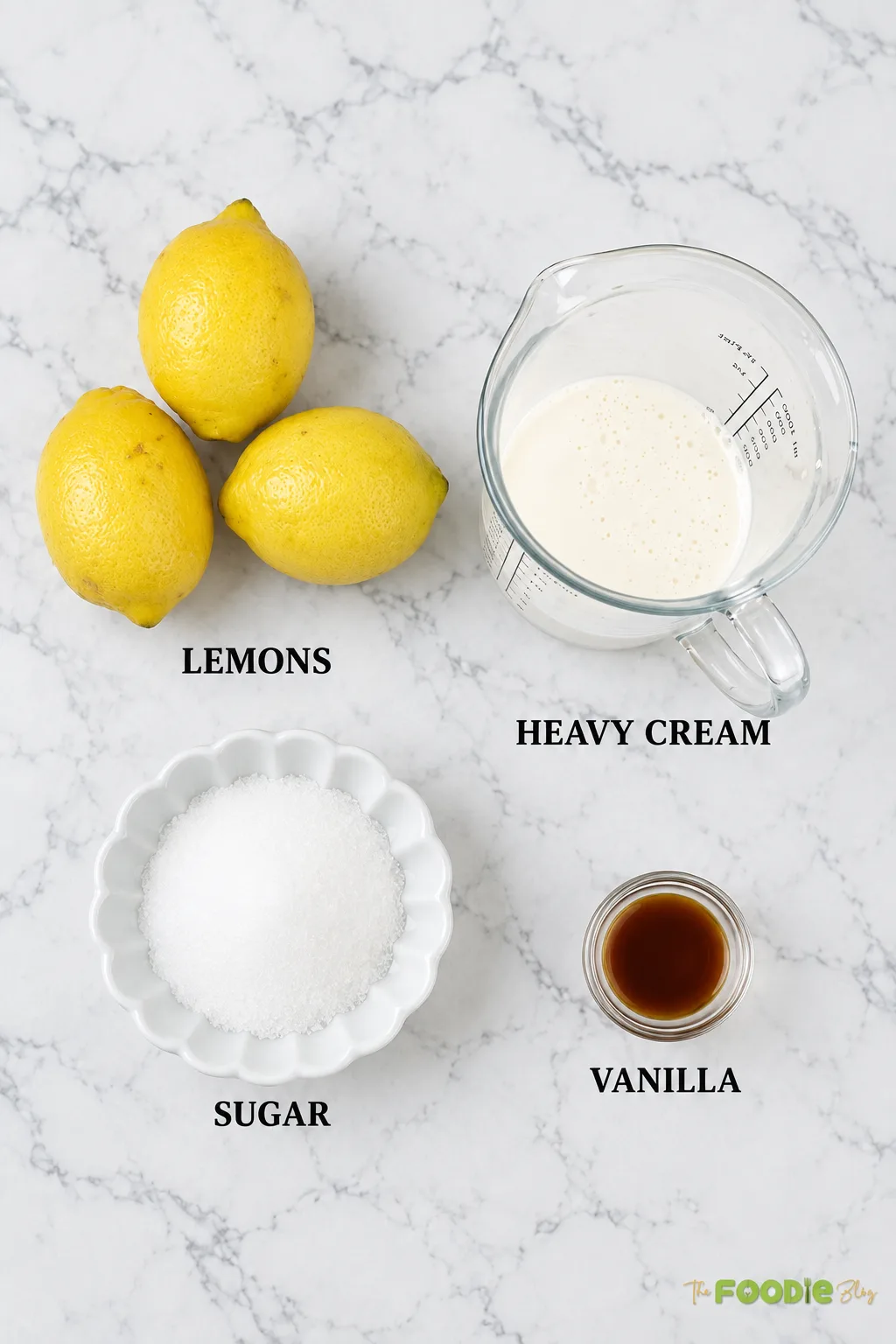
- Fresh lemons: Use 3 large lemons for the six serving shells. Before cutting them, finely grate 1 tablespoon of yellow zest, avoiding the bitter white pith. Strain and measure ⅓ cup (80 ml) of fresh lemon juice.
- Heavy cream: Use 2 cups (480 ml) of heavy cream or heavy whipping cream, as listed in the recipe card.
- Granulated sugar: Use ⅔ cup (135 g) in the cream mixture. Keep the separate 2 tablespoons (25 g) for the brûlée topping, which is added just before serving.
- Vanilla and mint: Add 1 teaspoon vanilla extract to the cream. Fresh mint leaves are optional for serving.
The recipe card below includes the full quantities and serving adjustments.
Let’s Make Lemon Posset
- Prepare the Lemon Shells
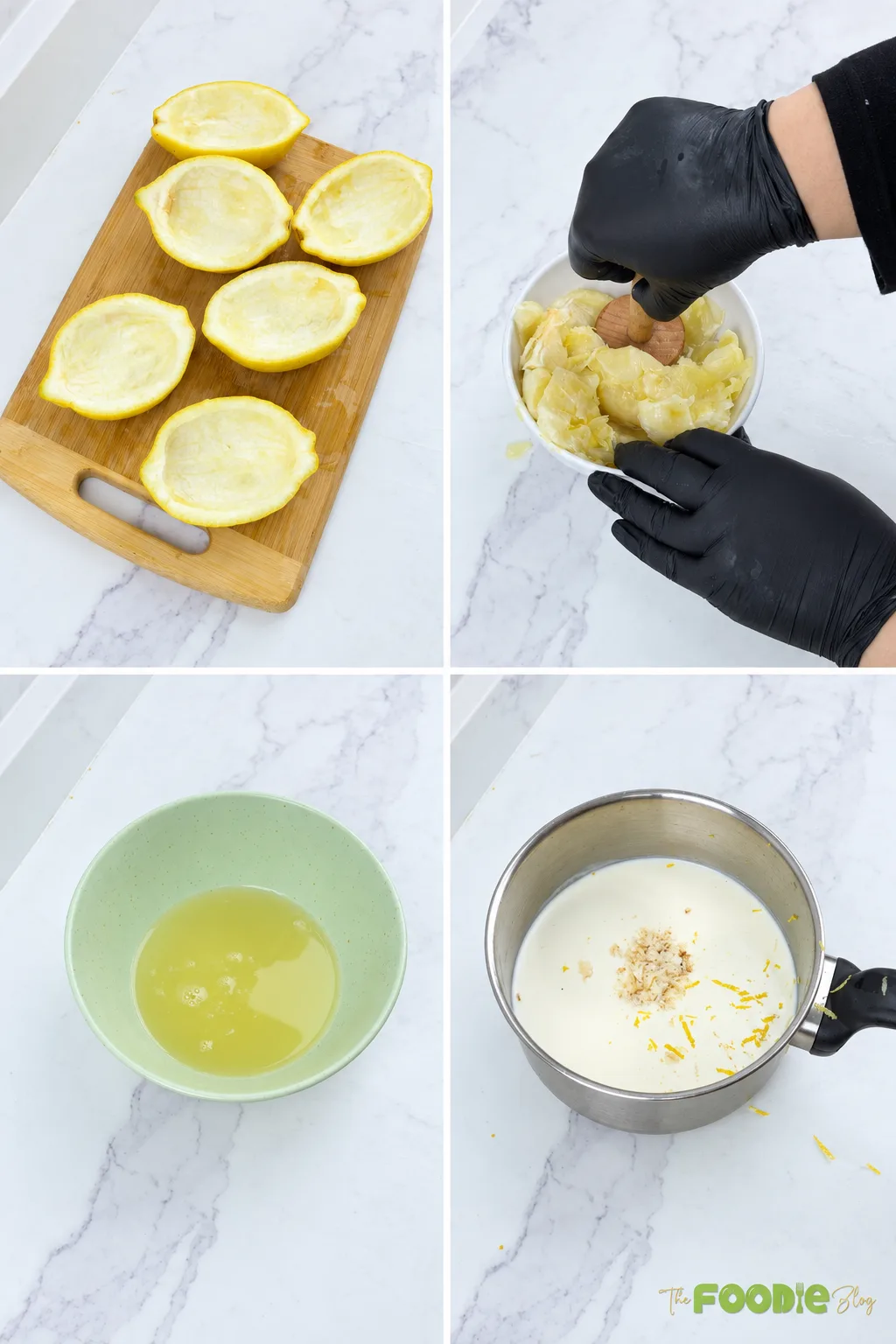
Wash and dry the three lemons thoroughly. Before cutting them, finely grate 1 tablespoon of yellow zest, avoiding the white pith, and set it aside. Cut each lemon in half lengthwise.
Carefully scoop the flesh from each lemon half without cutting through the peel. A spoon works well for loosening the pulp around the inside edge.
Place the empty shells in a muffin pan, small bowls, or a baking dish so they remain level.
- Extract the Lemon Juice
Place the removed lemon pulp in a bowl and press it with a citrus reamer or wooden tool.
Strain the pulp through a fine-mesh strainer and measure the amount of fresh lemon juice needed for the posset.
- Heat the Cream
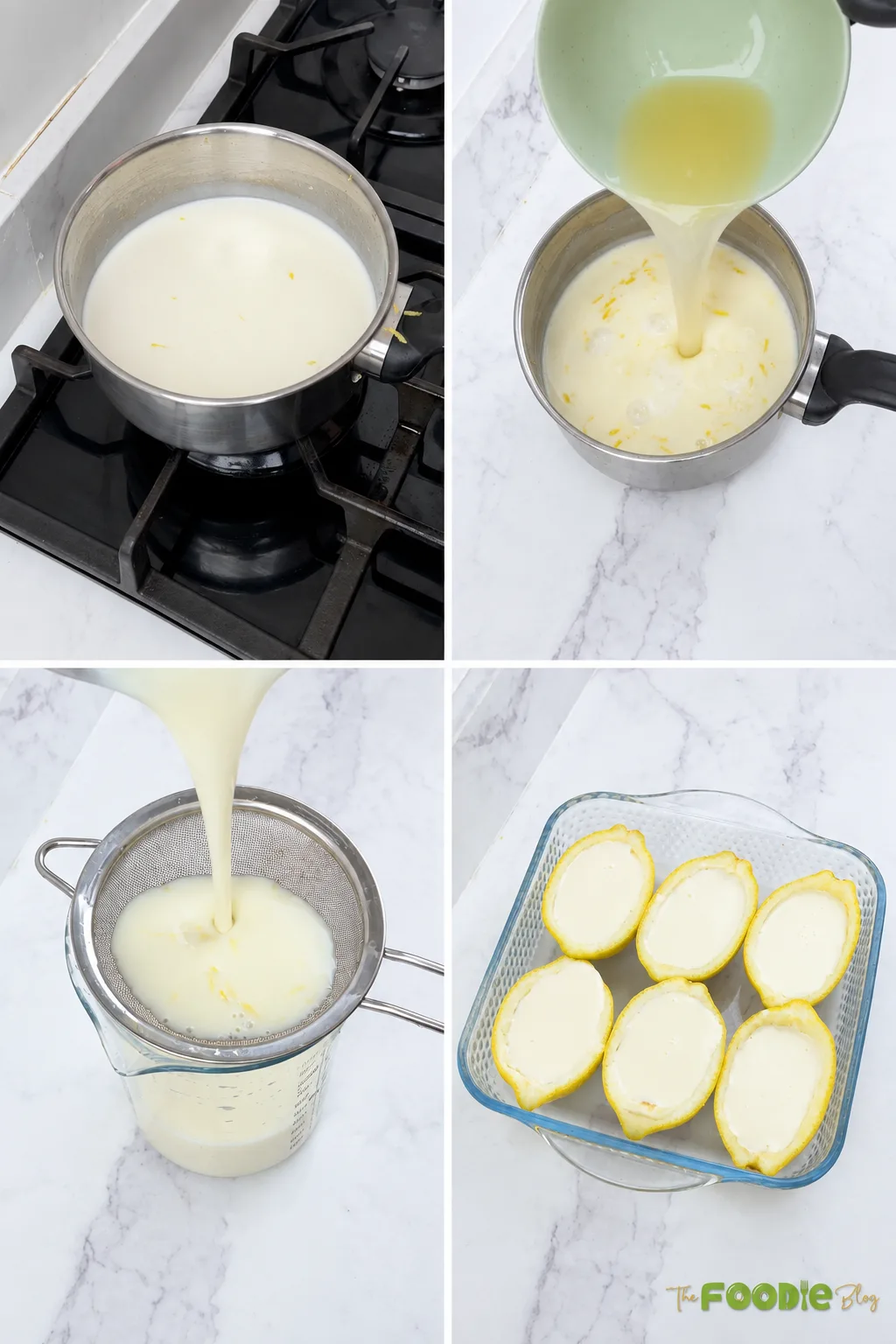
Add the heavy cream, granulated sugar, lemon zest, and vanilla to a saucepan.
Heat over medium-low heat, stirring until the sugar dissolves. Bring the mixture to a gentle simmer and cook for 3 to 4 minutes. Avoid a rapid boil that could make the cream overflow.
- Add the Lemon Juice
Remove the saucepan from the heat.
Slowly stir the fresh lemon juice into the warm cream. The mixture may begin to thicken slightly almost immediately.
Let it rest for about 5 minutes.
- Strain and Fill the Lemon Shells
Pour the cream mixture through a fine-mesh strainer to remove the lemon zest and any small pieces of pulp.
Carefully divide the mixture between the prepared lemon shells.
- Chill Until Set
Transfer the filled lemon shells to the refrigerator.
Chill uncovered until the surface is cool, then loosely cover and continue chilling for at least 4 hours. Overnight chilling also works well.
- Brûlée the Tops
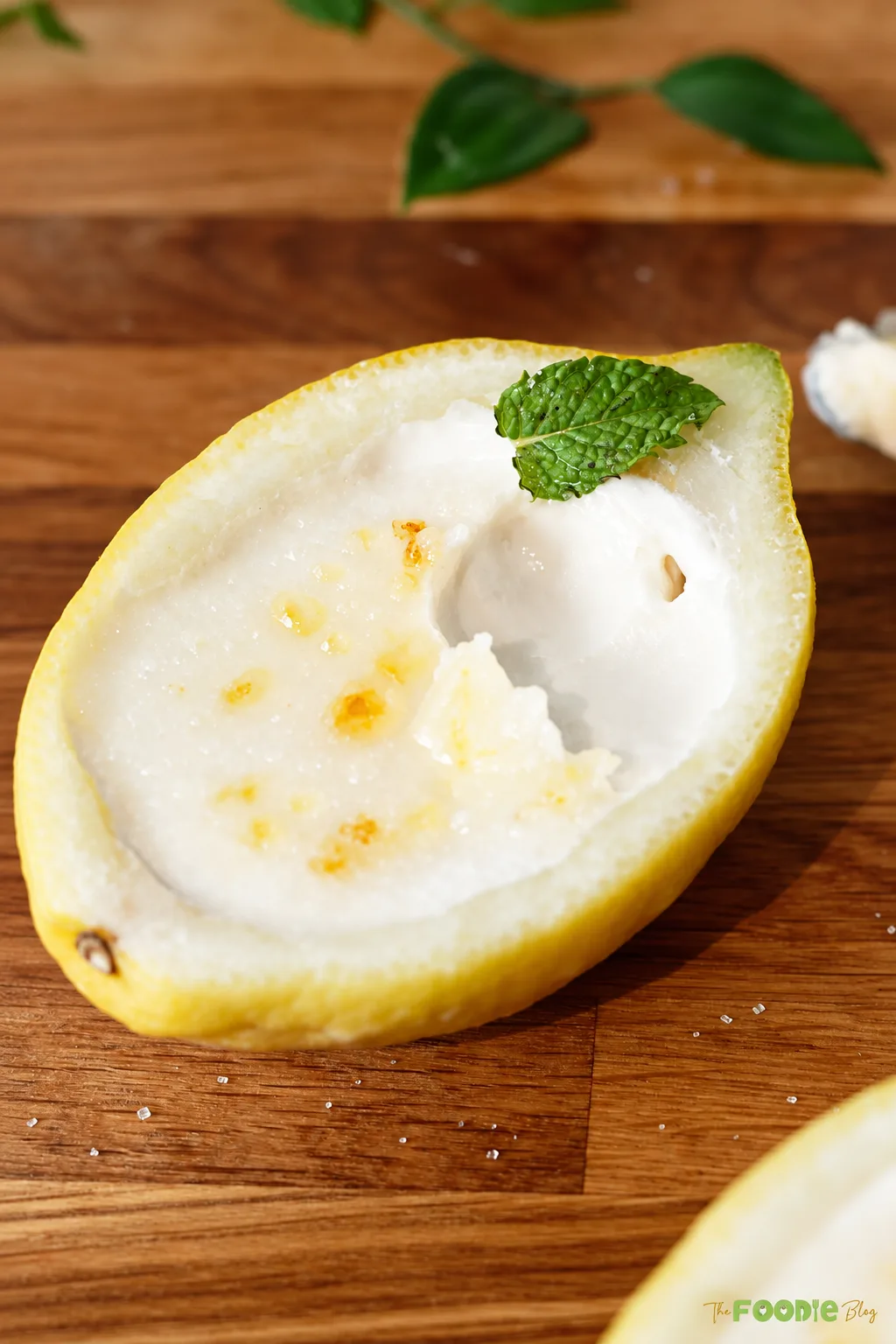
Just before serving, sprinkle each chilled posset with a thin, even layer of granulated sugar.
Use a kitchen torch to caramelize the sugar until golden and bubbling. Keep the torch moving so the sugar browns evenly without overheating the cream.
Let the caramelized topping sit for 1 to 2 minutes so it becomes crisp.
What Is a Lemon Posset
Modern lemon posset is a chilled dessert made by heating cream and sugar, then adding lemon juice.
The citrus thickens the warm cream, allowing the dessert to set without eggs, flour, cornstarch, or gelatin.
Can I Make a Three-Ingredient Lemon Posset
Yes. The basic dessert can be made with only:
- Heavy cream
- Granulated sugar
- Fresh lemon juice
Vanilla, lemon zest, brûlée sugar, and mint are optional additions.
Is Lemon Posset the Same as Panna Cotta?
No. Panna cotta is normally set with gelatin.
Lemon posset sets through the combination of cooked cream and citrus juice, so no gelatin is needed.
Getting a Set Filling and a Crisp Sugar Top
- Measure the juice: use the original 1/3 cup (80 ml), rather than the juice of an estimated number of lemons. Remove the cream from the heat before stirring it in.
- Give the filling time: refrigerate for at least 4 hours or overnight. It needs to be fully chilled before you add the topping.
- Keep the sugar layer thin: divide the separate 2 tablespoons (25 g) over the six possets just before serving. Move the torch across the surface until the sugar is golden and bubbling.
- Wait briefly, then serve: allow the topping 1–2 minutes to harden. Adding the sugar too far ahead makes it wet and takes away the crisp finish.
Make Ahead and Serving Cups
Keep the filled lemon shells level in a muffin pan or a snug baking dish while they chill. You can prepare them the day before and refrigerate overnight, leaving the sugar topping until serving time.
Small glasses or ramekins work too. Lemon halves vary in size, so use a small cup for any cream that will not fit without spilling. Keep that extra portion chilled alongside the shells.
FAQS For Lemon Posset Brûlée
Graininess can happen when the cream is boiled too aggressively or when too much lemon juice is added too quickly.
Yes. Prepare and fill the lemon shells, then refrigerate them overnight.
Do not add or torch the sugar topping until shortly before serving. For more information about keeping chilled desserts safe, see the Food Standards Agency’s chilling guidance.
Use cream with a high enough fat content to create a rich, stable set.
Lower-fat cream or half-and-half may produce a much softer dessert and is not recommended for this recipe.
Yes. Small glasses, ramekins, espresso cups, or dessert jars all work.
Using lemon shells is mainly for presentation and does not affect the way the posset sets.
Place each lemon half in one section of a muffin pan.
Small pieces of crumpled aluminum foil can also be placed around the shells to stop them from tilting.
A kitchen torch provides better control because only the surface sugar needs to caramelize.
A broiler may heat the chilled cream too much or damage the lemon shells before the sugar browns evenly.
More Dessert Recipes
Lemon Posset Brûlée
Ingredients
Equipment
Method
- Wash and zest the lemons. Wash and dry the 3 large lemons thoroughly. Before cutting them, finely grate 1 tablespoon of zest from the yellow outer peel, avoiding the white pith. Set the zest aside.
- Prepare the shells. Cut each lemon in half lengthwise. Carefully loosen and remove the flesh with a small spoon without cutting through the peel. Place the six empty shells in a muffin pan or small baking dish to keep them level.

- Measure the juice. Transfer the lemon flesh to a bowl and press it with a citrus reamer or wooden muddler. Strain through a fine-mesh strainer, then measure ⅓ cup (80 ml) of fresh juice and set it aside.
- Heat the cream mixture. Add the 2 cups (480 ml) heavy cream, ⅔ cup (135 g) sugar, prepared lemon zest and 1 teaspoon vanilla to a medium saucepan. Heat over medium-low heat, stirring until the sugar dissolves completely.
- Simmer gently. Bring the cream to a gentle simmer and cook for 3 to 4 minutes, stirring occasionally. Do not allow it to boil aggressively. Remove the saucepan from the heat.
- Add the lemon juice. Slowly pour the measured lemon juice into the warm cream while stirring gently. Let the mixture rest for 5 minutes.
- Strain, fill and chill. Strain the cream mixture through a fine-mesh strainer into a clean measuring jug, then divide it evenly between the prepared shells. Carefully refrigerate the filled shells. Chill uncovered until the surface is cool, then loosely cover and continue chilling for at least 4 hours, or until completely set. Overnight chilling also works.
- Caramelize the topping. Just before serving, divide the reserved 2 tablespoons (25 g) sugar among the chilled possets in a thin, even layer. Use a kitchen torch to caramelize the sugar until golden brown and bubbling. Keep the torch moving to brown the sugar evenly without overheating the cream.
- Finish and serve. Let the topping rest for 1 to 2 minutes until firm and crisp. Garnish with fresh mint leaves, if desired, and serve immediately.
Nutrition
Video
Notes
- Use heavy cream: Heavy cream or heavy whipping cream gives the dessert enough richness and structure to set properly.
- Use fresh lemon juice: Bottled juice may taste harsher and does not give the dessert the same fresh citrus flavor.
- Avoid the white pith: When zesting the lemons, remove only the yellow outer layer. The white pith underneath can taste bitter.
- Do not boil aggressively: A gentle simmer is enough. Cream can rise quickly and overflow when boiled too hard.
- Measure the juice: Adding significantly more lemon juice may make the texture grainy or overly sharp.
- Strain the mixture: Straining creates the smoothest finished posset.
- Keep the shells level: A muffin pan is useful for holding the lemon halves upright while they chill.
- Chill completely: The dessert must be very cold before adding and torching the sugar.
- Use a thin sugar layer: Too much sugar takes longer to caramelize and can warm or soften the posset underneath.
- Torch just before serving: The brûlée topping gradually absorbs moisture in the refrigerator and loses its crisp texture.
- Three-ingredient option: Omit the vanilla and brûlée topping to make a basic three-ingredient lemon posset with cream, sugar, and lemon.
- Storage: Refrigerate the un-torched possets for up to 3 days.
- Food safety: Keep this cream-based dessert refrigerated. General cold-food guidance from the Food Standards Agency explains that proper chilling helps limit harmful bacterial growth.
- Freezing: Freezing is not recommended because the cream may separate or become grainy after thawing.
Tried this recipe?
Let us know how it was!Estimated reading time: 1 minute