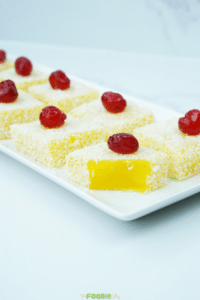
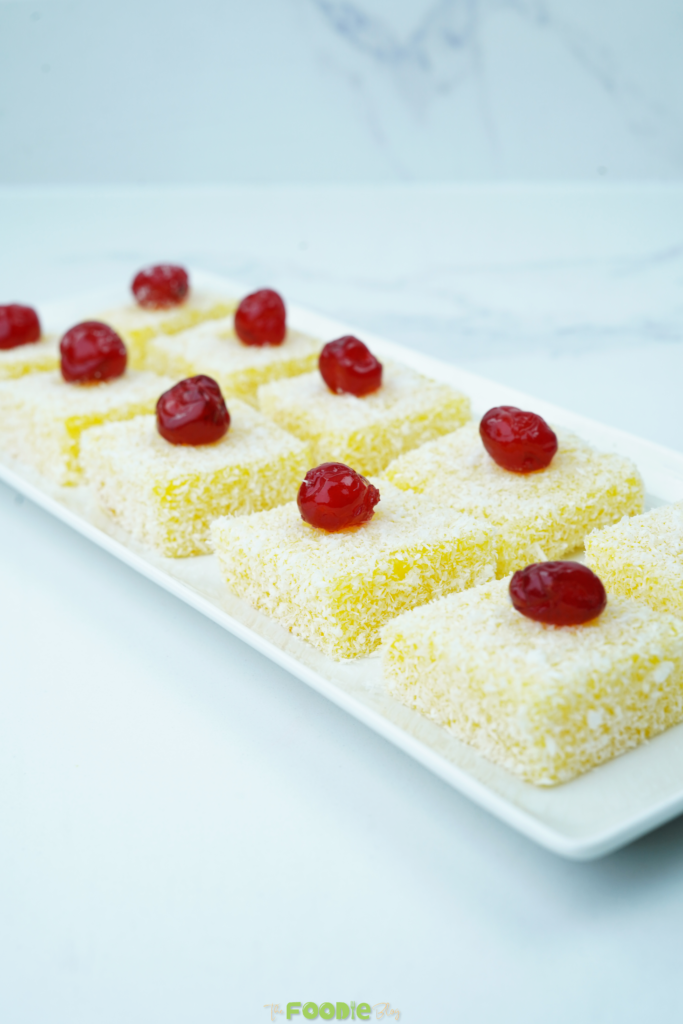
This Orange Jelly is a bright, citrusy dessert made with fresh orange juice, sugar, and cornstarch, then chilled until firm enough to cut into soft, glossy squares. I like to roll each piece in coconut and finish it with a candied cherry for a simple dessert that looks surprisingly special.
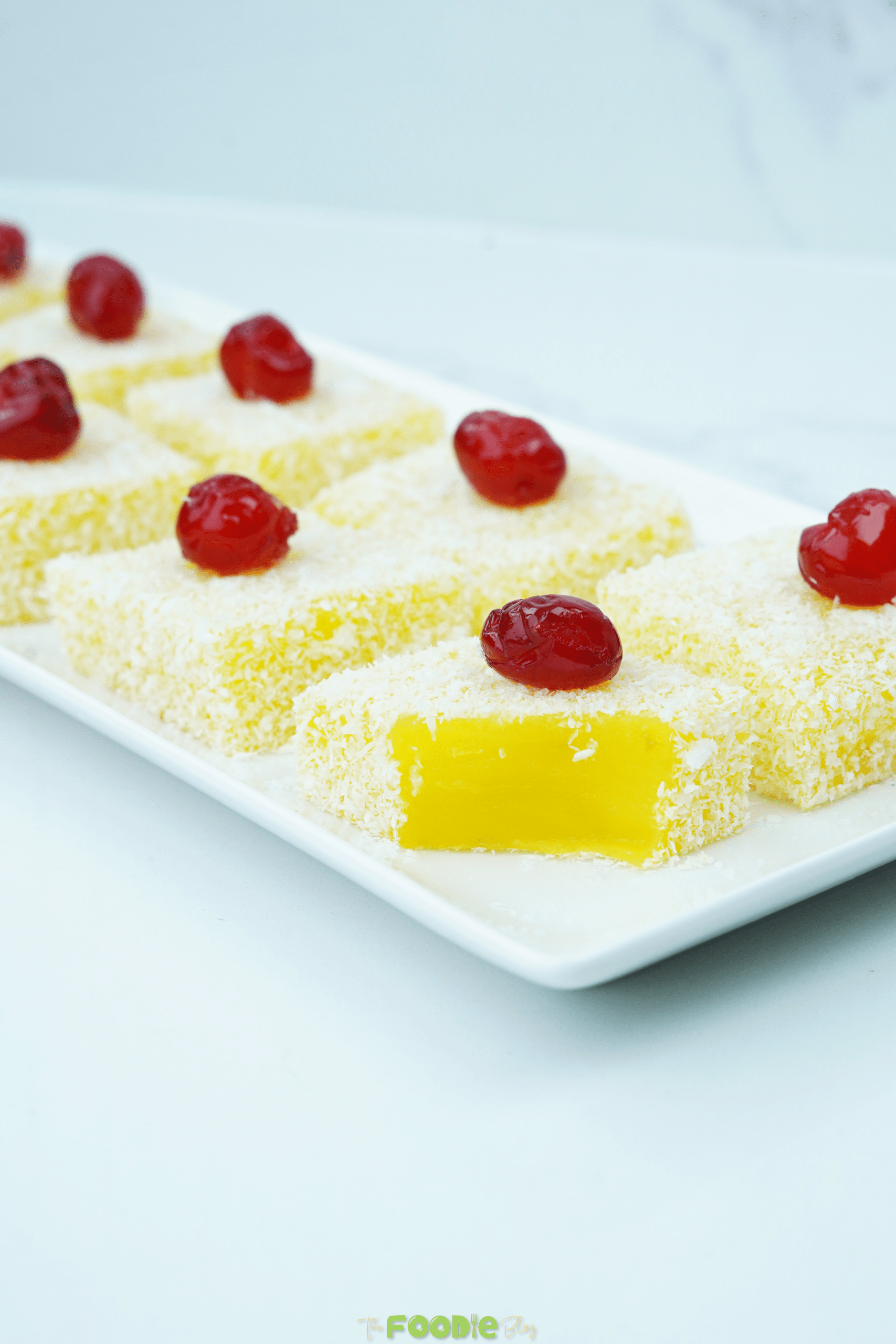
I make this when I want something fresh and sweet without turning on the oven. The orange flavor really comes through, especially when I use freshly squeezed juice and a little orange zest.
The texture is soft and tender rather than rubbery, and the coconut gives each piece a light, slightly chewy coating. It is an easy orange jelly recipe to prepare ahead for parties, holidays, or an afternoon treat.
If you enjoy easy no-bake desserts, try my Raffaello Coconut Balls next. For another citrusy dessert, my Italian Almond Cake has a lovely fresh orange flavor.
You can also serve these jelly squares alongside my Fresh Fruit Salad for a lighter dessert spread, or add White Christmas Rocky Road when you want a mix of soft, fruity, and chocolate treats.
Table of contents
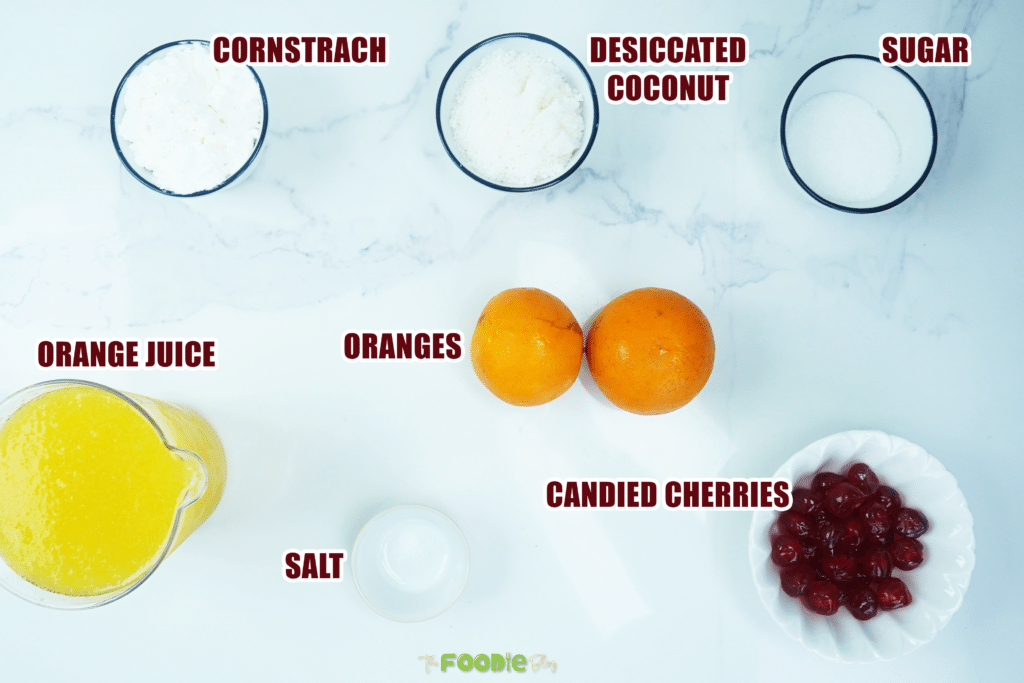
Ingredients
How to Make Orange Jelly
- Strain the orange juice into a pot to remove pulp (especially important if using fresh-squeezed).
- Whisk in the cornstarch, sugar, salt, and orange zest (if using) until smooth with no lumps.
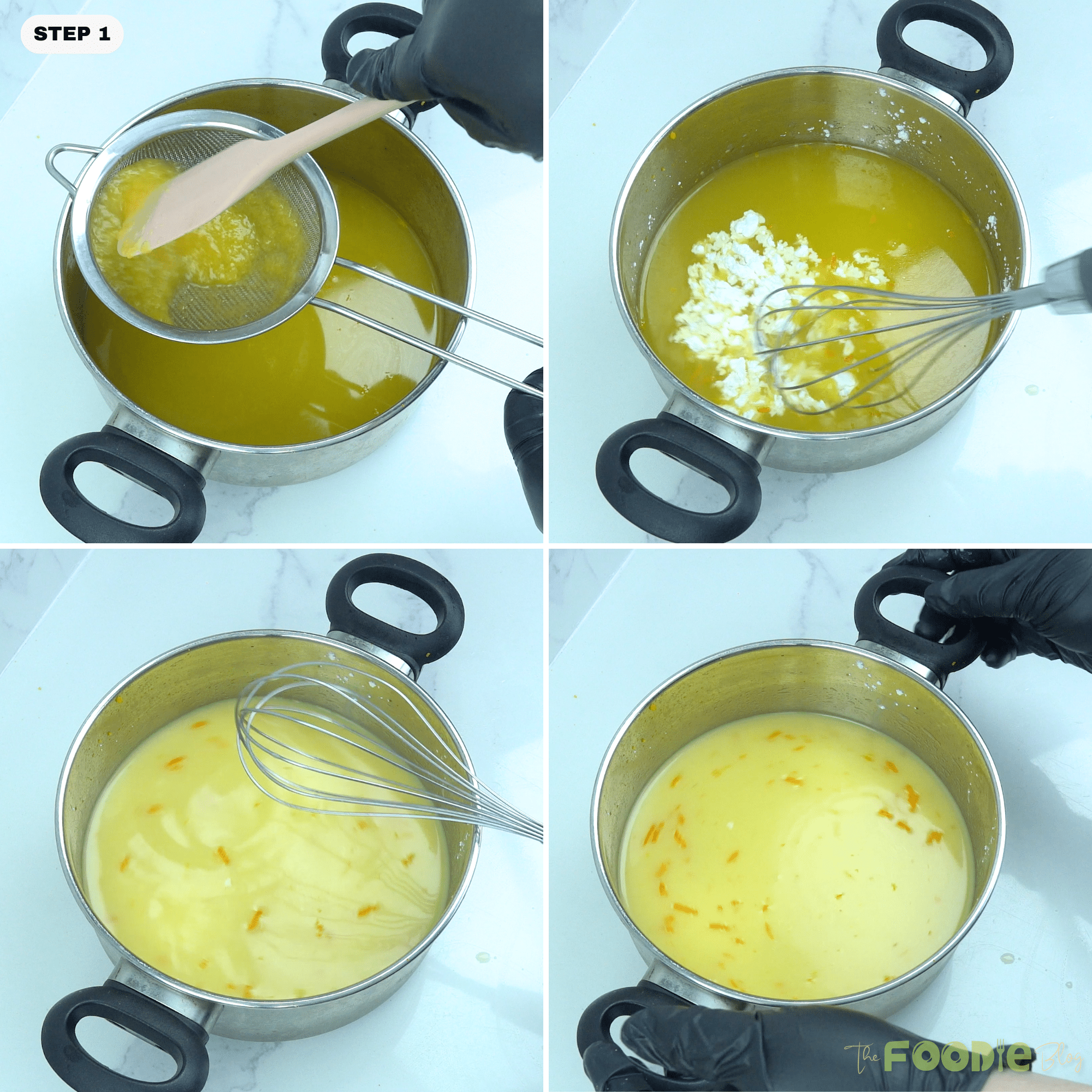
- Cook over medium heat, whisking and stirring constantly, until the mixture thickens and turns glossy (it should look like a thick pudding).
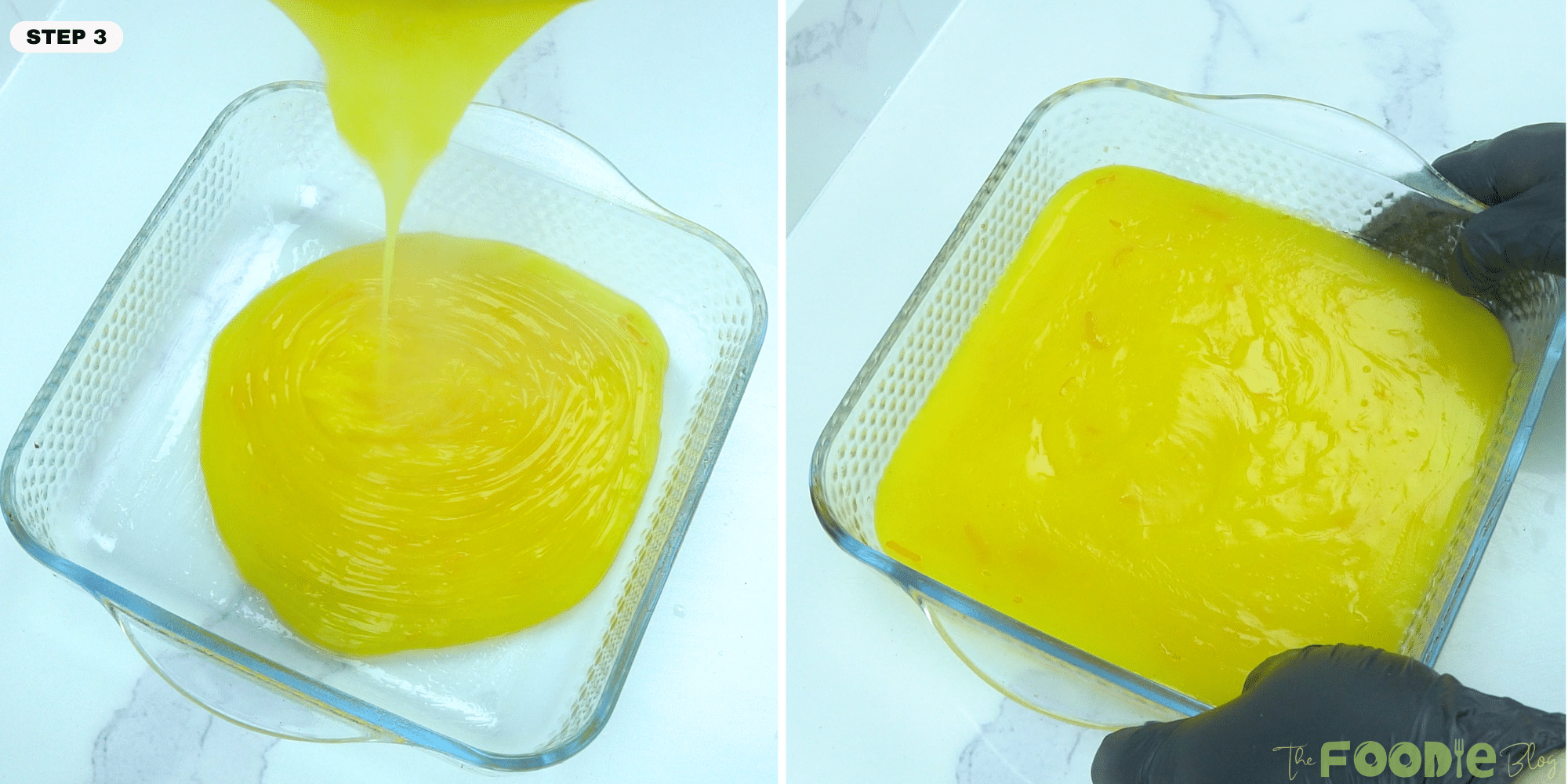
- Pour the hot mixture into a lightly greased dish (or a dish lined with parchment) and spread into an even layer.
- Chill until fully set, then unmold and cut into squares.
- Roll each square in desiccated coconut to coat all sides.
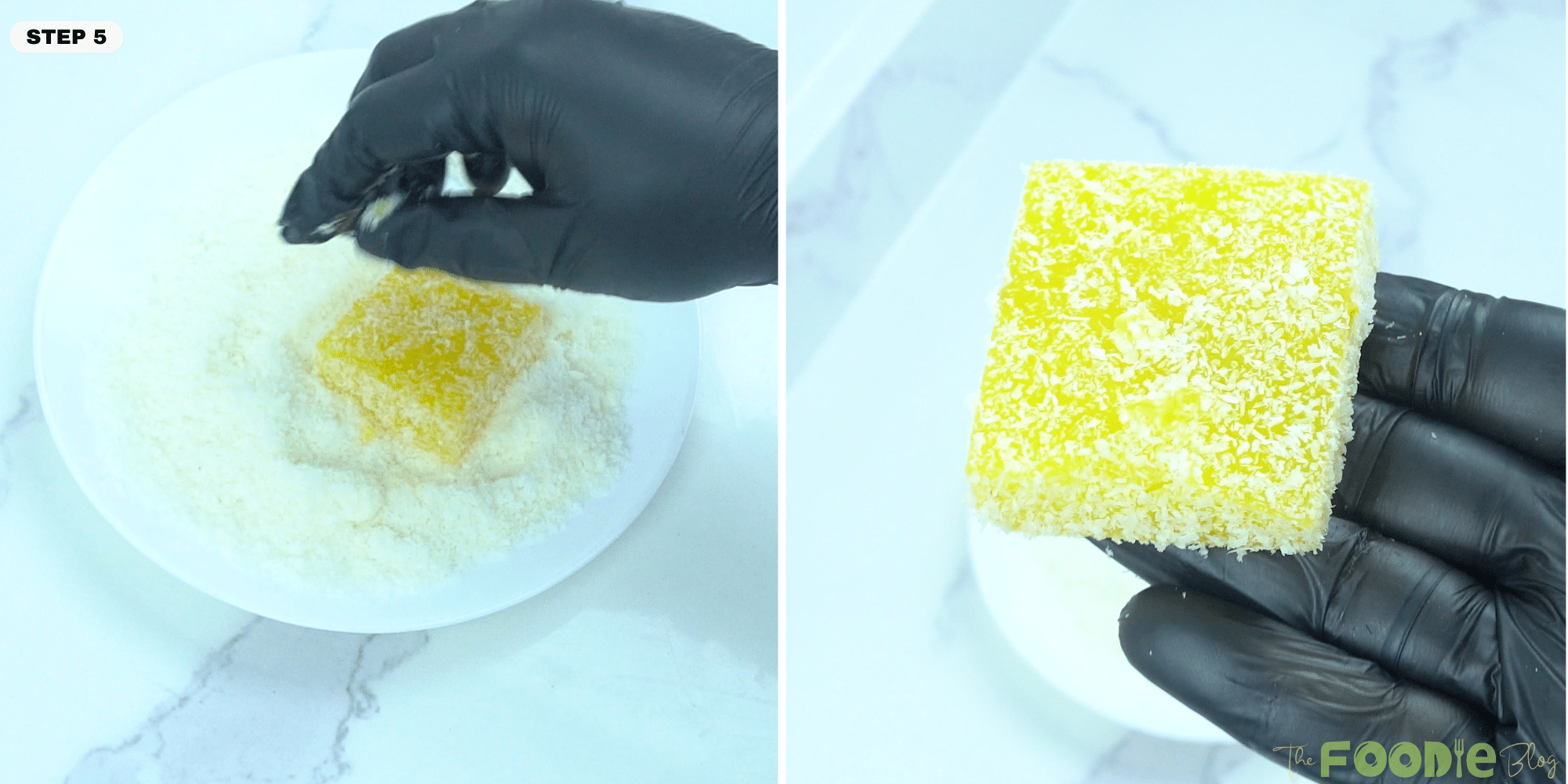
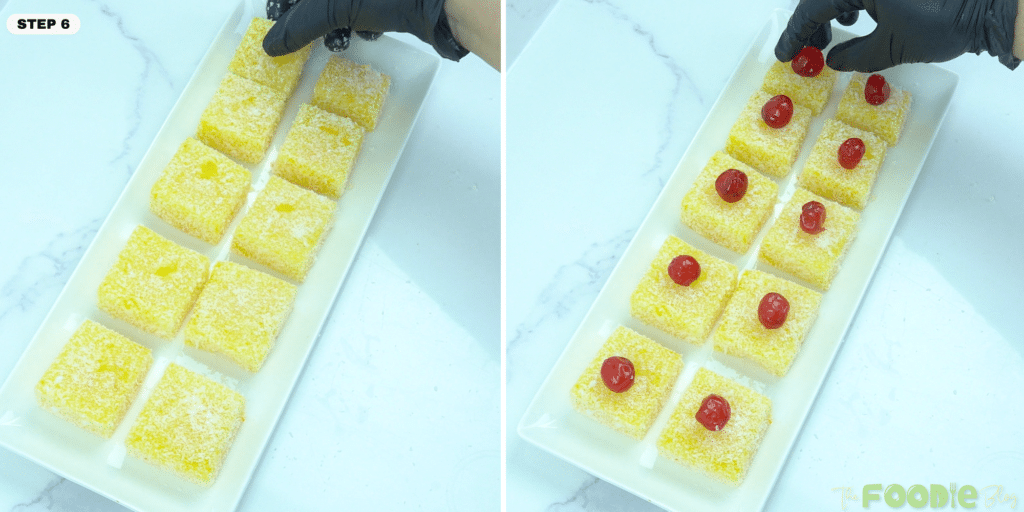
- Top with candied cherries if you’d like, then serve chilled.
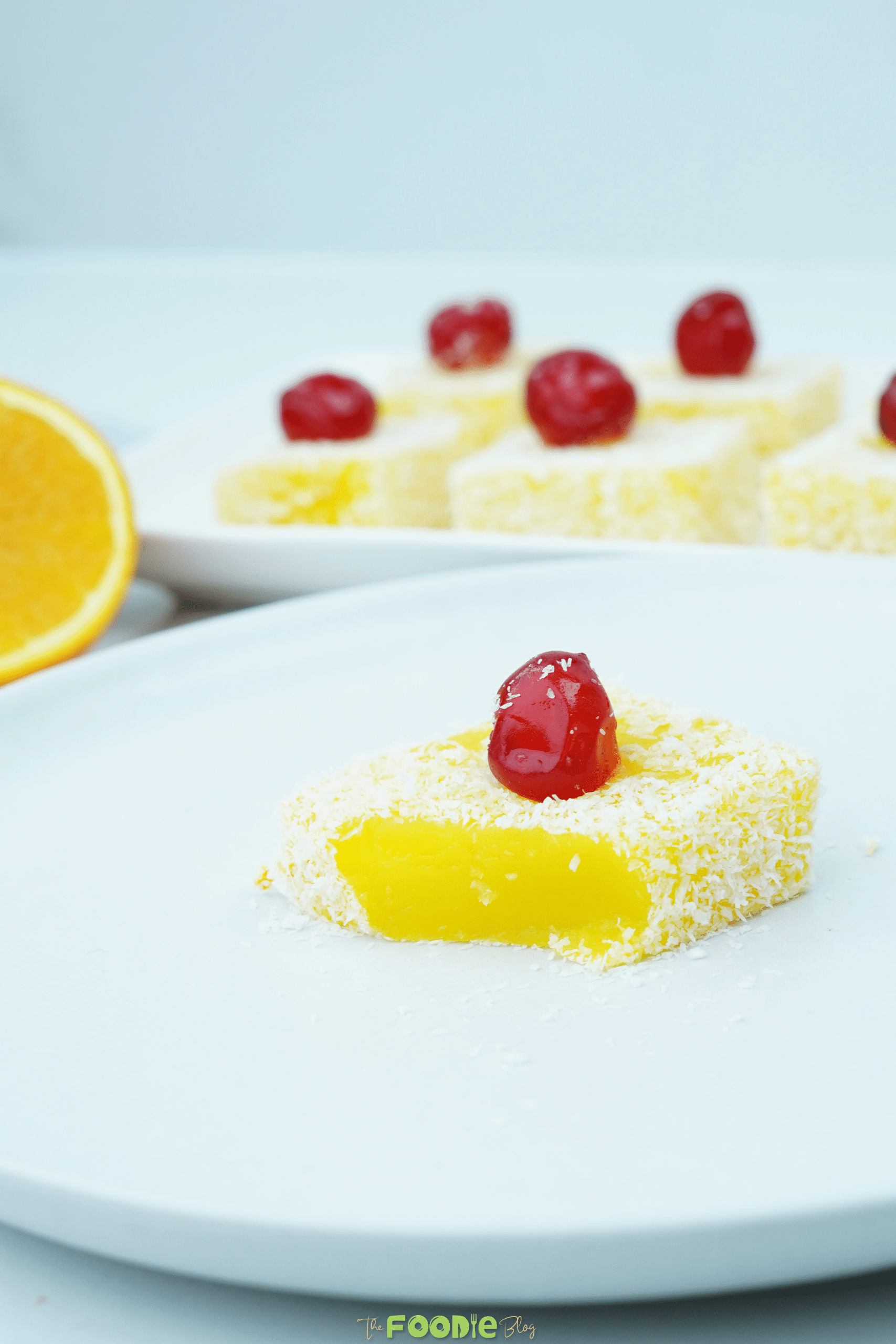
What Should Orange Jelly Look Like
The cooked orange mixture should look very thick, smooth, and glossy before you pour it into the dish.
If you lift your whisk or spatula, the mixture should fall back slowly rather than pour like juice.
Once chilled, the jelly should hold its shape when cut but still feel soft and tender when you bite into it.
This is different from gelatin-based jelly. Cornstarch creates a softer, almost pudding-like bite while still allowing the mixture to be cut into squares.
What to Serve With Orange Jelly
Orange Jelly is light, fruity, and refreshing, so I like serving it with simple desserts that won’t overpower the fresh citrus flavor.
For a dessert platter, pair the jelly squares with buttery shortbread cookies. Their crisp, rich texture is a nice contrast to the soft orange jelly. King Arthur Baking has a helpful Shortbread Cookies recipe if you want another classic option for the platter.
Coconut desserts are another natural match because the jelly is already coated in desiccated coconut. These Coconut Macaroons from Sally’s Baking Addiction work especially well alongside the orange flavor.
You can also serve Orange Jelly with:
- Fresh strawberries, raspberries, or blueberries
- Fresh orange slices
- Almond or vanilla cake
- Light butter cookies
- Hot tea or coffee
- Sparkling water with lemon or orange slices
For parties, I like arranging the jelly with a mix of fresh fruit and small cookies so guests get a combination of soft, crisp, fruity, and buttery textures.
FAQs
Whisk the cornstarch into the orange juice while the juice is still cold.
Continue whisking or stirring as the mixture heats, making sure to reach the bottom and corners of the saucepan.
No. This recipe uses cornstarch instead of gelatin to thicken the orange juice.
That gives it a soft, sliceable texture that’s slightly different from traditional gelatin jelly.
Make sure the jelly is completely chilled first.
Use a sharp knife that has been very lightly oiled, then wipe the blade between cuts.
This recipe falls somewhere between a soft jelly dessert and orange jelly candy.
It is firm enough to cut into individual pieces and coat in coconut, but because it is thickened with cornstarch rather than gelatin or pectin, the texture is softer than traditional jelly candies.
More Recipes You Will Like :
Orange Jelly Recipe
Ingredients
Equipment
Method
- Pour the orange juice through a fine-mesh strainer into a medium saucepan to remove any pulp and seeds.
- While the orange juice is still cold, add the cornstarch, sugar, salt, and orange zest, if using. Whisk thoroughly until completely smooth and no cornstarch lumps remain.
- Place the saucepan over medium heat. Cook, whisking and stirring constantly, until the mixture becomes very thick, smooth, and glossy, similar to a thick pudding.
- Immediately pour the hot orange mixture into a lightly greased 8-inch square dish or a dish lined with parchment paper. Smooth the top into an even layer.
- Allow the mixture to cool slightly, then refrigerate for about 2 hours, or until completely cold and firm enough to slice.
- Carefully unmold the jelly. Lightly oil a sharp knife and cut into approximately 16 squares, wiping the blade between cuts as needed.
- Place the desiccated coconut in a shallow bowl. Roll each orange jelly square in coconut until evenly coated on all sides.
- Top each square with a candied cherry, if desired. Serve chilled.
Nutrition
Video
Notes
- Freshly squeezed orange juice gives the brightest orange flavor, but 100% bottled orange juice also works.
- Strain fresh juice before cooking for a smoother jelly.
- Always mix the cornstarch into cold orange juice before heating to prevent lumps.
- Keep stirring while the mixture cooks because cornstarch thickens quickly and can stick to the bottom of the pan.
- The mixture should be very thick and glossy before you remove it from the heat. If it is still runny, the finished jelly may not set firmly enough to cut.
- Chill completely before slicing for clean, neat squares.
- Lightly oil the knife and wipe it between cuts for the best presentation.
- For the prettiest coconut coating, roll the squares shortly before serving.
- Store leftovers in an airtight container in the refrigerator for up to 5 days.
- Freezing is not recommended because cornstarch-based jelly can release water and become grainy after thawing.
Tried this recipe?
Let us know how it was!Estimated reading time: 6 minutes