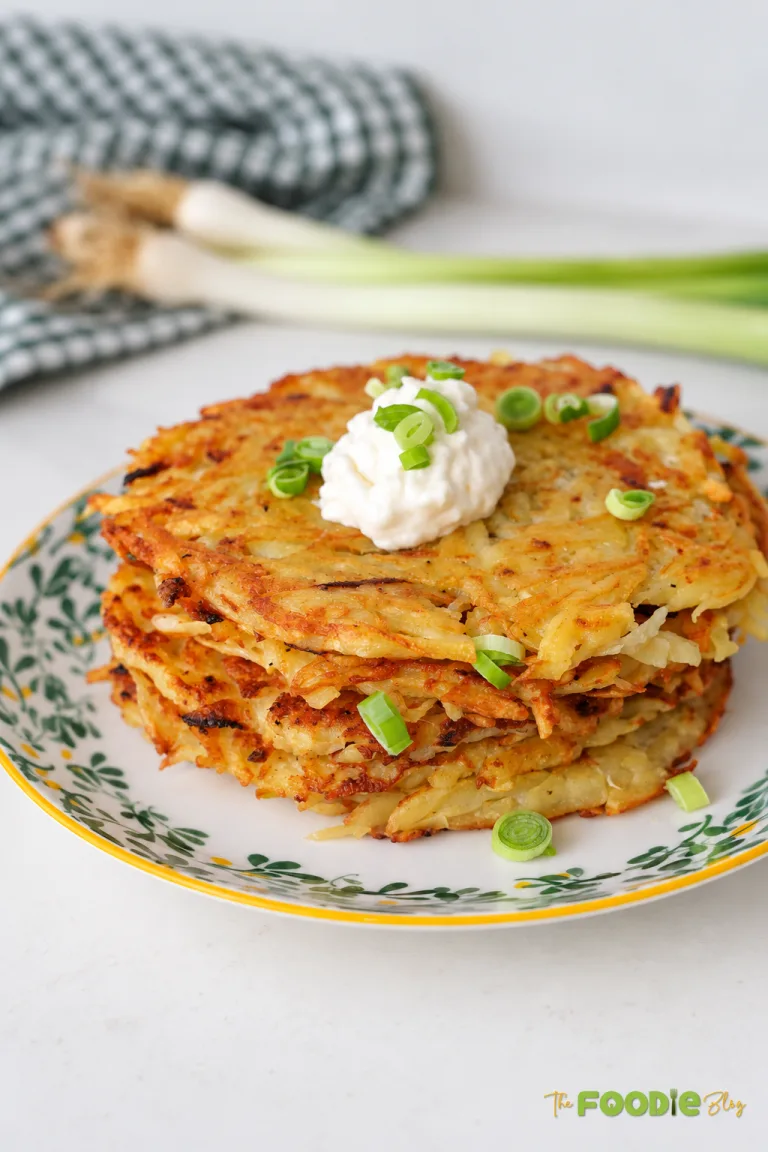
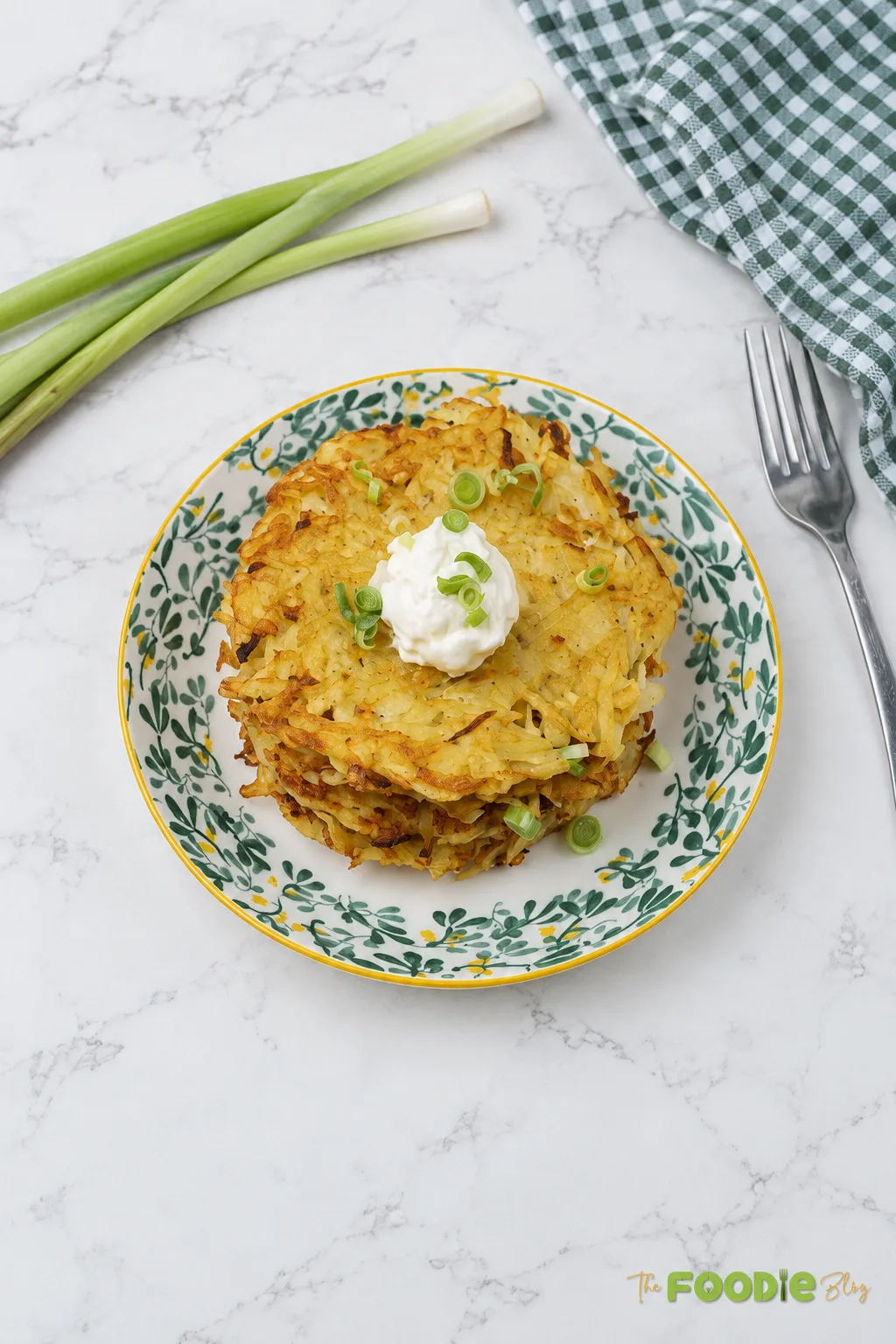
These German potato pancakes, also known as Kartoffelpuffer, are made with freshly grated potatoes, onion, egg, and flour, then pan-fried until beautifully golden and crispy. They’re crunchy around the edges, tender in the middle, and delicious served warm with sour cream.
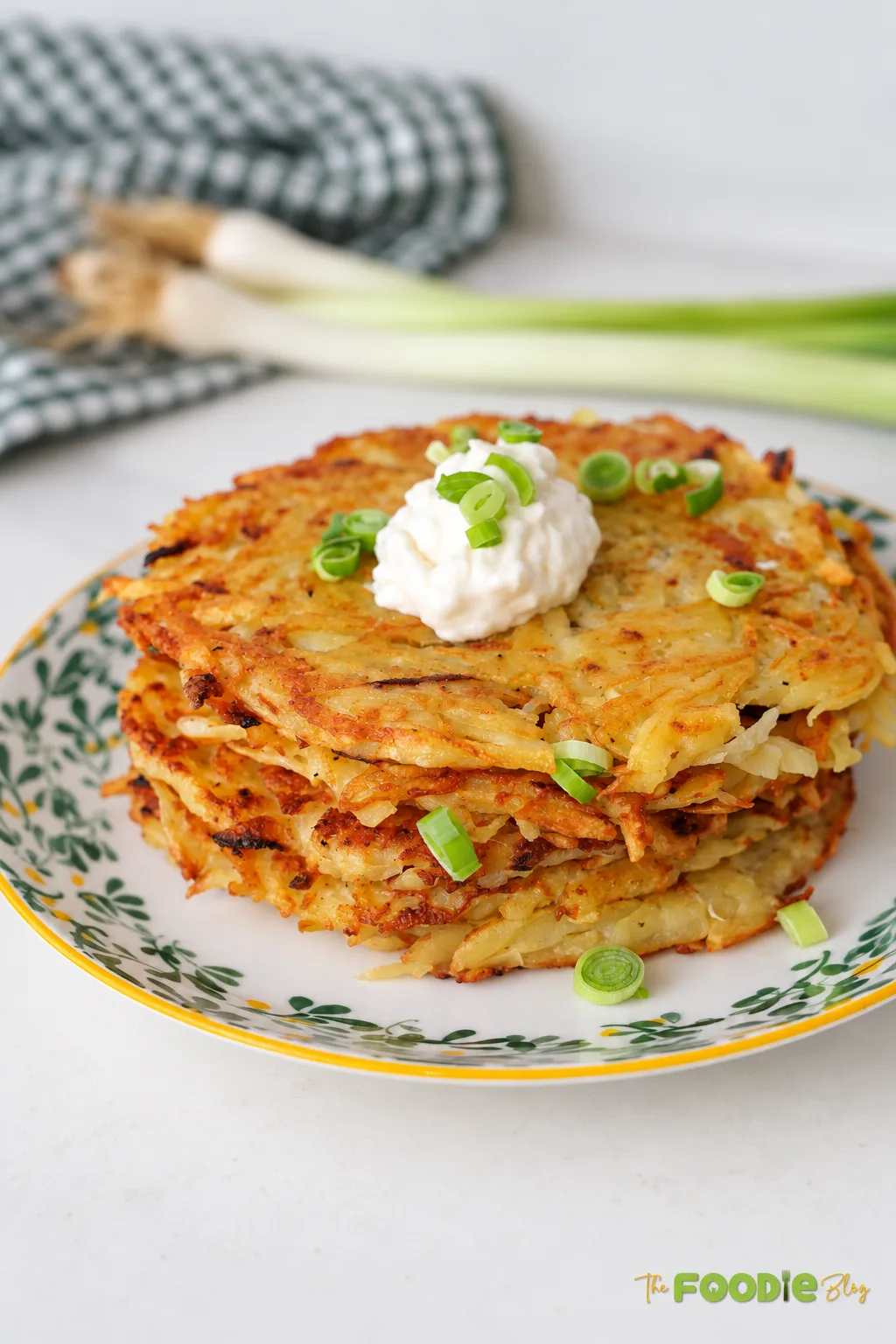
There’s something about a stack of golden potato pancakes that makes me want to grab a fork before they even reach the table. I love those crispy, lacy edges and the soft potato center, especially with a spoonful of cool sour cream and a few sliced green onions.
The ingredients couldn’t be simpler, but the technique makes all the difference. Freshly grated potatoes create that wonderful texture, while a little flour and egg help everything hold together in the pan.
If you enjoy crispy potato recipes, try my Crispy Smashed Potatoes or these creamy Cheesy Scalloped Potatoes. For a fresh vegetable pairing, my Crispy Roasted Broccoli is a lovely option, and a glass of Homemade Lemonade balances the richness of the fried potatoes.
What Makes German Potato Pancakes Crispy?
The secret to crispy German potato pancakes starts with the grated potatoes.
Potatoes naturally contain moisture, and too much of it can make the mixture watery and prevent the pancakes from browning properly. Removing excess liquid helps the shredded potatoes fry instead of steam.
The flour and egg have another important job. They bind the shredded potatoes and onion together, making it easier to shape and flip each pancake without breaking it.
Finally, spreading the mixture into relatively thin pancakes creates more surface area for browning. That’s how you get those golden, slightly lacy edges with a soft center.
Table of contents
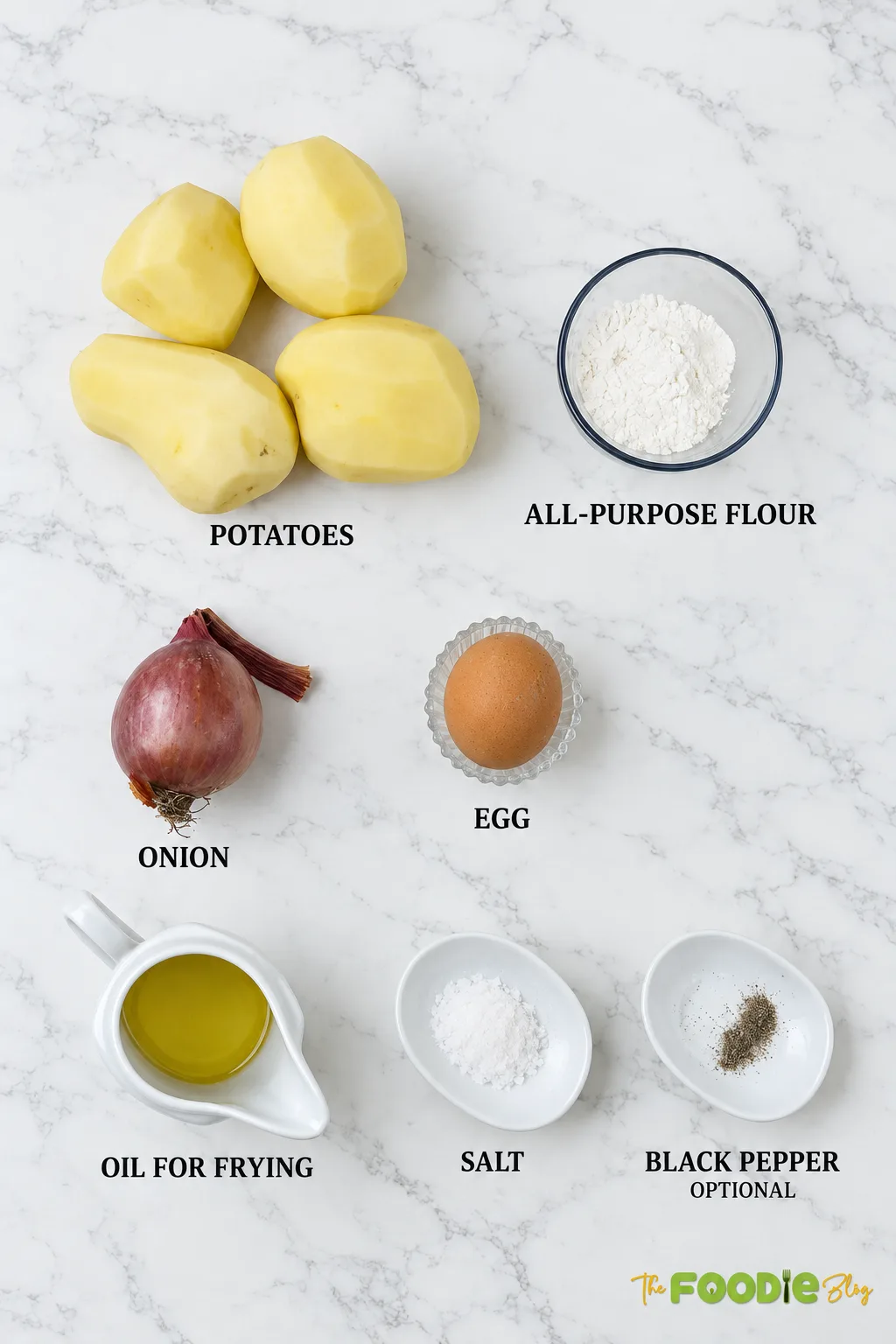
Ingredients for German Potato Pancakes
Let’s Make German Potato Pancakes
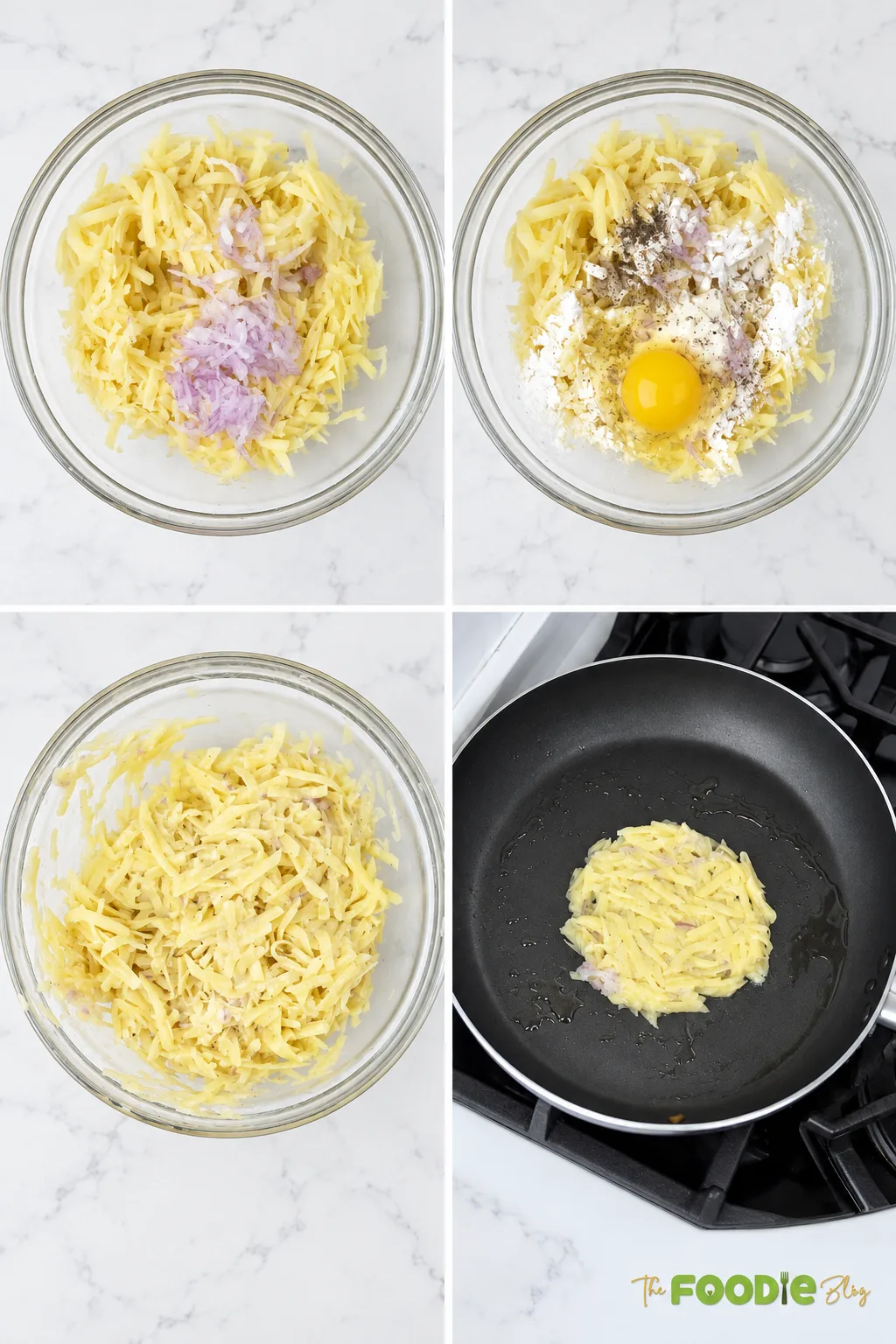
- Grate the Potatoes and Onion
Peel the potatoes and grate them using the large holes of a box grater.
Peel and finely grate the onion, then add it to the shredded potatoes in a large mixing bowl.
If the potatoes release a lot of liquid, squeeze out the excess moisture before adding the remaining ingredients.
- Add the Egg and Flour
Add the medium egg, all-purpose flour, salt, and optional black pepper to the bowl.
The egg helps bind the potatoes, while the flour absorbs some moisture and holds the mixture together.
- Mix the Potato Mixture
Stir everything until the grated potatoes and onion are evenly coated.
The mixture should hold together when pressed with a spoon without having excess liquid pooling at the bottom of the bowl.
- Shape and Fry the Pancakes
Heat oil in a large skillet over medium to medium-high heat.
Spoon a portion of the potato mixture into the pan and gently flatten it into a thin, round pancake.
Avoid making the pancakes too thick, as the outside may brown before the middle becomes tender.
- Cook Until Golden and Crispy
Fry the pancakes until the underside develops a golden-brown crust, then carefully flip them with a spatula.
Continue cooking until both sides are golden and the potatoes in the center are fully cooked.
Transfer the finished pancakes to a paper towel-lined plate or wire rack to remove excess oil.
- Serve Warm
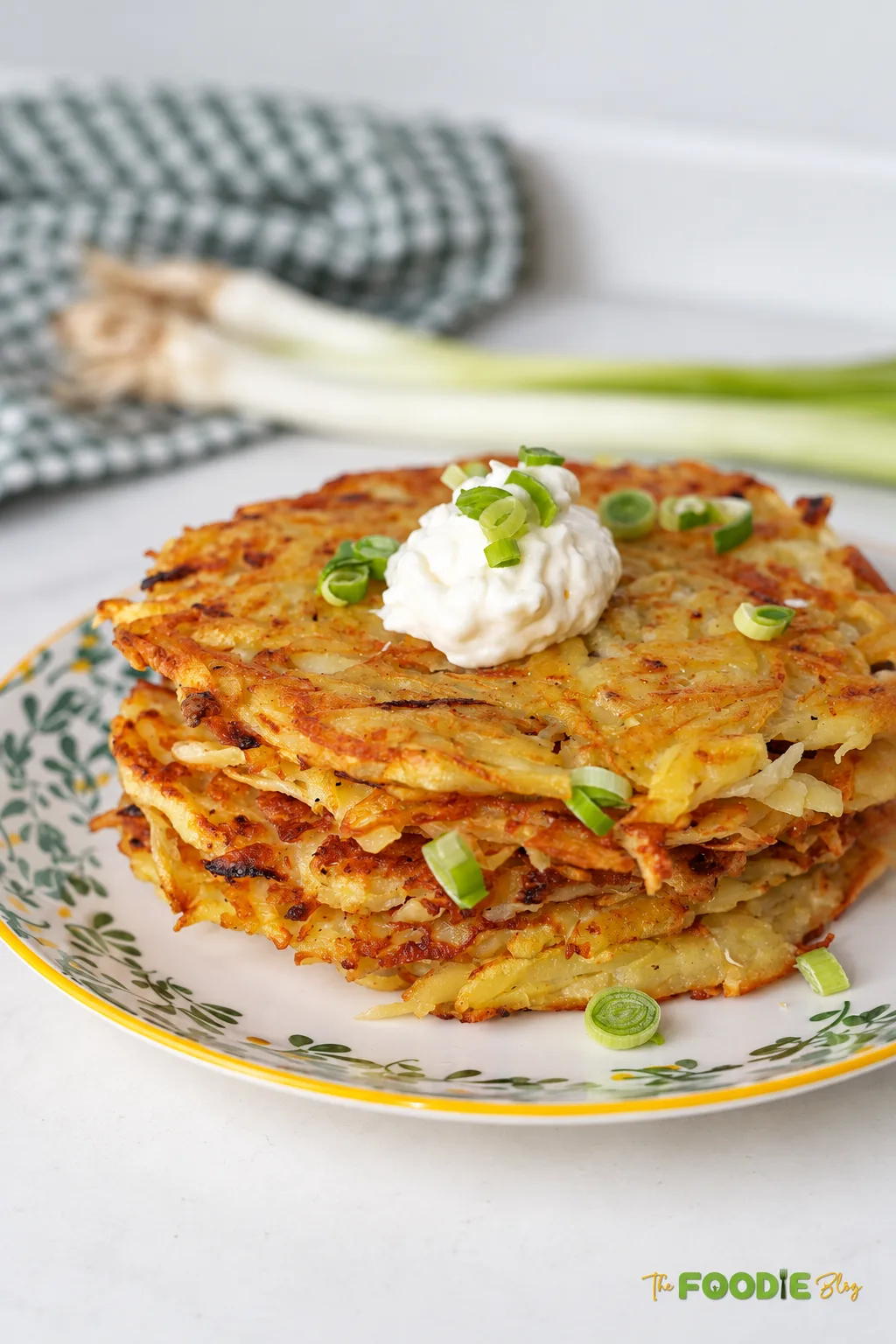
Arrange the German potato pancakes on a serving plate while they’re still warm and crispy.
Top with a spoonful of sour cream and sliced green onions if desired, just like in the photographs.
The combination of warm, crispy potatoes and cool sour cream is especially delicious.
How to Keep German Potato Pancakes Crispy
The most important step is removing excess moisture from the grated potatoes.
If your potato mixture contains too much water, it will be harder to get a golden crust. After grating, press or squeeze the potatoes to release as much excess liquid as possible.
Another important detail is the thickness. Thin pancakes develop more crispy edges than thick ones, and they cook more evenly.
Make sure the oil is hot enough before adding the mixture. If the oil is too cool, the potatoes may absorb more oil and become greasy.
Removing excess moisture is one of the most important steps for crispy potato pancakes. The Idaho Potato Commission also recommends squeezing the water from freshly grated potatoes before frying to help achieve a golden, crisp texture.
Finally, serve them as soon as possible after frying. Potato pancakes lose some of their crispness as they sit, especially when stacked while hot.
Common Mistakes to Avoid
- Not removing excess potato moisture: Wet potatoes can produce soft, soggy pancakes instead of crisp ones.
- Grating the potatoes too far in advance: Raw grated potatoes can darken and release more moisture as they sit.
- Adding too much flour: Excess flour can create dense pancakes and overpower the potato texture.
- Making the pancakes too thick: Thick pancakes can brown outside before cooking through in the center.
- Using oil that isn’t hot enough: The mixture may absorb excess oil rather than developing a golden crust.
- Flipping too early: Let the first side develop a firm crust before turning.
- Overcrowding the pan: Frying too many pancakes at once can lower the oil temperature and make them less crispy.
- Stacking immediately after frying: Trapped steam can soften the golden edges.
What to Serve with German Potato Pancakes
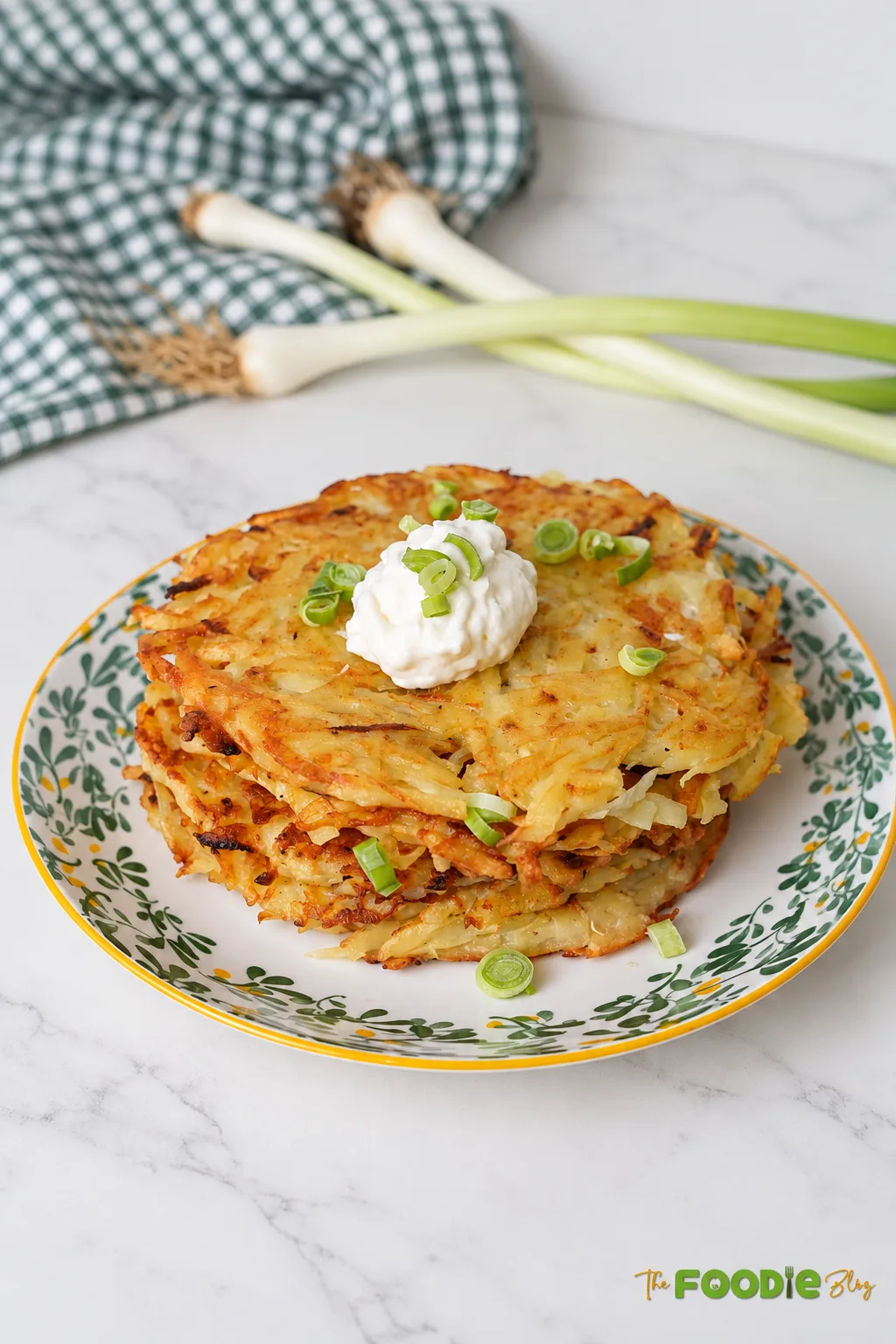
These crispy potato pancakes are delicious on their own, but they’re even better with a simple topping or side.
- Sour cream: A cool, creamy contrast to the crispy potatoes.
- Applesauce: A classic sweet pairing for German potato pancakes.
- Green onions or chives: Add freshness and a mild onion flavor.
- Smoked salmon: Makes the pancakes feel more substantial for brunch.
- Fried eggs: Turn them into a satisfying savory breakfast.
- Fresh green salad: Adds a light contrast to the richness of the fried potatoes.
I especially enjoy these with sour cream because it balances the crunchy, golden exterior without hiding the potato flavor.
FAQs
German potato pancakes are commonly known as Kartoffelpuffer. Depending on the region, they may also be called Reibekuchen or Reiberdatschi.
Both are made with grated potatoes and fried until crispy. The ingredients and cooking techniques overlap considerably, but the dishes have different cultural traditions and customary serving styles.
Starchy potatoes such as Russets are a good option because they can produce crispy edges. Yukon Gold potatoes also work for a slightly creamier texture.
The grated potatoes may contain too much moisture, the pan may not be hot enough, or the pancakes may be overcrowded during cooking.
Peeling is traditional for many Kartoffelpuffer recipes and matches the preparation shown here. Leaving the skin on is possible with thin-skinned, well-scrubbed potatoes, but it changes the texture.
You might also like
More Recipes To Try
Swipe to see all 5 recipes
German Potato Pancakes (Kartoffelpuffer)
Ingredients
Equipment
Method
- Peel and grate the potatoes using the large holes of a box grater. Peel and finely grate the onion.
- Place the grated potatoes in a clean kitchen towel and squeeze out excess liquid. Transfer to a large mixing bowl and add the grated onion.
- Add the egg, flour, salt, and optional black pepper. Stir until the potatoes are evenly coated and the mixture holds together.
- Add enough oil to lightly cover the bottom of a large nonstick skillet. Heat over medium to medium-high heat.
- Scoop a portion of the potato mixture into the skillet and flatten it into a thin, round pancake using the back of a spoon.
- Cook until the bottom is golden brown and crisp, then carefully flip. Continue cooking until the second side is golden and the potatoes are tender in the center.
- Transfer the pancakes to a paper towel-lined plate or wire rack to remove excess oil. Repeat with the remaining mixture, adding oil as needed.
- Serve the German potato pancakes warm with sour cream, chopped green onions, or applesauce, if desired.
Nutrition
Video
Tried this recipe?
Let us know how it was!Estimated reading time: 7 minutes