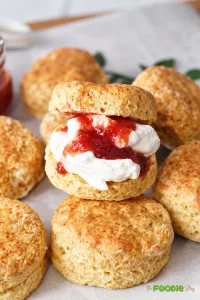
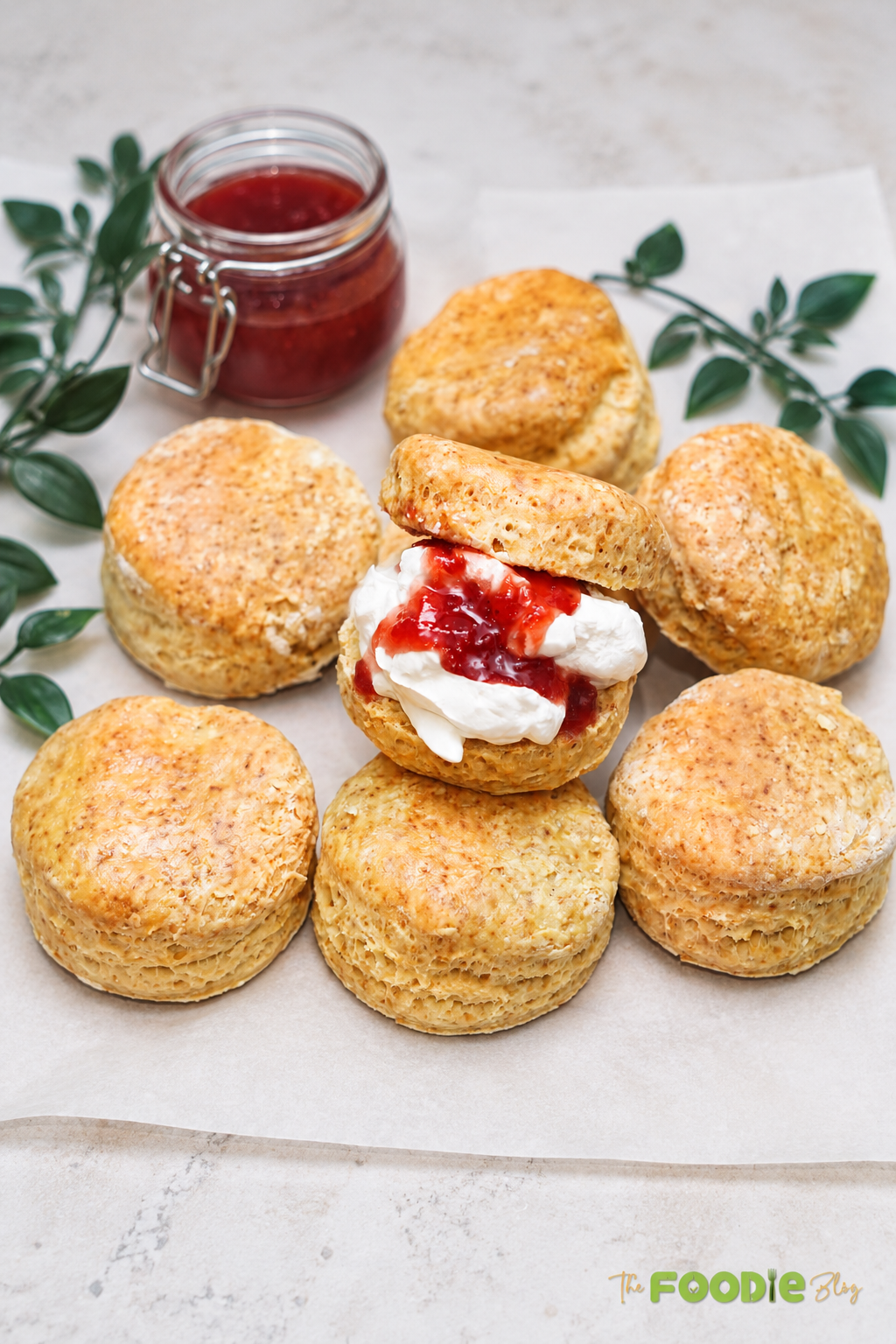
These English scones are soft and tender inside with lightly golden tops, made from a simple dough of self-rising flour, cold butter, and milk. Serve them warm with strawberry jam and freshly whipped cream for an easy afternoon tea or brunch treat.
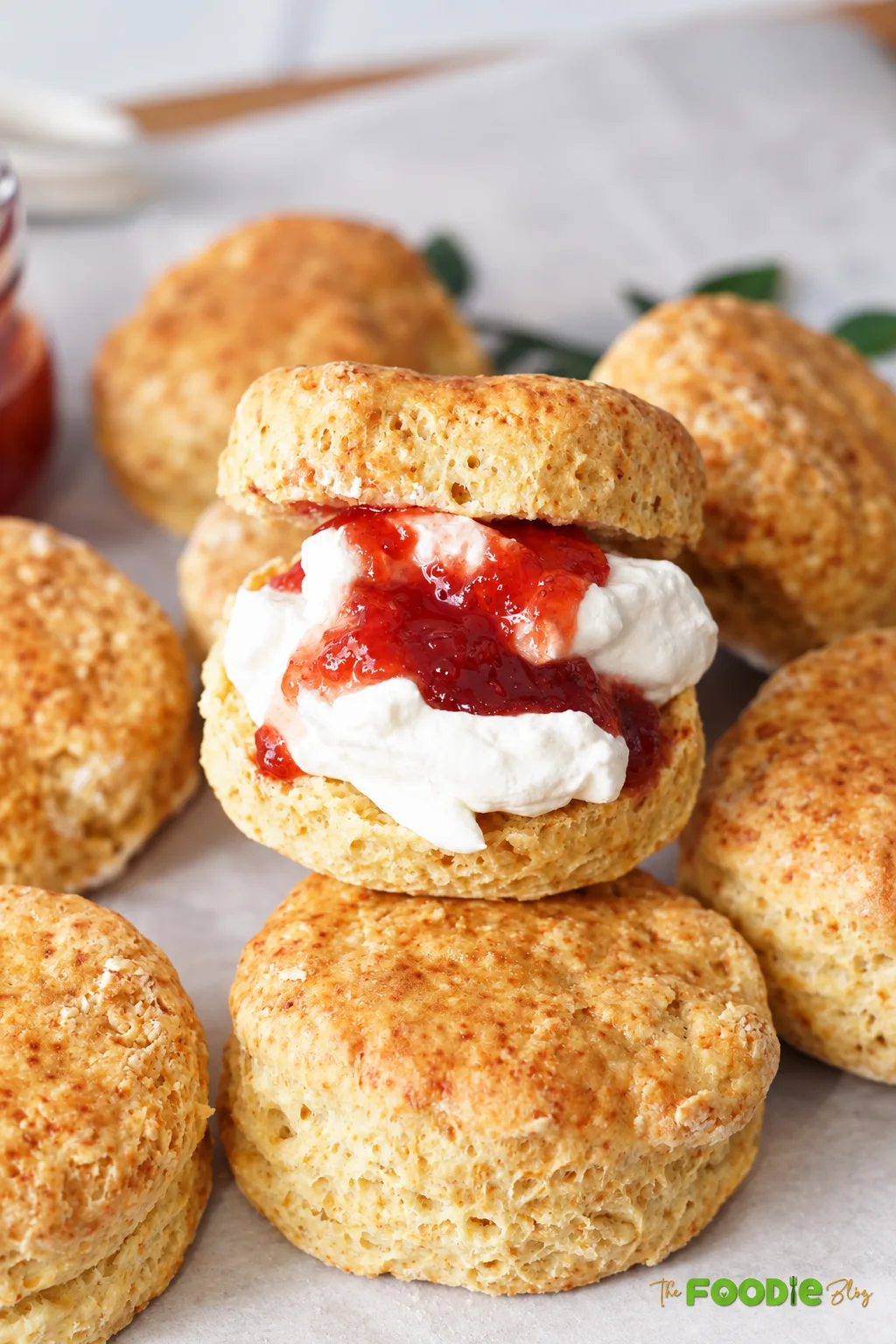
The dough contains no eggs or added sugar, so the scones themselves stay simple and lightly savory before you add the sweet toppings. Serve them alongside my High-Protein Greek Yogurt Bowl, try these Keto Caramel Apple Scones for another scone variation, add Strawberry Jam Thumbprint Cookies to an afternoon tea spread, or pair them with Soft Homemade Brioche Bread for a bakery-style brunch.
What Are English Scones
English scones are small, lightly golden baked pastries traditionally served split open with jam and cream.
They are generally less sweet than many American-style scones. This version has no sugar or eggs in the dough and gets its rise from self-rising flour.
The dough is handled lightly, cut into rounds, brushed with milk, and baked hot until the tops turn golden.
Table of contents
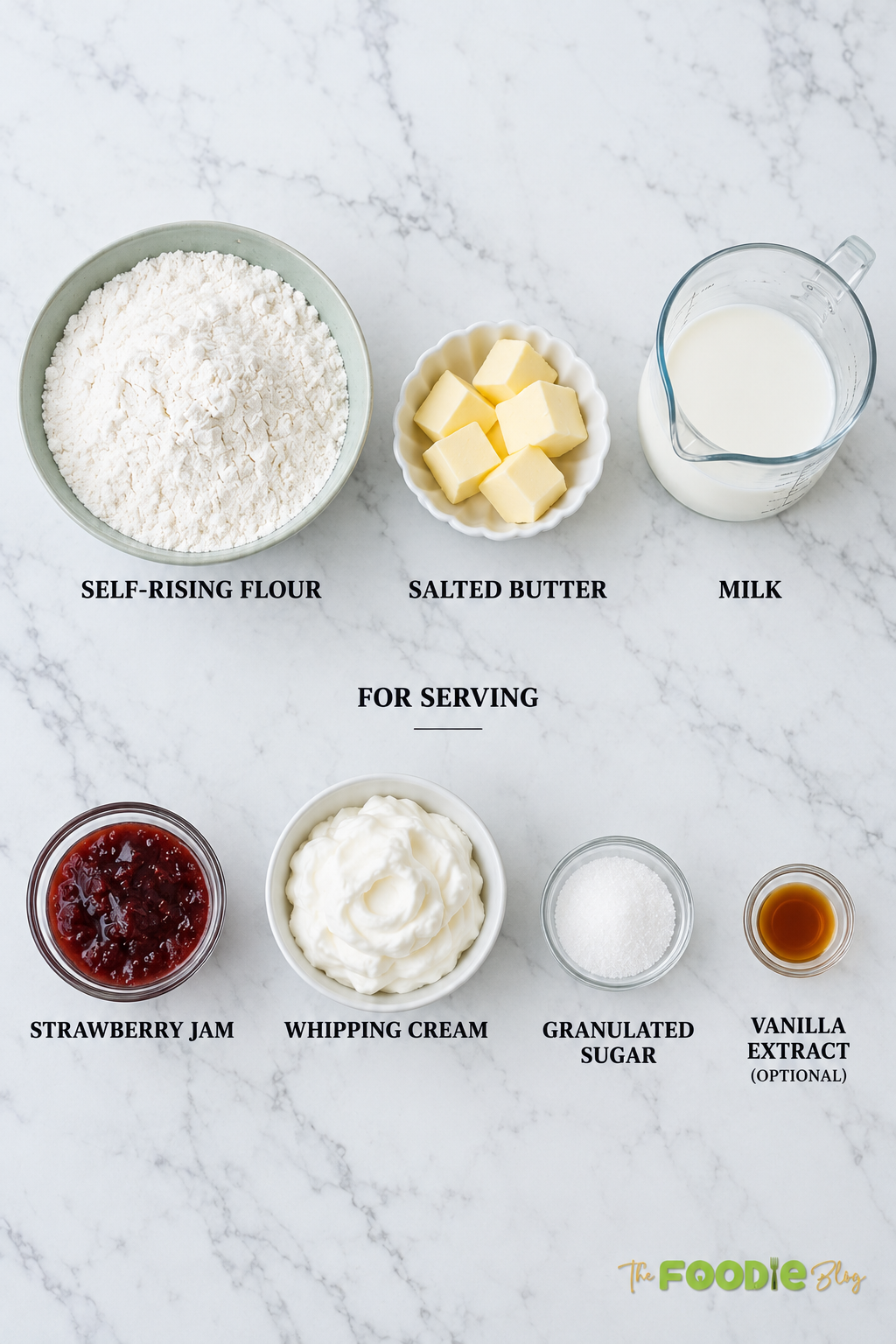
Ingredients
Let’s Make English Scones
Prepare the Dough
Preheat the oven to 390°F (200°C), or 350°F (180°C) for fan ovens. Line a baking sheet with parchment paper.
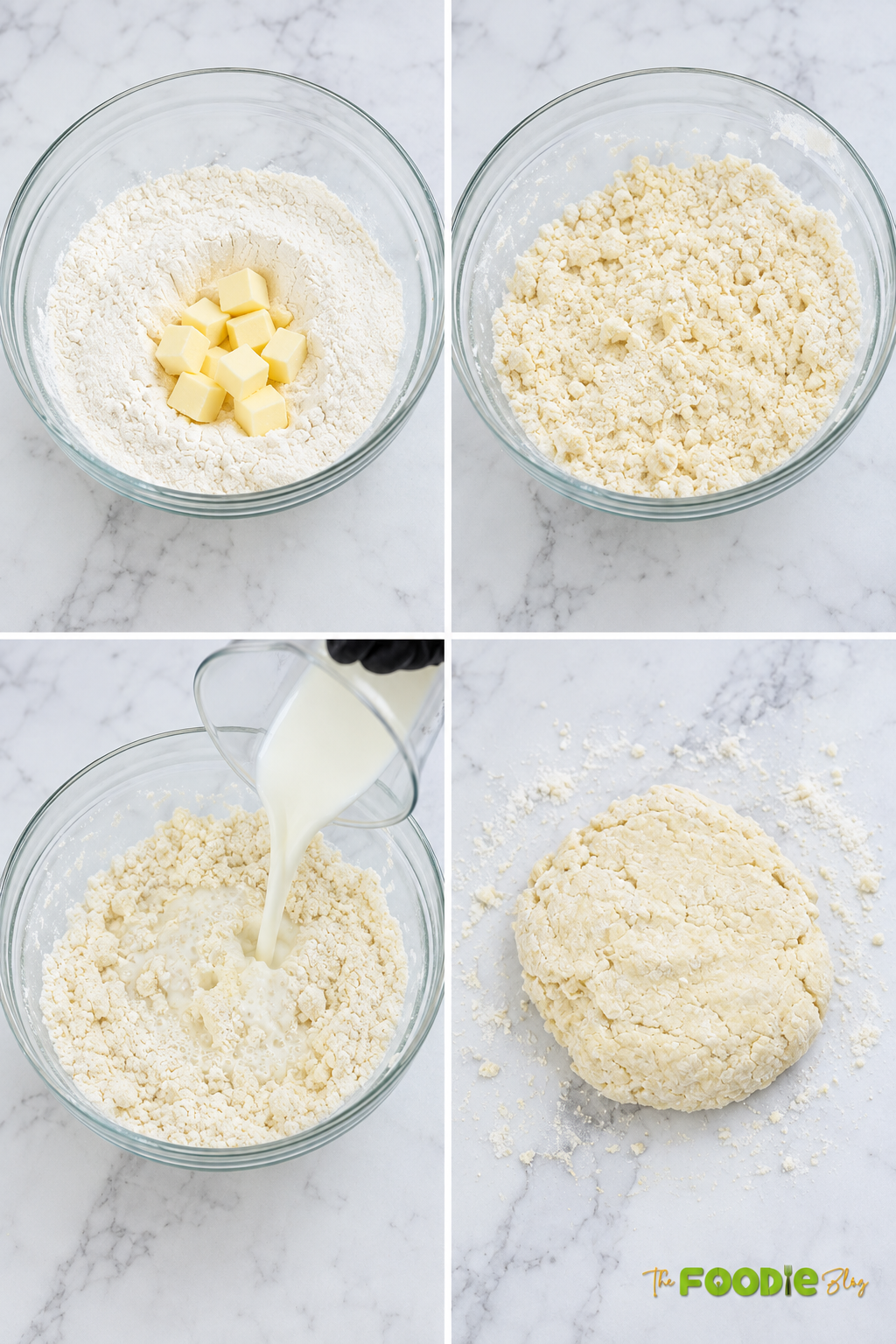
Add the self-rising flour to a large bowl. Add the cold butter and rub it into the flour with your fingertips until the mixture looks like fine breadcrumbs.
Pour the cold milk over the flour mixture. Stir gently with a butter knife, spatula, or wooden spoon until a rough dough forms.
Do not try to make the dough perfectly smooth at this stage. Mix only until it starts to come together, then finish it gently on the counter. Keeping the dough cold and handling it lightly helps the scones stay tender instead of tough. For more detail, see this guide to avoiding overmixing.
Shape the Scones
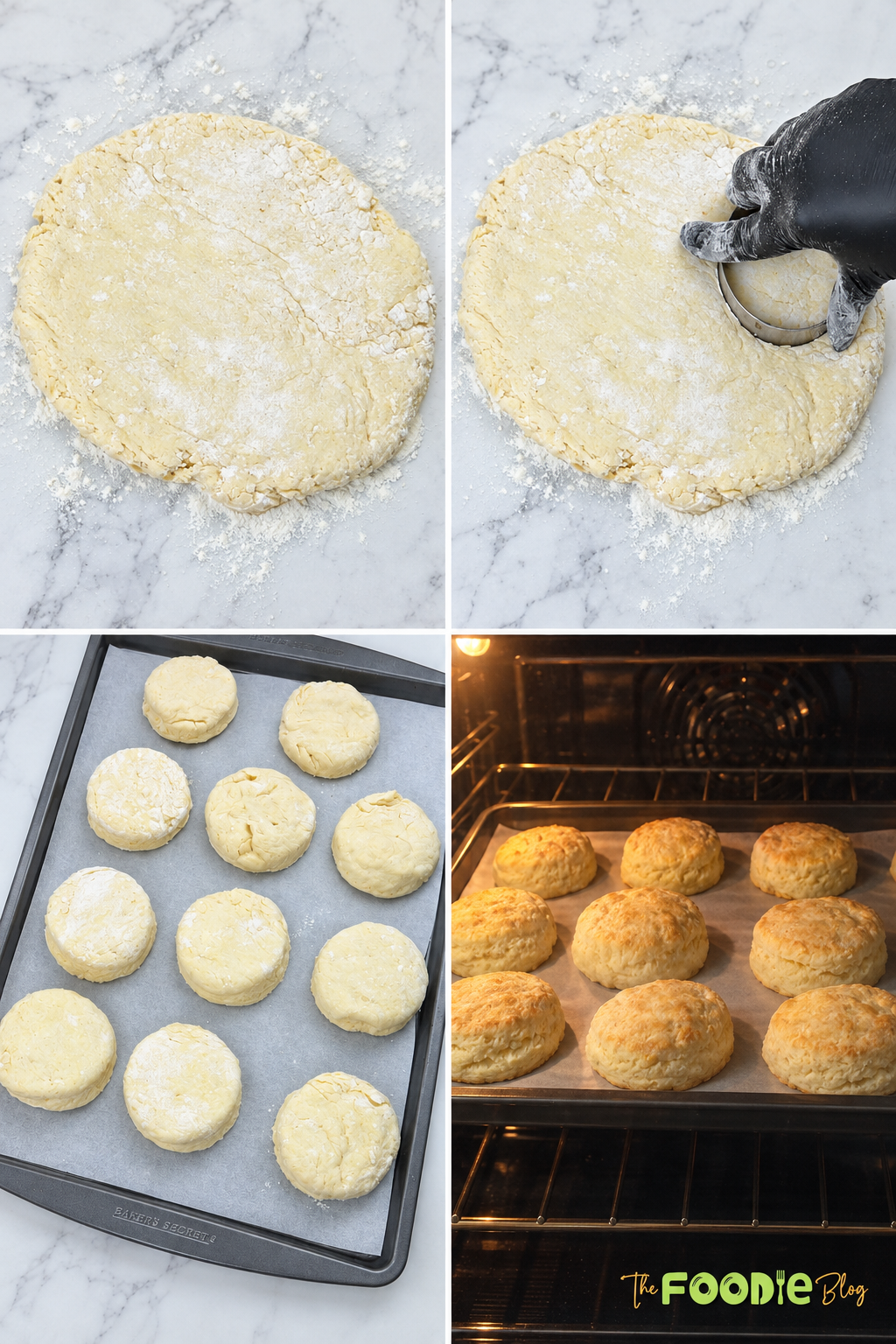
Turn the dough onto a lightly floured surface. Gently knead it about 8 to 10 times, only until it comes together.
Pat the dough into a round disc about ¾ inch thick. Lightly flour a 2-inch round cutter.
Press the cutter straight down into the dough, then lift it straight up. Do not twist the cutter, because twisting can prevent a clean cut along the edges. See King Arthur Baking’s guide to getting tall, even scones and biscuits for more helpful tips.
Bake
Place the cut scones on the prepared baking sheet. Brush the tops lightly with milk.
Bake for 10 to 12 minutes, until the tops are lightly golden and the scones sound hollow when tapped underneath.
Whip the Cream
Add the whipping cream, sugar, and vanilla to a cold bowl.
Beat until soft peaks form. Do not overmix or the cream may become grainy.
Serve
Let the scones cool for 10 to 15 minutes until warm.
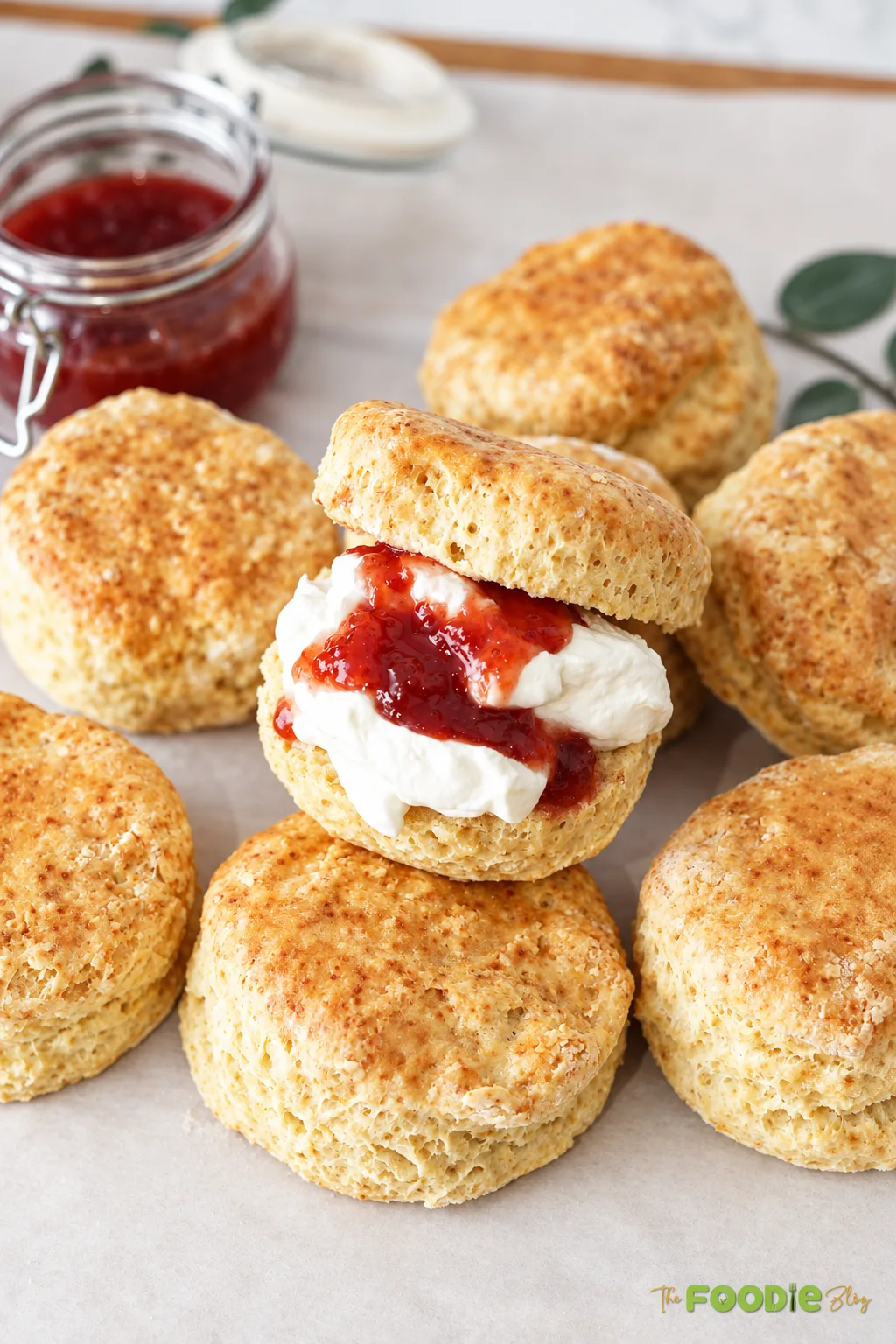
Split each scone with your hands, add whipped cream, then finish with strawberry jam.
How to Get Soft, Fluffy English Scones
The biggest rule is keep everything cold and don’t overwork the dough.
Cold butter stays in small pieces throughout the flour mixture rather than melting before baking.
Once the milk is added, mix only until the dough comes together. Your tested method uses just 8–10 gentle kneads.
Keep the dough about 3/4 inch thick and press the cutter straight down so you don’t compress or seal the sides.
Then bake immediately rather than leaving the shaped scones sitting around.
recipe for big fluffy scones is also a strong supporting keyword in your SEMrush data at 480 volume / KD16.
Common Mistakes to Avoid
Using warm butter: Keep it cold until it goes into the flour.
Using warm milk: Cold milk helps keep the dough cool.
Overmixing the dough: Stop once it starts holding together.
Kneading too much: Your tested method only uses 8–10 gentle kneads.
Patting the dough too thin: Keep it about 3/4 inch thick.
Twisting the cutter: Push straight down and lift straight up.
Brushing milk down the sides: Brush only the tops.
Waiting too long to bake: Put the scones in the oven soon after cutting.
What to Serve With English Scones
English scones are especially good with:
- Strawberry jam
- Whipped cream
- Clotted cream
- Butter
- Lemon curd
- Honey
- Fresh strawberries
- Raspberries
- English breakfast tea
- Coffee
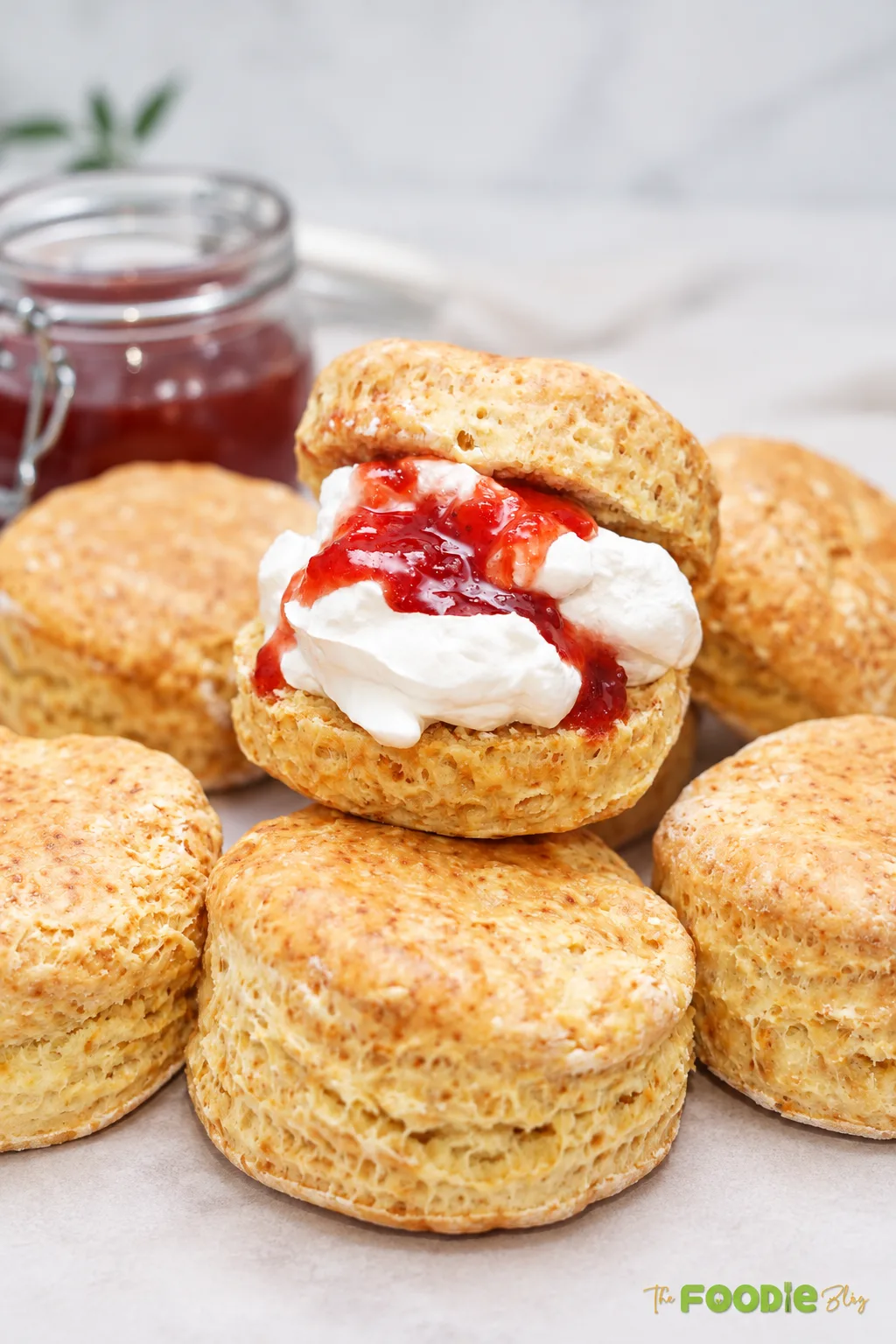
For your photographed version, I’d keep strawberry jam + whipped cream as the main serving suggestion.
FAQs
Yes, but you need to make a self-rising flour substitute with baking powder and salt. Self-rising flour contains both ingredients already.
They were probably overmixed or over-kneaded. Handle the dough lightly and stop mixing as soon as it comes together.
Twisting the cutter can seal the edges and make the scones rise sideways. Press straight down and lift straight up.
It is better to bake the dough immediately. You can freeze unbaked rounds, then bake them directly from frozen with a few extra minutes.
No. Pulling them apart gently with your hands keeps the soft interior texture.
They are similar, but these are classic English-style scones meant to be served with jam and cream.
The secret is using cold butter, cold milk, and handling the dough gently. Overmixing or kneading too much can make scones tough instead of soft and fluffy.
Yes. This English scone recipe is made without eggs. Self-rising flour, cold butter, and milk create soft, fluffy scones without needing eggs in the dough.
More Scone and Breakfast Recipes You’ll Love
English Scones
Ingredients
Equipment
Method
- Preheat the oven to 390°F (200°C), or 350°F (180°C) for fan ovens. Line a baking sheet with parchment paper.
- Add the self-rising flour to a large bowl. Rub in the cold butter using fingertips until the mixture resembles fine breadcrumbs.
- Pour the cold milk over the flour mixture. Stir gently until a rough dough forms.
- Turn the dough onto a lightly floured surface. Knead lightly about 8 to 10 times, just until smooth.
- Pat the dough into a disc about ¾ inch thick.
- Flour a 2-inch round cutter. Cut straight down into the dough without twisting.
- Transfer the scones to the baking sheet. Brush the tops lightly with milk.
- Bake for 10 to 12 minutes, until lightly golden.
- Beat the whipping cream, sugar, and vanilla until soft peaks form.
- Let the scones cool until warm. Split them open and serve with whipped cream and strawberry jam.
Nutrition
Video
Notes
- Use cold butter and milk for the best texture.
- Do not over-knead the dough.
- Do not twist the cutter when cutting rounds.
- Use self-rising flour, not plain flour.
- Plain scones can be frozen before adding jam and cream.
- Nutrition excludes jam and whipped cream because serving amounts vary.
Tried this recipe?
Let us know how it was!Estimated reading time: 7 minutes