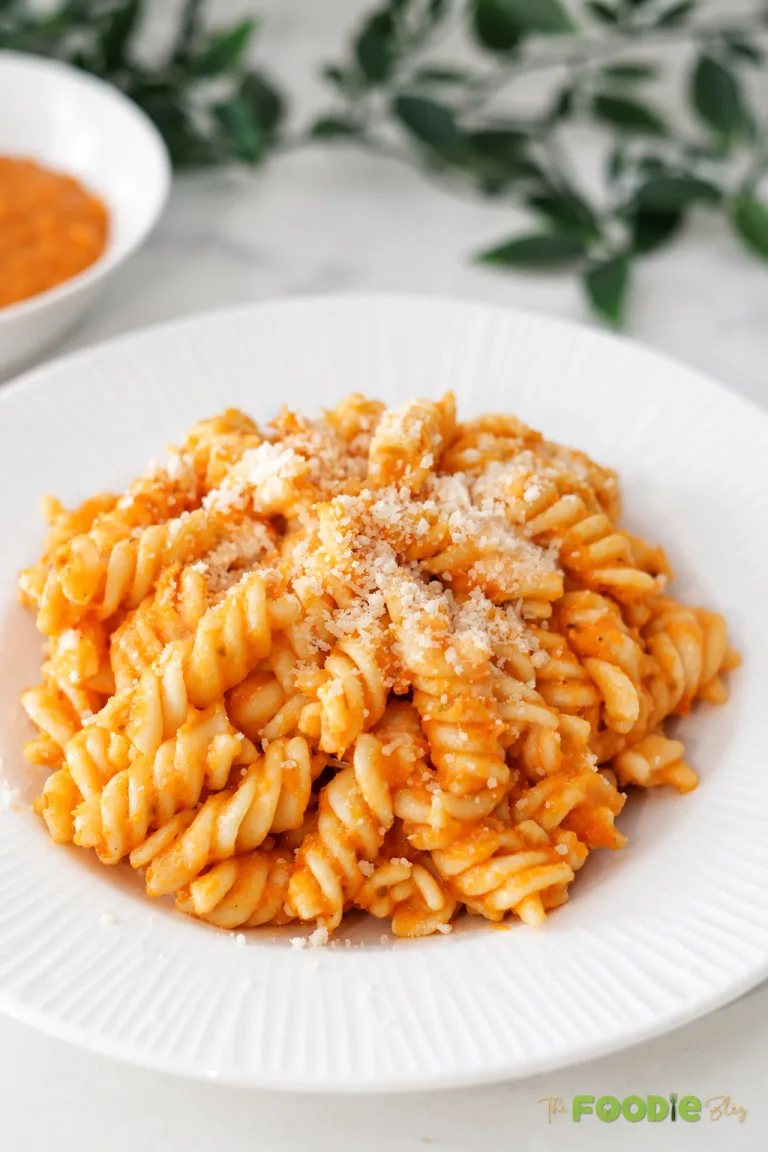
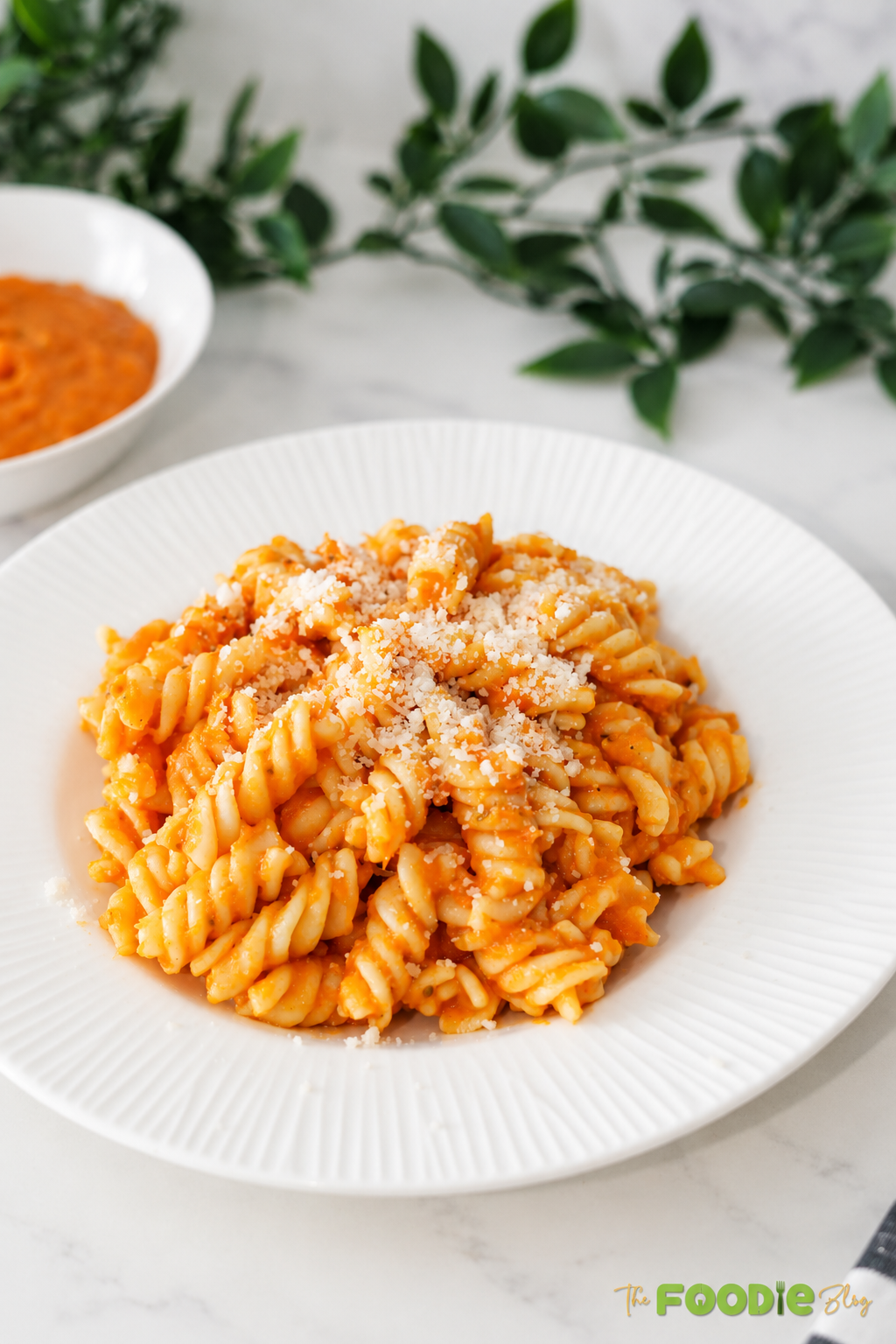
This roasted butternut squash pasta is made with tender roasted squash, juicy tomatoes, sweet onion, olive oil, and thyme blended into a smooth, creamy sauce. Tossed with fusilli pasta, it’s a comforting, easy dinner that doesn’t need heavy cream or complicated ingredients.
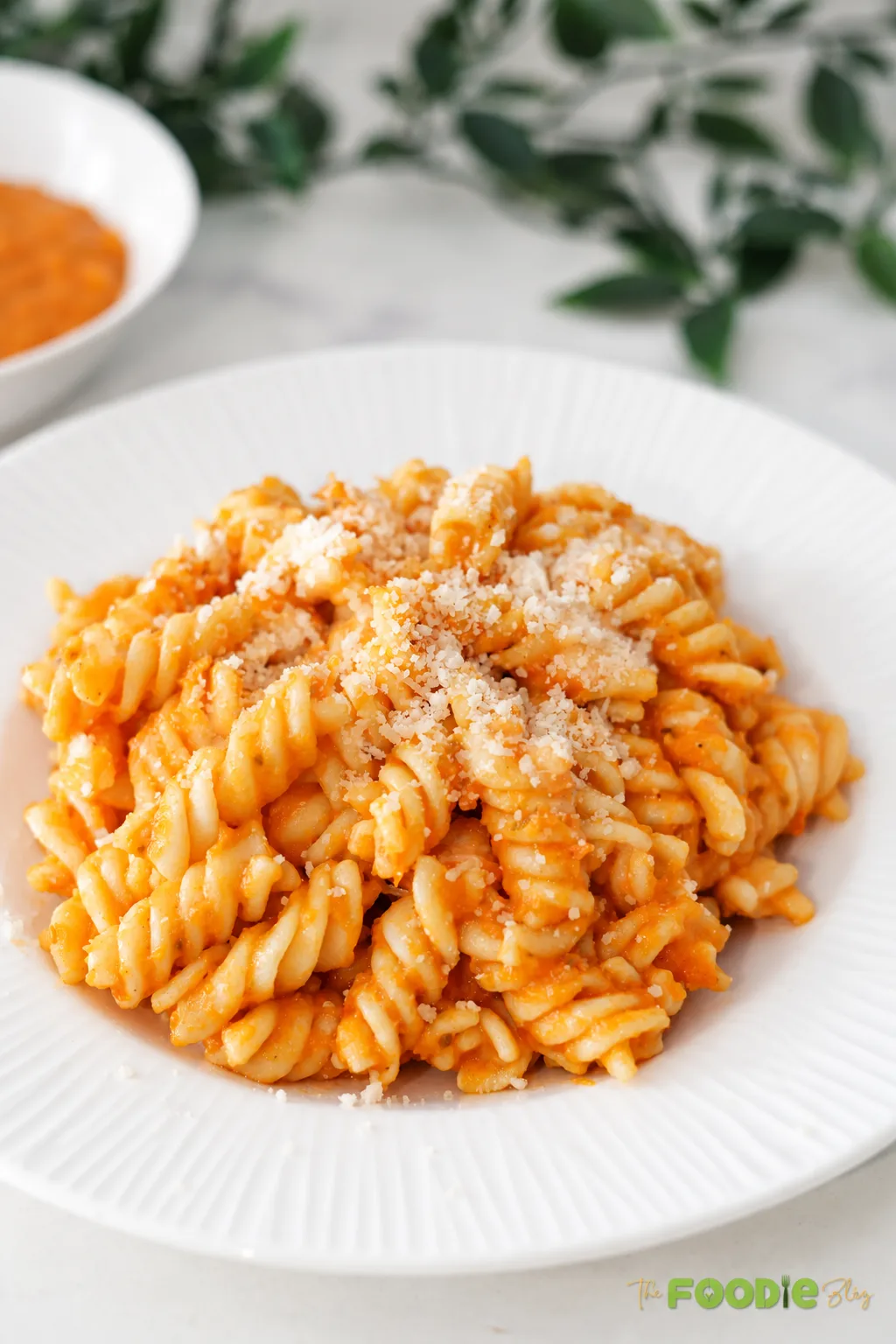
There’s something I love about roasting vegetables and turning them into a pasta sauce. The vegetables become soft and flavorful in the oven, and after a quick blend, they make a sauce that looks almost creamy even though there’s no cream in it.
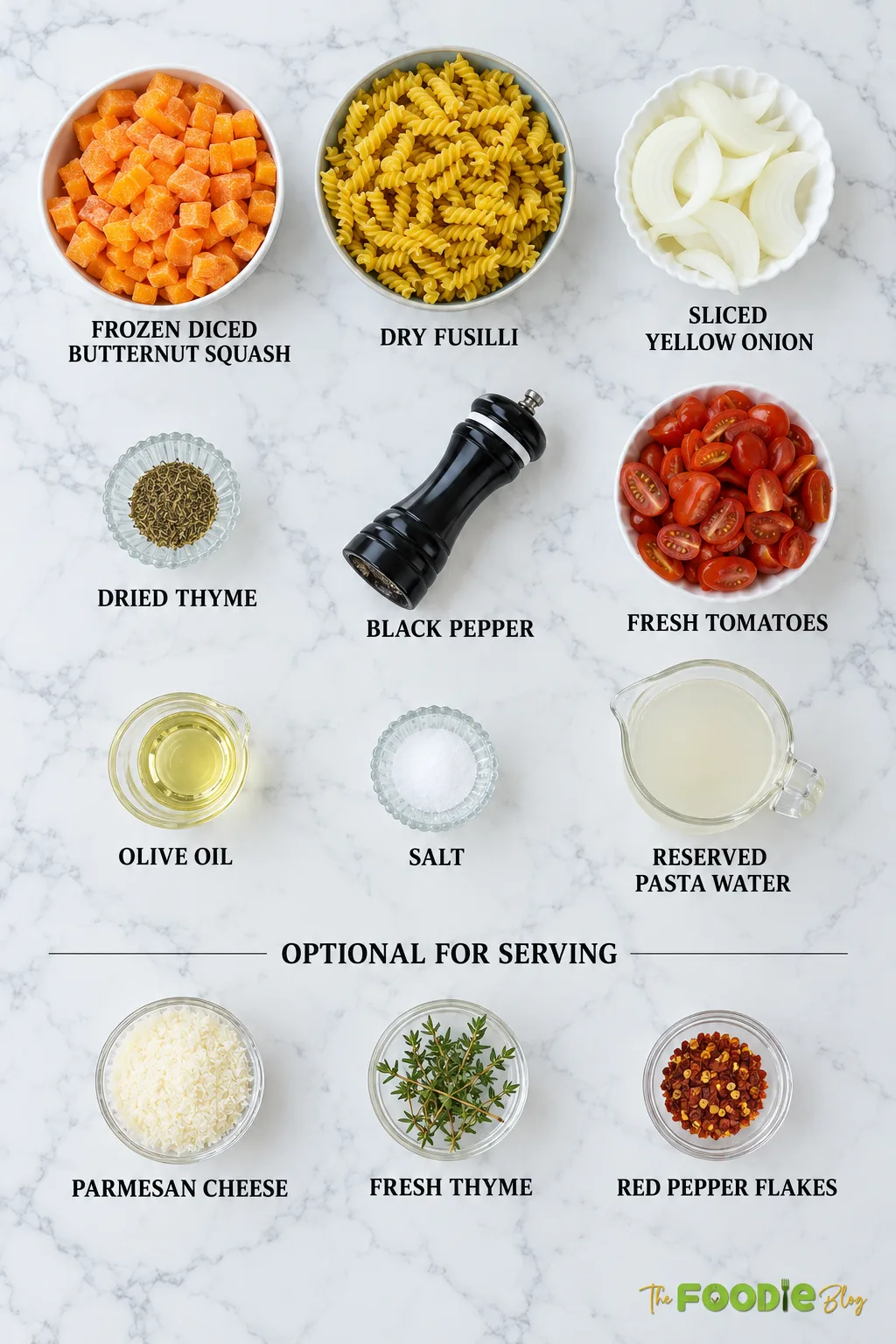
For this butternut squash pasta, I used frozen diced squash, fresh tomatoes, onion, olive oil, and dried thyme. Roasting everything together gives the sauce its warm orange color and a slightly sweet, savory flavor.
I especially like using fusilli because the little spirals catch the sauce beautifully. When I finish the pasta with a sprinkling of grated cheese, it makes such a cozy dinner.
If you enjoy comforting pasta dinners, try my Creamy Mushroom Pasta or Penne alla Vodka. Serve this pasta alongside my Crispy Roasted Broccoli and enjoy a glass of Homemade Lemonade for a refreshing pairing.
Table of contents
Ingredients for Butternut Squash Pasta
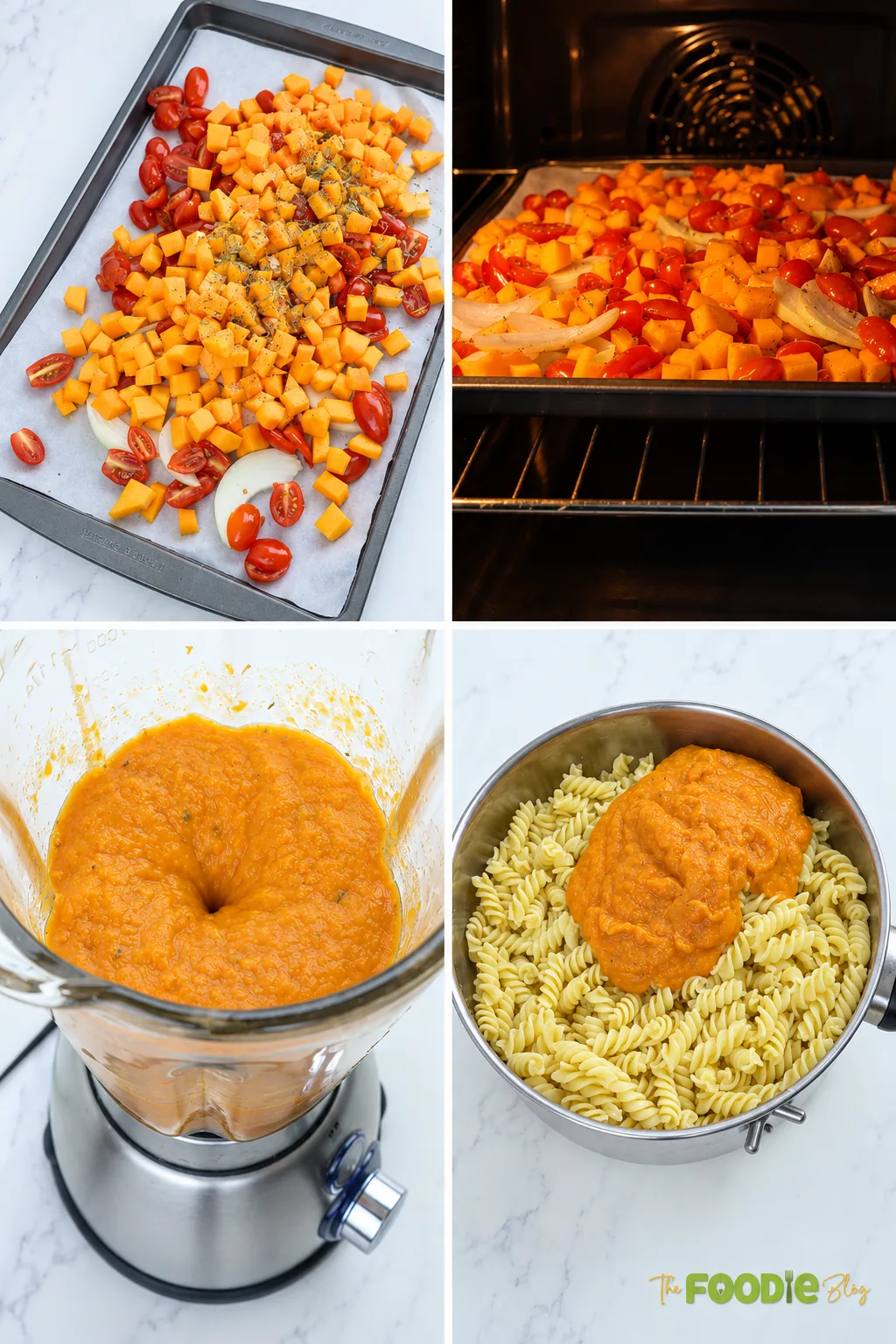
How to Make Roasted Butternut Squash Pasta
- Preheat the Oven
Preheat your oven to 400°F (200°C).
Line a large baking sheet with parchment paper.
This temperature is a practical roasting recommendation; adjust as needed based on how quickly your vegetables soften.
- Prepare the Vegetables
Spread the diced butternut squash, chopped tomatoes, and sliced yellow onion over the baking sheet.
Try to arrange everything in an even layer.
Avoid piling the squash into a deep mound, because crowded vegetables may steam instead of roasting.
- Add the Seasonings
Drizzle the vegetables with 2 tablespoons of olive oil.
Sprinkle with the salt, black pepper, and dried thyme.
Toss gently until everything is evenly coated.
- Roast Until Tender
Transfer the baking sheet to the oven.
Roast for approximately 25–35 minutes, checking and turning the vegetables as needed.
The squash should be tender enough to blend smoothly, the tomatoes should be soft, and the onions should look lightly golden.
Because frozen squash contains additional moisture, roasting times can vary.
- Cook the Pasta
While the vegetables are roasting, bring a large pot of water to a boil.
Add the fusilli and cook according to the package instructions until al dente.
Before draining, reserve 1/3 cup of the starchy pasta cooking water.
Drain the pasta and return it to the pot.
- Blend the Roasted Vegetables
Transfer the roasted squash, tomatoes, and onions to a heat-safe blender.
Blend carefully until you have a smooth, thick orange sauce.
If the vegetables are very hot, follow your blender’s hot-liquid instructions and blend in batches if necessary.
The squash should create a creamy texture without adding milk or heavy cream.
- Combine the Pasta and Sauce
Pour the blended butternut squash sauce over the cooked fusilli.
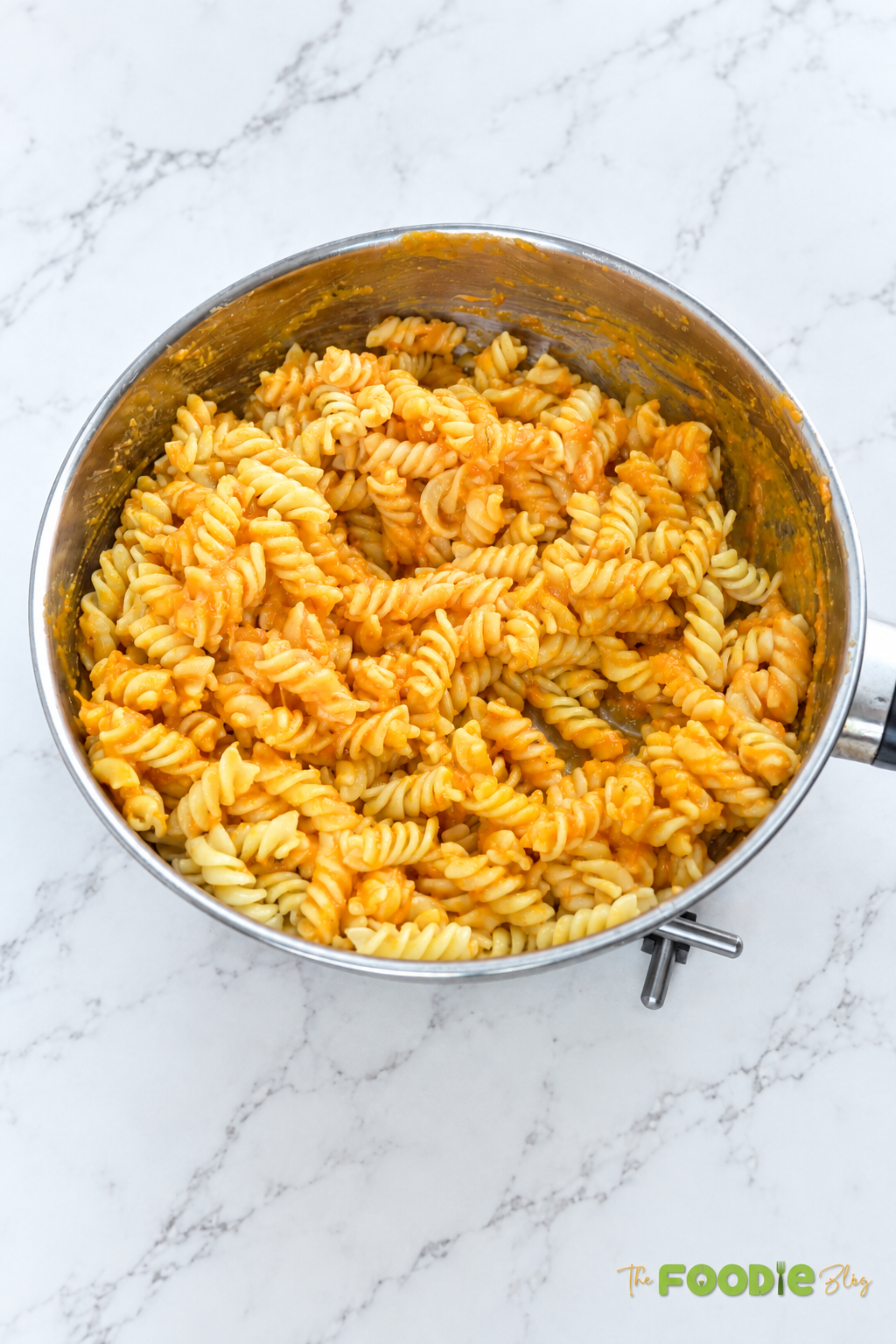
Stir gently until the pasta begins to absorb the sauce.
Add the reserved pasta water a little at a time, stirring until the sauce coats the pasta without becoming watery.
- Warm and Toss
Place the pot over low heat if needed.
Toss the pasta gently for another minute or two until everything is warmed through and evenly coated.
Taste and adjust the seasoning if necessary.
- Serve
Divide the pasta among serving bowls or plates.
Finish with freshly grated Parmesan cheese if desired.
Serve immediately while the sauce is warm and creamy.
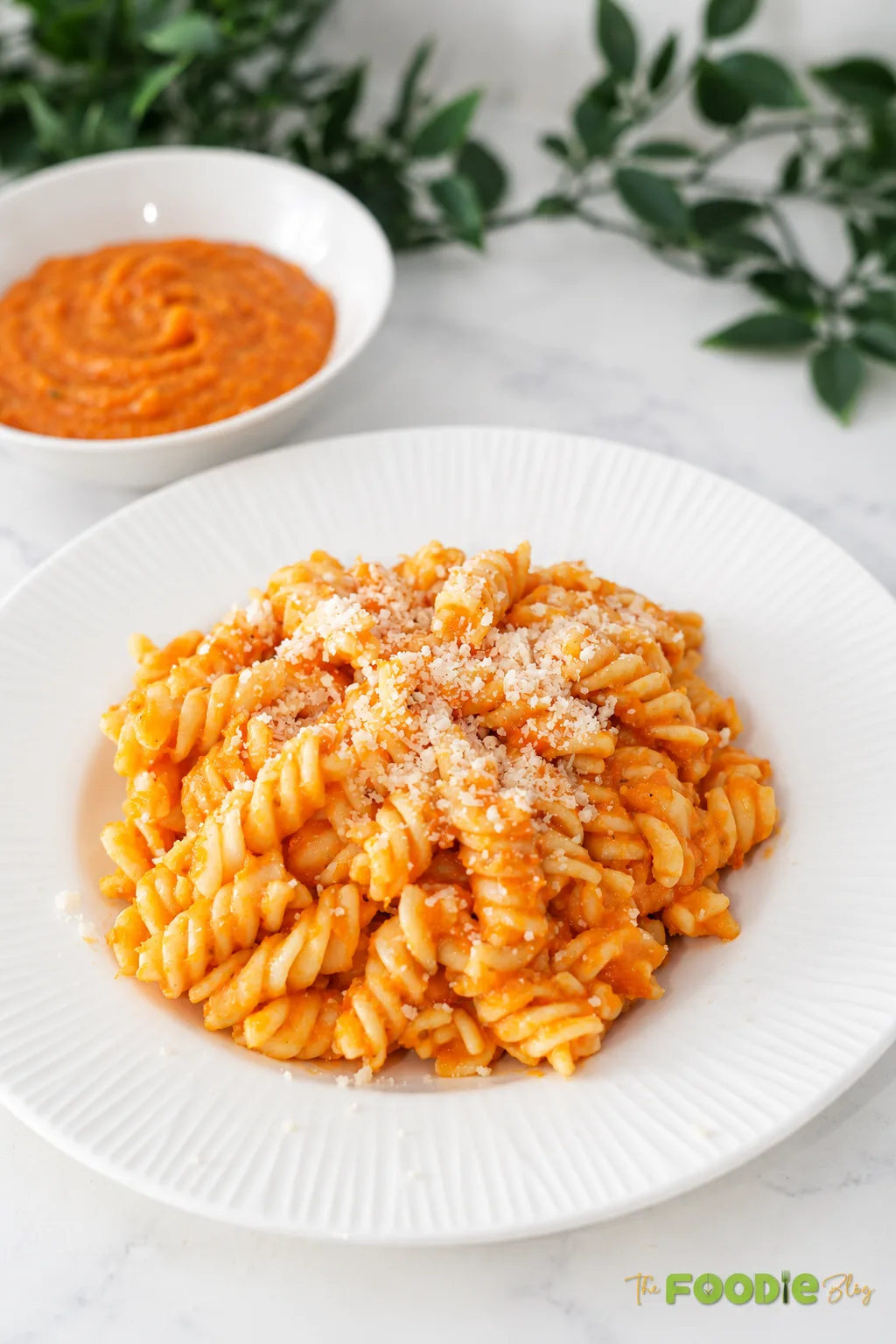
How to Balance the Sweetness of Butternut Squash Pasta Sauce
Butternut squash has a naturally sweet, earthy flavor that becomes more noticeable after roasting. While that sweetness is part of what makes this pasta so comforting, the secret to a really flavorful sauce is balancing it with savory and acidic ingredients.
Here’s how the ingredients in this recipe work together:
- Roasted tomatoes add acidity. Their tangy flavor cuts through the sweetness of the squash and keeps the sauce from tasting too sweet.
- Yellow onion adds depth. Roasting softens the onion’s sharpness and gives the sauce a more rounded, savory flavor.
- Dried thyme brings an earthy note. Its herbal flavor complements the squash without overpowering the tomatoes.
- Salt enhances the savory flavors. Taste the sauce after blending, especially if your squash is particularly sweet.
- Black pepper adds gentle warmth. A little freshly ground pepper helps balance the sweet vegetables.
Common Mistakes to Avoid
- Not roasting the squash long enough: Firm pieces won’t blend into a smooth sauce.
- Crowding the baking sheet: Vegetables may steam instead of roast.
- Using too much pasta water: The sauce can become thin.
- Not reserving pasta water: Thick squash puree may be harder to toss evenly with pasta.
- Overcooking the fusilli: Soft pasta can become mushy when mixed with the sauce.
- Underseasoning the vegetables: Squash needs enough seasoning to balance its natural sweetness.
- Blending hot vegetables unsafely: Hot steam can create pressure in a sealed blender.
- Letting the finished pasta sit too long: The sauce thickens as the pasta absorbs moisture.
What to Serve with Butternut Squash Pasta
This dish works well on its own, but a few simple sides can make it a complete dinner.
Garlic bread: Great for scooping up any extra sauce.
Roasted broccoli: Its savory flavor contrasts with the naturally sweet squash.
Green salad: A light, crisp salad adds freshness.
Grilled chicken: A simple protein option if you want a heartier meal.
Parmesan cheese: Adds extra savory flavor and a salty finish.
Fresh herbs: A little parsley or basil can brighten the finished dish.
FAQs
Yes. Roasted butternut squash blends into a thick, smooth sauce that coats pasta beautifully. This recipe combines it with tomatoes and onion for additional flavor.
Yes. The roasted squash becomes naturally smooth when blended. Reserved pasta water helps adjust the consistency without adding dairy.
Absolutely. This recipe uses a 16-ounce bag of frozen diced squash, which makes preparation much easier.
Fusilli, rigatoni, and penne all work well. Short pasta shapes with ridges or spirals help hold the thick sauce.
It has a mild sweetness from the roasted squash, balanced by the savory onion, tomatoes, black pepper, and thyme.
You might also like
More Recipes To Try


Swipe to see all 5 recipes
Roasted Butternut Squash Pasta
Ingredients
Equipment
Method
- Preheat your oven to 400°F (200°C). Line a large baking sheet with parchment paper.
- Arrange the frozen diced butternut squash, chopped tomatoes, and sliced onion on the baking sheet. Drizzle with olive oil and season with salt, black pepper, and dried thyme. Toss until everything is evenly coated.
- Roast for approximately 25–35 minutes, stirring halfway through, until the squash is tender and the tomatoes and onions are soft and lightly caramelized.
- Meanwhile, bring a large pot of water to a boil. Add the fusilli and cook according to the package directions until al dente. Reserve 1/3 cup (80 ml) pasta cooking water, then drain.
- Carefully transfer the roasted vegetables to a blender. Blend until smooth and creamy, adding a little reserved pasta water if necessary. Vent the blender lid appropriately and work in batches when blending hot vegetables.
- Return the cooked pasta to the pot. Add the roasted butternut squash sauce and toss over low heat for 1–2 minutes. Gradually add the remaining reserved pasta water as needed.
- Divide the pasta among serving plates and garnish with freshly grated Parmesan or fresh herbs, if desired. Serve immediately.
Nutrition
Video
Tried this recipe?
Let us know how it was!Estimated reading time: 7 minutes